Team6 · July 14, 2026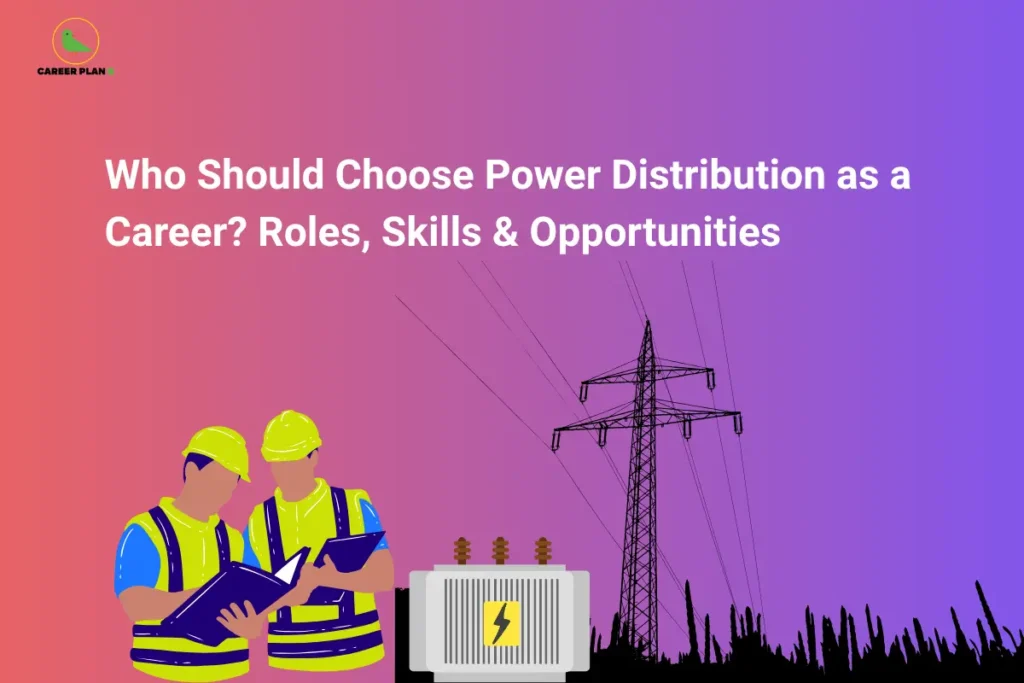
Introduction
Every single time you switch on a light, charge your phone, or walk into an air-conditioned office, someone made that possible. Not just the power plant that generated the electricity, but the vast, complex network of cables, substations, transformers, and control systems that delivered it silently to your doorstep.
That network is called the power distribution system. And the professionals who design, manage, and maintain it are among the most essential and most underappreciated engineers in the world.
Power distribution as a career is one of the most stable, high-growth, and genuinely impactful paths an engineering graduate can choose today. India alone is targeting 500 GW of renewable energy capacity by 2030, and distributing that energy efficiently across cities, towns, and villages is one of the biggest engineering challenges of our time. According to the Ministry of Power, India’s total installed power capacity crossed 900 GW in 2024, and managing this grid requires thousands of trained power distribution professionals. (Source: Ministry of Power, India)
But is this career right for you? In this blog, we will answer exactly that, breaking down who is best suited for this path, what roles are available, what skills you need, and how to start your journey.
What Is Power Distribution and Why Does It Matter?
Before diving into careers, let us understand what power distribution actually is.
Electricity follows a three-stage journey from source to socket:
Generation → Transmission → Distribution
- Generation is where electricity is produced in thermal plants, solar farms, wind turbines, or hydro dams.
- Transmission moves high-voltage electricity across long distances through power lines and towers.
- Distribution is the final leg stepping down that voltage and delivering it reliably to homes, hospitals, factories, and offices.
Electrical power systems engineering focuses on all three stages, but distribution is where the engineering meets real life. A failure in the distribution network is what causes a blackout in your neighbourhood. A well-designed distribution system is what keeps a hospital running during a storm.
With India’s push toward smart grids, electric vehicles, and rooftop solar integration, the distribution network is becoming more intelligent and complex than ever. The Central Electricity Authority (CEA) of India sets the technical standards for power distribution infrastructure across the country. (Source: Central Electricity Authority)
Who Is Best Suited for a Career in Power Distribution?
Power distribution as a career is not for everyone, but for the right person, it is an incredibly rewarding path. Here is a clear breakdown of who fits best:
Students from Electrical and EEE Backgrounds
If you have studied electrical engineering or Electrical and Electronics Engineering, you already have the foundational knowledge of circuit theory, power systems, machines, and control systems that power distribution careers are built on. Subjects like load flow analysis, protection systems, and transformer design are directly applicable to real-world distribution roles.
This is the most natural entry point into electrical power systems engineering, and most leading power sector employers specifically recruit from these disciplines.
Those Who Enjoy Problem-Solving and Field Work
Power distribution is not a desk job, at least not entirely. Distribution network engineers frequently visit substations, inspect transmission lines, diagnose faults, and coordinate with field teams during outages. If you enjoy hands-on, real-world problem-solving rather than purely theoretical work, this career offers that balance every day.
People Passionate About Sustainability and Clean Energy
The energy transition is reshaping power distribution from the ground up. Renewable energy and power systems integration, connecting solar farms and wind turbines to the existing grid, is one of the most complex and exciting challenges in distribution engineering today. If you care deeply about climate change and clean energy, this is a career where your technical work directly drives environmental impact.
India’s National Solar Mission and the PM-KUSUM scheme for rural solar are creating massive demand for engineers who understand both renewable systems and distribution networks.
Candidates Who Want Government and PSU Stability
Power distribution is one of the few engineering fields where government jobs and PSU (Public Sector Undertaking) opportunities remain extremely strong. Organisations like POWERGRID, NTPC, BHEL, state DISCOMs (distribution companies), and RECPDCL regularly recruit electrical engineers for distribution and grid roles.
If job security, structured growth, and public service appeal to you, power grid and transmission careers in the government sector offer some of the most stable career trajectories available to engineering graduates.
Professionals Looking to Transition Into the Energy Sector
You do not have to be a fresh graduate to enter this field. Professionals from related backgrounds civil engineering, instrumentation, electronics, or even IT are increasingly transitioning into smart grid technology careers as the industry digitises. If you are willing to upskill through certifications and bridge courses, power distribution welcomes lateral entrants with relevant transferable skills.
Have Any Doubts?
Top Career Roles in Power Distribution
Energy sector job opportunities in power distribution span technical, analytical, managerial, and consultancy functions. Here is a detailed look at the most prominent roles:
| Role | Key Skills Required | Top Employers |
|---|---|---|
| Distribution Network Engineer | Load flow analysis, ETAP, AutoCAD Electrical | DISCOMs, POWERGRID, Tata Power |
| Power Systems Analyst | Power system simulation, fault analysis, SCADA | Siemens, ABB, GE Power |
| Smart Grid Engineer | IoT, AMI systems, communication protocols | Schneider Electric, Honeywell |
| Substation Design Engineer | Switchgear, protection relay, HV systems | BHEL, L&T, Sterlite Power |
| Energy Audit & Compliance | Energy auditing, BEE standards, reporting | BEE-empanelled firms, State DISCOMs |
| Renewable Integration Engineer | Grid interconnection, DER management | SECI, NTPC Renewable, ReNew Power |
Distribution Network Engineer
This is the core distribution network engineer role responsible for planning, designing, and maintaining the electrical network that delivers power to end consumers. They work on feeder routing, load balancing, fault detection, and network upgrades. State DISCOMs are the largest employers for this role across India.
Smart Grid Engineer
As India deploys Advanced Metering Infrastructure (AMI) and smart meters under the Revamped Distribution Sector Scheme (RDSS), smart grid technology careers are booming. These engineers integrate digital communication, IoT sensors, and data analytics into traditional power networks, making distribution systems self-monitoring and self-healing.
Substation Design Engineer
Substations are the nerve centres of power distribution where voltage is stepped down and power is routed to different feeders. Substation design engineers work on equipment selection, protection relay coordination, civil layout design, and safety compliance. This is a highly specialised and well-compensated power grid and transmission career path.
Energy Audit and Compliance Officer
With India’s Bureau of Energy Efficiency mandating energy audits for large consumers and distribution utilities, professionals trained in energy auditing are in growing demand. These roles combine power sector skills and certifications with regulatory knowledge, making them ideal for detail-orientated engineers.
Skills and Certifications Needed to Succeed
To build a strong foundation in power distribution as a career, here is what you need to develop:
Technical Skills:
- Power system simulation tools: ETAP, PowerWorld, DIgSILENT
- CAD tools: AutoCAD Electrical, EPLAN
- Load flow, short circuit, and protection coordination analysis
- SCADA systems and energy management software
- Understanding of smart metering and AMI systems
- Knowledge of grid codes and Indian Electricity Grid Code (IEGC)
Key Certifications:
- BEE Certified Energy Manager / Energy Auditor essential for energy audit roles in India (Source: Bureau of Energy Efficiency)
- POWERGRID Training Institute Programs specialised training in transmission and distribution systems (Source: POWERGRID Training Institute)
- CEA Guidelines Compliance Knowledge critical for substation and grid design roles (Source: Central Electricity Authority)
- CBIP (Central Board of Irrigation and Power) Courses: widely respected technical training in the Indian power sector (Source: CBIP Official)
- IEEE Power and Energy Society membership is valuable for staying current with global standards (Source: IEEE PES)
Soft Skills:
- Attention to detail and safety awareness
- Field adaptability and crisis management
- Strong documentation and regulatory reporting skills
- Cross-functional collaboration with civil, mechanical, and IT teams
How Career Plan B Helps
Deciding whether power distribution as a career aligns with your strengths, interests, and long-term goals can be genuinely confusing, especially with so many roles across electrical power systems engineering and the broader energy sector job opportunities landscape. Career Plan B offers personalised career counselling, PsycheIntel-based career assessment tests, and tailored career roadmapping to help you identify the right role, whether in smart grids, renewable integration, or substation design, and build a focused plan to get there.
For Latest Information
Frequently Asked Questions (FAQs)
Q1. Is power distribution as a career a good choice in India?
Absolutely. With India targeting 500 GW of renewable energy by 2030, the Revamped Distribution Sector Scheme (RDSS) investing over ₹3 lakh crore in grid upgrades, and thousands of DISCOM vacancies annually, power distribution as a career offers exceptional stability and growth.
Q2. What educational background is needed for power distribution careers?
A degree in Electrical Engineering or Electrical and Electronics Engineering is the most direct route. Diplomas in electrical engineering also qualify for several DISCOM and government roles. Postgraduate specialisation in power systems or smart grid technology careers adds significant value.
Q3. What is the difference between power transmission and power distribution?
Transmission refers to moving bulk high-voltage electricity over long distances between power plants and substations. Distribution is the final stage of stepping down voltage and delivering it to end consumers. Distribution network engineer roles focus specifically on this last-mile delivery infrastructure.
Q4. Are there government job opportunities in power distribution?
Yes, extensively. POWERGRID, NTPC, BHEL, state DISCOMs, RECPDCL, and SECI are among the major public sector employers. Examinations like GATE and organisation-specific recruitment drives are the primary entry routes into power grid and transmission careers in the government sector.
Q5. How is renewable energy changing power distribution careers?
Renewable energy and power systems integration is transforming distribution networks. Rooftop solar, wind farms, and battery storage systems are all being connected to distribution grids, creating new engineering challenges around grid stability, reverse power flow, and smart metering. This is one of the fastest-growing specialisations within distribution engineering today.
Conclusion
Not every engineering career offers the combination of stability, real-world impact, and future relevance that power distribution does. Every home lit up, every hospital kept running, every electric vehicle charged these are the results of the work done by power distribution engineers, quietly and continuously, every single day.
Power distribution as a career is the right choice if you love problem-solving, care about sustainable energy, want the security of the public sector, or simply want a career where your work genuinely matters. With India’s massive grid modernisation push, the demand for skilled professionals in electrical power systems engineering, smart grid technology careers, and distribution network engineer roles is only going to grow.
The question is not whether this field has a future. The question is whether you have a clear plan to enter it.
That is exactly where Career Plan B can help. With in-depth career assessments, expert counselling, and personalised roadmapping, Career Plan B helps you cut through the confusion and take your first confident step toward a powerful career literally.
Your career in power distribution starts with one decision. Make it today.