Team5 · July 29, 2026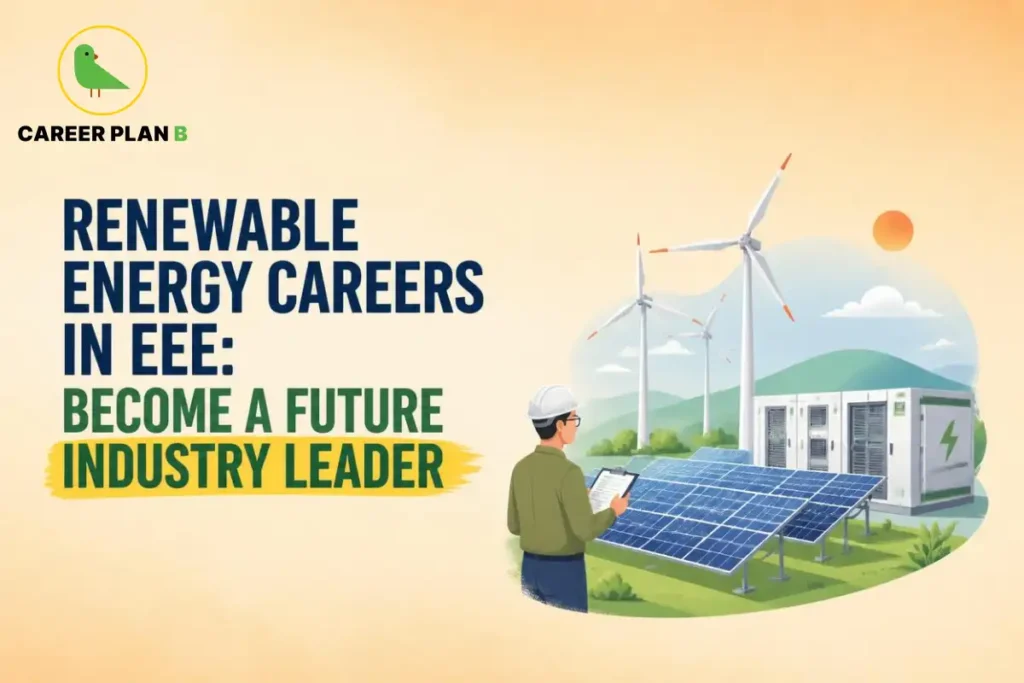
Introduction
India has made a promise to the world, and it is an enormous one.
By 2030, India aims to install 500 gigawatts of renewable energy capacity. That is enough to power hundreds of millions of homes and businesses, and it represents one of the largest clean energy transitions any country has ever attempted. As of early 2024, India has already crossed 180 GW of installed renewable capacity, according to the Ministry of New and Renewable Energy. The pace is accelerating every year.
Behind every solar panel, every wind turbine, and every smart grid upgrade powering this transition stands an electrical engineer.
Renewable energy careers in EEE are not just growing; they are becoming some of the most important engineering roles in the country. If you are an electrical and Electronics Engineering graduate wondering where your degree can take you, the answer is increasingly pointing toward the green energy sector. This blog walks you through the best roles available, the skills you need to build, and how to position yourself at the forefront of India’s energy future.
Why Renewable Energy Is the Fastest-Growing Career Sector for EEE Graduates
There is a simple reason why renewable energy careers in EEE make so much sense: the technology is fundamentally electrical.
Solar panels generate DC electricity. Inverters convert it to AC. Transformers step it up for transmission. Grid controllers balance supply and demand in real time. Battery storage systems absorb excess energy and release it when needed. Every single one of these systems is designed, built, and managed by electrical and electronics engineers.
Private sector investment is matching government ambition. Companies like Adani Green Energy, ReNew Power, and Greenko are investing billions into solar and wind projects, creating thousands of engineering jobs at every level.
Best Renewable Energy Careers in EEE
Solar Power Systems Engineer
Solar energy jobs for electrical engineers are currently the single largest category of renewable energy hiring in India. A Solar Power Systems Engineer is responsible for designing photovoltaic systems calculating panel layouts, sizing inverters, designing DC and AC wiring systems, and ensuring grid compliance. They work on rooftop solar projects, utility-scale solar farms, and hybrid systems that combine solar with battery storage.
Tools like PVsyst and HOMER are standard in this role, and familiarity with the Central Electricity Authority’s grid connectivity standards is essential for utility-scale work.
Entry-level solar engineers in India typically earn between ₹4–6 LPA, with experienced professionals at mid and senior levels earning ₹12–25 LPA depending on project scale and company.
Wind Energy Engineer
Wind energy career opportunities in India are expanding rapidly, particularly in states like Tamil Nadu, Gujarat, Rajasthan, and Karnataka, where large wind farms are being developed. A Wind Energy Engineer works on the electrical systems of wind turbines, including generator design, power conversion systems, and grid connection infrastructure. Offshore wind is also emerging as a new frontier, with the government actively developing policy frameworks for offshore wind development along India’s coastline through MNRE.
Power Systems and Grid Integration Engineer
As more renewable energy enters the grid, managing grid stability becomes increasingly complex. A Power Systems Engineer in renewable energy works on load flow analysis, fault studies, and grid code compliance to ensure that solar and wind power can be absorbed reliably by the national grid. This role connects directly with the work of the Central Electricity Authority and state electricity boards and is critical to India’s energy transition at a systems level.
Energy Storage Engineer
Energy storage and grid integration jobs are among the fastest-emerging roles in the EEE space. Since solar and wind energy are intermittent, they only generate when the sun shines and wind blows; large-scale battery storage systems are needed to smooth out supply. An Energy Storage Engineer designs and manages these battery systems, working on battery chemistry selection, BMS integration, thermal management, and grid interface design. The government’s Production Linked Incentive scheme for Advanced Chemistry Cell batteries is driving domestic manufacturing of these systems, creating a growing base of local job opportunities.
Renewable Energy Project Engineer
A Renewable Energy Project Engineer oversees the end-to-end execution of solar or wind projects from site assessment and equipment procurement to installation supervision, commissioning, and handover. This role suits EEE graduates who enjoy combining technical knowledge with project management and site coordination. It is one of the most accessible entry points into the renewable energy sector for fresh graduates.
Energy Audit and Efficiency Consultant
Not all green energy career opportunities for engineering graduates are about generation. Energy efficiency reducing how much energy buildings, factories, and infrastructure consume is equally important. Energy auditors assess energy consumption patterns, identify waste, and recommend improvements. The Bureau of Energy Efficiency, under the Ministry of Power, runs a certified Energy Auditor programme that is a highly respected credential in this space. EEE graduates who qualify as BEE Certified Energy Auditors open doors in consulting, industrial energy management, and government energy efficiency programmes.
Top Companies and Government Organisations Hiring EEE Graduates
EEE graduate jobs in the renewable energy sector are available across both private companies and government-backed organisations.
On the government side:
- NTPC Renewable Energy Limited: NTPC’s dedicated renewable arm is expanding aggressively into solar and wind, hiring electrical engineers at scale
- Solar Energy Corporation of India (SECI), the nodal agency for implementing India’s solar and wind energy schemes, regularly recruiting engineering professionals
- BHEL manufactures solar modules and wind turbine components, with dedicated R&D and project execution teams
- Ministry of New and Renewable Energy (MNRE) offers opportunities through technical and policy roles for experienced engineers
On the private side, Adani Green Energy, ReNew Power, Greenko, Torrent Power, and Waaree Energies are among the largest employers in electrical engineering in solar and wind industry roles. Global companies like Siemens Gamesa, ABB, and Schneider Electric also have strong renewable energy operations in India.
Salary benchmarks across levels:
- Entry level (0–2 years): ₹4.5–7 LPA
- Mid-level (3–6 years): ₹10–18 LPA
- Senior level (7+ years): ₹20–40 LPA, especially in project leadership and technical advisory roles
Have Any Doubts?
Skills EEE Graduates Need to Build a Career in Renewable Energy
The fundamentals of your EEE degree give you a strong foundation. What distinguishes candidates who land strong renewable energy roles is the additional layer of specialised skills and tools built on top of that foundation.
Technical skills that matter most:
- Power systems analysis load flow, short circuit, and stability studies
- Inverter and converter design for solar and wind applications
- SCADA systems and energy management software
- Grid codes and connectivity standards as defined by the CEA
- Battery storage system design and integration
- Knowledge of solar and wind resource assessment methods
Software tools employers expect:
- PVsyst for solar PV system simulation and yield estimation
- HOMER for hybrid renewable energy system optimisation
- MATLAB and Simulink for power systems modelling and control design
- AutoCAD Electrical for system layout and single-line diagram preparation
Certifications worth pursuing:
- NPTEL courses on Solar Energy, Power Systems, and Renewable Energy Technologies
- free, government-backed, and widely recognised by employers
- BEE Certified Energy Auditor programme highly valued for energy efficiency and consulting roles
- National Skill Development Corporation renewable energy skill programmes
How Career Plan B Helps
Renewable energy is a broad field, and choosing the right career stream within it, whether solar design, grid integration, energy storage, or project engineering, depends heavily on your individual strengths and interests. Career Plan B offers PsycheIntel Career Assessment Tests and Personalised Career Counselling to help EEE graduates identify which renewable energy career path fits them best. Their Career Roadmapping service then creates a clear, step-by-step plan covering the skills, certifications, and experiences you need to build a strong career in this sector.
For Latest Information
Frequently Asked Questions (FAQs)
Q1. Are renewable energy careers in EEE suitable for fresh graduates?
Yes. Many roles such as Renewable Energy Project Engineer and Solar Systems Engineer actively hire fresh EEE graduates. Having done relevant projects, NPTEL certifications, or internships with renewable energy companies significantly strengthens your application at the entry level.
Q2. Is a government job possible in the renewable energy sector for EEE graduates?
Absolutely. Organisations like NTPC Renewable Energy, SECI, BHEL, and MNRE regularly recruit electrical engineers. NTPC and BHEL conduct their own graduate trainee exams, while SECI and government agencies recruit through standard PSU channels.
Q3. How important is knowledge of grid systems for renewable energy roles?
Very important for most roles beyond basic project execution. Grid integration, power quality, and stability are central challenges in scaling up renewable energy, and engineers with strong power systems knowledge are in high demand. The Central Electricity Authority publishes detailed technical standards that are worth studying.
Q4. What is the difference between a Solar Engineer and a Power Systems Engineer in this sector?
A Solar Engineer focuses on the design and performance of photovoltaic systems panels, inverters, and wiring. A Power Systems Engineer focuses on how renewable energy connects to and interacts with the broader electricity grid. Both roles are essential and often work together on large projects.
Q5. Where can I find official information on India’s renewable energy targets and schemes?
The Ministry of New and Renewable Energy is the primary source for all scheme details, capacity targets, and policy updates. The Bureau of Energy Efficiency covers energy efficiency programmes and certification.
Conclusion
India is not just building a cleaner energy future; it is building one of the largest energy systems ever created, and it needs engineers to make it work.
Renewable energy careers in EEE offer something rare: the combination of strong job prospects, competitive salaries, long-term sector growth, and work that genuinely contributes to solving one of the most important challenges of our time. Whether your interest lies in designing solar farms, integrating wind power into the grid, or building the battery systems that store clean energy for millions of people, there is a well-defined career path waiting for you in this sector.
The window of opportunity for EEE graduates entering renewable energy right now is wide open. The question is how well prepared you are to walk through it.
Start with clarity on which renewable energy career path fits your strengths. Visit Career Plan B to take a career assessment and get personalised guidance on building your future in green energy.