Team Career Plan B · November 2, 2026
Introduction
Hydrogen is often called the fuel of the future. Countries around the world are investing billions in hydrogen production, storage, and distribution. India is also making significant investments in this sector. Many people overlook one important fact. The engineers best prepared to build the hydrogen economy already exist. Many of them work in the oil and gas industry.
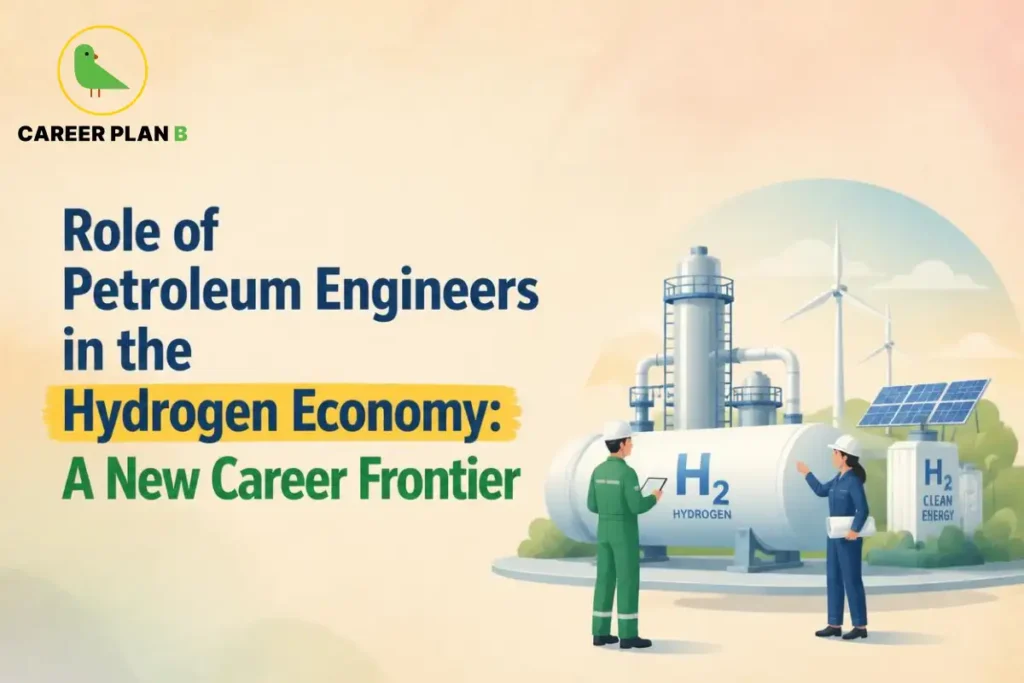
The role of petroleum engineers in the hydrogen economy is no longer just a future possibility. It is already expanding. Petroleum engineers already possess many of the technical skills, tools, and industry knowledge that the hydrogen sector requires. This blog explains how petroleum engineers fit into India’s hydrogen future. It explores emerging career opportunities and shows how you can prepare for this rapidly growing field.
What Is the Hydrogen Economy and Why Does It Matter for India?
A hydrogen economy is one where hydrogen serves as a primary energy carrier used to power industries, transport, and buildings while producing little to no carbon emissions when generated from clean sources.
India has made hydrogen a national priority. The National Green Hydrogen Mission, launched by the Ministry of New and Renewable Energy, targets the production of 5 million metric tonnes of green hydrogen per year by 2030. The mission also aims to make India a global hub for green hydrogen export, attract over Rs 8 lakh crore in investments, and create more than 6 lakh jobs across the hydrogen value chain.
The hydrogen economy in India is no longer just a future concept. It is an active national priority backed by government funding, institutional support, and industry participation. This growing sector needs engineers who understand high-pressure gas systems, subsurface storage, and large-scale process infrastructure. Petroleum engineering programmes equip graduates with these skills.
Why Petroleum Engineers Are Naturally Suited for the Hydrogen Economy
The overlap between petroleum engineering and hydrogen technology is significant and often underestimated.
Consider what petroleum engineers already know:
High-pressure fluid systems: Petroleum engineers routinely work with gases and liquids under extreme pressure. They apply this expertise to systems that store, transport, and process hydrogen. These operating conditions closely match those found in the hydrogen industry.
Subsurface Reservoir Engineering: Underground hydrogen storage in depleted oil and gas reservoirs, aquifers, and salt caverns requires the same reservoir modelling and simulation skills petroleum engineers use for oil and gas.
Drilling and Well Engineering: Geothermal hydrogen production and underground hydrogen storage both require drilling expertise a core petroleum engineering competency.
Pipeline and Compression Systems: Natural gas pipeline engineers are directly applicable to hydrogen pipeline design, with modifications for hydrogen embrittlement and blending protocols.
Thermodynamics and Phase Behaviour: Understanding how gases behave under varying temperature and pressure conditions is fundamental to both petroleum and hydrogen engineering.
In short, petroleum engineer skills in the energy transition do not need to be built from scratch. Engineers can adapt their existing expertise to new energy applications. India’s energy sector is already driving this transition.
Key Roles Petroleum Engineers Can Play in the Hydrogen Sector
Hydrogen Production Engineering
Green hydrogen is produced through electrolysis powered by renewable energy. Blue hydrogen is produced from natural gas with carbon capture. Petroleum engineers with expertise in process engineering and chemical engineering play a key role in this field. They design, operate, and optimise hydrogen production facilities. They are especially valuable in blue hydrogen plants that integrate with existing oil and gas infrastructure.
Underground Hydrogen Storage
One of the biggest challenges of the hydrogen economy is storage. Underground hydrogen storage in depleted reservoirs and salt caverns is an emerging field that relies almost entirely on petroleum reservoir engineering principles. Hydrogen production and storage engineering is therefore a natural extension of what petroleum engineers already do.
Hydrogen Pipeline and Distribution Systems
India’s gas pipeline network, overseen by the Petroleum and Natural Gas Regulatory Board, is being evaluated for hydrogen blending and eventual hydrogen-dedicated pipelines. Pipeline engineers from the oil and gas sector are directly transferable to this work, with additional knowledge of hydrogen-specific material science and safety protocols.
Carbon Capture Linked to Blue Hydrogen
Blue hydrogen production requires capturing the carbon dioxide released when natural gas is reformed. Carbon capture, utilisation, and storage or CCUS is a technology where petroleum engineers are already ahead their knowledge of reservoir injection, wellbore integrity, and subsurface monitoring is directly applicable.
Offshore Hydrogen Production Platforms
Offshore wind-powered hydrogen production is an emerging concept that combines offshore engineering another petroleum engineering domain with electrolysis and hydrogen compression systems. Clean energy companies already recruit oil and gas engineers for offshore feasibility studies and pilot projects. As offshore renewable energy projects expand, they increasingly seek engineers with experience in offshore operations and energy infrastructure.
How Indian Oil and Gas Companies Are Entering the Hydrogen Space
India’s major oil and gas companies are not watching the hydrogen transition from the sidelines they are actively investing in it.
ONGC has committed to ONGC green hydrogen projects as part of its broader energy transition strategy, including investments in electrolyser technology and renewable-powered hydrogen production at its facilities.
Oil India Limited has announced plans to develop green hydrogen production capacity alongside its existing oil and gas operations, leveraging its infrastructure and engineering workforce.
GAIL is piloting hydrogen blending in its natural gas pipelines a critical first step toward building a hydrogen distribution network across India using existing pipeline assets.
IOCL is working on green hydrogen projects at its refineries to decarbonise refining operations and produce hydrogen for industrial use.
These developments mean that future energy jobs for petroleum engineers are increasingly likely to exist within the same organisations that hire them today just in newer, hydrogen-focused divisions.
Skills Petroleum Engineers Need to Transition Into Hydrogen
While the foundational skills transfer well, petroleum engineers looking to move into hydrogen roles will benefit from targeted upskilling in the following areas:
- Electrolyser technology and hydrogen production processes
- Hydrogen safety standards and material science particularly hydrogen embrittlement in pipelines and vessels
- Carbon capture and storage systems
- Fuel cell technology fundamentals
- Renewable energy integration with hydrogen production systems
Engineers can pursue postgraduate programmes and short courses through IITs and NITs that are increasingly offering hydrogen and clean energy specialisations. AICTE recognises programmes that combine chemical, petroleum, and energy engineering with emerging technology modules.
Staying updated with policy developments through the Ministry of Petroleum and Natural Gas and the Ministry of New and Renewable Energy is also essential for engineers building careers at this intersection.
Have Any Doubts?
Hydrogen Economy Job Roles and Salary Outlook
Green hydrogen career opportunities are still emerging in India, but the trajectory is clear. Here are key job titles appearing in the hydrogen sector:
- Hydrogen Production Engineer
- Underground Storage and Reservoir Engineer
- Hydrogen Pipeline Integrity Engineer
- CCUS Project Engineer
- Hydrogen Safety and Compliance Specialist
- Electrolyser Systems Engineer
- Offshore Hydrogen Platform Engineer
Salary Outlook:
| Experience Level | India (Hydrogen Sector) | International Market |
|---|---|---|
| Entry Level (0–3 Years) | ₹8–14 LPA | ₹25–40 LPA |
| Mid Level (4–8 Years) | ₹15–28 LPA | ₹40–70 LPA |
| Senior Level (9+ Years) | ₹30–50 LPA | ₹70–120 LPA |
Salaries in India’s hydrogen sector are expected to grow significantly as investment and project activity increases through 2030 under the National Green Hydrogen Mission targets.
How Career Plan B Helps
Transitioning from traditional petroleum engineering into hydrogen economy roles requires both career clarity and a concrete upskilling plan. Career Plan B offers personalised career counselling, PsycheIntel aptitude assessments, and expert guidance on higher education pathways and emerging energy sector careers helping petroleum engineers navigate the hydrogen transition with a strategy that fits their strengths and goals.
For Latest Information
Frequently Asked Questions
- Can petroleum engineers work in the hydrogen economy?
Yes. Petroleum engineers possess core skills in subsurface engineering, high-pressure fluid systems, drilling, and pipeline design all of which are directly applicable to hydrogen production, storage, and distribution roles.
- What is India’s plan for the hydrogen economy?
India’s National Green Hydrogen Mission targets 5 million metric tonnes of green hydrogen production per year by 2030, with investments exceeding Rs 8 lakh crore and the creation of over 6 lakh jobs across the hydrogen value chain.
- Which Indian companies are hiring for hydrogen roles?
ONGC, GAIL, IOCL, and Oil India are among the major companies actively investing in hydrogen projects and are expected to create internal hydrogen engineering roles in the coming years.
- What skills do petroleum engineers need to enter the hydrogen sector?
Key upskilling areas include electrolyser technology, hydrogen safety and material science, carbon capture systems, and renewable energy integration all of which build on existing petroleum engineering foundations.
- Are there dedicated hydrogen engineering courses in India?
Several IITs and NITs are developing hydrogen and clean energy programmes. AICTE-recognised courses in energy engineering with hydrogen specialisations are increasingly available for postgraduate aspirants.
Conclusion
The role of petroleum engineers in the hydrogen economy is one of the most exciting career stories unfolding in India’s energy sector right now. The skills are transferable, the demand is growing, and the companies that once hired petroleum engineers purely for oil and gas are now building hydrogen divisions that need the same people.
This is not a career disruption it is a career evolution. Petroleum engineers who recognise this shift early and take steps to upskill will find themselves at the centre of India’s clean energy future.
The transition starts with a clear plan. Visit Career Plan B to build yours today.