Team6 · September 18, 2026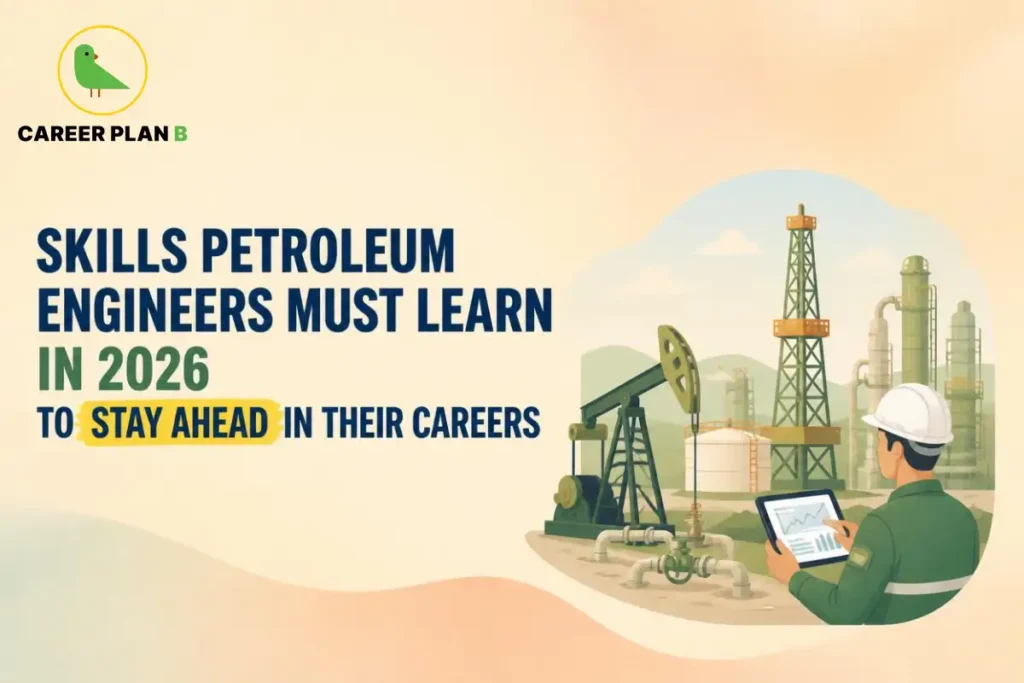
Introduction
The oil rig of 2026 looks nothing like the one from 2010, and neither does the engineer running it. Sensors feed live data into cloud dashboards. Algorithms predict equipment failures before they happen. And the companies hiring engineers are looking for far more than drilling knowledge and reservoir theory. If you are a petroleum engineering student or a working professional wondering what it takes to stay relevant, the answer is clear: the skills petroleum engineers must learn in 2026 go well beyond what most university curricula cover.
India’s energy sector is in the middle of a genuine transformation. Oil and gas production is still growing, but it is being managed with digital tools, governed by tighter environmental regulations, and increasingly integrated with renewable energy systems. The engineers who will lead this sector over the next decade are not just technically sound; they are digitally fluent, sustainability-aware, and capable of working across disciplines. This blog covers exactly the skills you need to build right now.
Why 2026 Is a Turning Point for Petroleum Engineers
India remains heavily dependent on oil and gas, with the Ministry of Petroleum and Natural Gas continuing to invest in domestic exploration and production capacity. At the same time, the government’s energy transition agenda, anchored by India’s Net Zero 2070 commitment and a 500 GW renewable energy target by 2030, is fundamentally changing the skills landscape inside energy companies.
NITI Aayog’s energy strategy documents have consistently highlighted the need for a digitally skilled energy workforce capable of managing both conventional and clean energy systems. These policy directions are already shaping how PSUs like ONGC, IOCL, and GAIL recruit and retain engineering talent. Explore NITI Aayog’s energy roadmap.
The result is a widening gap between engineers who only hold traditional petroleum engineering knowledge and those who have built hybrid skill sets combining domain expertise with digital, environmental, and management capabilities. Here are the seven skills that will define petroleum engineering career growth in India through 2026 and beyond.
1. Data Analytics and Python Programming
This is the single most important addition to the petroleum engineer’s toolkit in 2026. Data analytics and Python programming are now being used for production data analysis, reservoir performance tracking, well log interpretation, and operational efficiency reporting tasks that used to require dedicated IT teams.
PSUs like ONGC have launched large-scale digital transformation programmes where engineers are expected to work with data pipelines and visualisation tools, not just hand data off to analysts. For petroleum engineering career growth in India, the ability to write basic Python scripts, work with pandas and NumPy, and build simple dashboards using tools like Power BI or Matplotlib is fast becoming a baseline expectation rather than a bonus.
The best place to start building these digital skills for petroleum engineers is NPTEL, India’s official online learning platform, which offers free and certified courses in Python, data analysis, and machine learning.
2. Reservoir Simulation and Digital Oilfield Tools
Reservoir simulation has always been central to petroleum engineering. What has changed is the sophistication of the tools and the expectation that engineers can use them independently. Software platforms like Eclipse, CMG, Petrel, and tNavigator are now standard in both PSU and private sector roles.
Beyond simulation, the concept of the digital oilfield, where real-time sensor data, SCADA systems, and remote monitoring are integrated into daily operations, is rapidly becoming the norm inside India’s major oil and gas operations. Engineers who understand how to work within these digital environments, interpret live production data, and troubleshoot remotely are significantly more valuable than those who only understand the geology.
Building proficiency in at least one major reservoir simulation platform alongside a working knowledge of digital oilfield architecture should be a priority for anyone serious about the future of oil and gas careers in India.
3. Machine Learning and AI Applications in Oil and Gas
Machine learning in petroleum engineering is no longer a niche research topic; it is being applied in active field operations. Real-world use cases include predictive maintenance of drilling equipment, AI-assisted seismic data interpretation, automated well performance monitoring, and intelligent production optimisation.
For engineers entering the workforce in 2026, understanding how machine learning models work, how to interpret their outputs, and how to collaborate with data science teams on energy problems is becoming essential. You do not need to become a machine learning engineer, but you do need to speak the language fluently.
The Department of Science and Technology actively funds research in AI applications for energy systems, and several IITs and NITs are running collaborative projects in this space. Explore DST’s research funding initiatives here.
NPTEL also offers accessible machine learning courses specifically useful for engineers from non-CS backgrounds.
4. HSE and Environmental Compliance
Health, safety, and environmental knowledge has always been part of petroleum engineering training. In 2026, however, it is being elevated from a checkbox requirement to a core professional competency driven by stricter regulatory enforcement and growing ESG scrutiny of energy companies.
In India, the Directorate General Factory Advice Service and Labour Institutes (DGFASLI) governs occupational safety standards in hazardous industries, including oil and gas. The Petroleum and Explosives Safety Organisation (PESO) regulates the safe handling, storage, and transport of petroleum products.
Engineers with formal HSE knowledge and familiarity with these regulatory frameworks are consistently preferred for field and plant roles in both PSUs and private sector energy companies. This is one of the most underleveraged skills among young petroleum engineers today.
Read More : Top Companies Hiring Petroleum Engineers in 2026 You Should Know About
5. Renewable Energy Fundamentals
This might surprise you, but understanding renewable energy is now a genuine requirement for upskilling petroleum engineers in India. Here is why.
ONGC has launched ONGC Green, a dedicated initiative to build clean energy capacity across solar, wind, green hydrogen, and geothermal. IOCL and BPCL are similarly investing in biofuels and EV infrastructure. These companies are not abandoning petroleum engineering; they are asking their petroleum engineers to grow with them into the energy transition.
Engineers who understand the basics of solar power generation, wind energy systems, hydrogen production, and energy storage are better positioned for senior leadership roles within PSUs that are actively diversifying. The Ministry of New and Renewable Energy is the official hub for India’s clean energy policy and programmes.
You do not need a full renewable energy degree. A working familiarity with clean energy systems and how they integrate with existing fossil fuel infrastructure is enough to set you apart.
Have Any Doubts?
6. Project Management and Cross-Functional Communication
One of the most underrated skills in any engineering career is the ability to manage projects and communicate across teams. In large energy projects, whether it is a new drilling programme, a refinery upgrade, or a digital transformation initiative, petroleum engineers regularly work alongside finance teams, government liaisons, environmental consultants, and technology vendors.
Engineers who can lead project timelines, manage budgets, write clear reports, and present findings to non-technical stakeholders consistently rise faster in PSU and private sector hierarchies. Credentials like PMP (Project Management Professional) or Six Sigma Green Belt are increasingly valued in senior roles across ONGC, IOCL, and HPCL.
This is not a soft skill in the energy industry of 2026; it is a technical career requirement.
7. Carbon Accounting and ESG Reporting
India aims to achieve net-zero emissions by 2070. Its commitments under the Paris Agreement are also shaping new requirements for energy companies.
ESG reporting now plays an important role in the energy sector. Carbon accounting is also becoming a dedicated function at companies such as ONGC, IOCL, BPCL, and GAIL. This process involves tracking, measuring, and reporting greenhouse gas emissions.
Petroleum engineers can benefit from learning carbon accounting methods. They can also develop skills in Scope 1 and Scope 2 emissions tracking and environmental impact reporting. These skills can support roles that combine engineering and sustainability.
The Ministry of Environment, Forest and Climate Change oversees India’s climate compliance framework.
These skills can also support international career opportunities. Global energy companies and development finance institutions increasingly seek professionals with petroleum engineering and ESG knowledge.
How Career Plan B Helps
Knowing which skills petroleum engineers must learn in 2026 is one thing; building a structured plan to acquire them is another. Career Plan B offers personalised career counselling, psychometric and skills assessments, and tailored career roadmapping to help petroleum engineering students and professionals identify their skill gaps, prioritise upskilling, and align their career trajectory with where India’s energy sector is actually heading.
Get In Touch With Us
Frequently Asked Questions
1. Which skill is most important for petroleum engineers to learn in 2026?
Data analytics and Python programming top the list because they are directly applicable to almost every function in modern petroleum engineering, from reservoir management to production optimisation. Combined with domain knowledge, this skill delivers the highest career return in the shortest time.
2. Can petroleum engineers learn data science without a computer science background?
Absolutely. Many petroleum engineers are successfully transitioning into data-heavy roles using free resources like NPTEL and structured online courses. The key advantage petroleum engineers bring is deep domain knowledge, understanding what the data means in an energy context, which pure data scientists often lack.
3. Is GATE petroleum engineering preparation still worth it in 2026?
Yes, without question. GATE PE remains the primary gateway to PSU recruitment at ONGC, IOCL, GAIL, BPCL, and HPCL. However, GATE alone is no longer sufficient for long-term career growth. Pairing your GATE preparation with the digital and sustainability skills listed above gives you a significant edge both at entry and mid-career levels.
4. How can I upskill while still studying or working full-time?
NPTEL courses are the most practical option; they are free, self-paced, and certification-bearing. Many working petroleum engineers complete one or two NPTEL courses per semester alongside their regular responsibilities. Start with Python for Engineers or Introduction to Machine Learning, then layer in domain-specific modules.
5. Do petroleum engineers need to know about renewable energy?
Increasingly, yes. As India’s major PSUs invest in clean energy portfolios, petroleum engineers who understand renewable energy fundamentals are being considered for cross-functional roles in energy transition projects, significantly expanding their career options beyond traditional oil and gas.
Conclusion
The skills petroleum engineers need in 2026 reflect a changing profession. Reservoir engineering, drilling, and production management remain essential. However, these skills alone are no longer enough.
Engineers can prepare for India’s evolving energy sector by developing broader skills. These include data analysis, environmental awareness, and cross-disciplinary expertise.
Fortunately, many upskilling options remain accessible and affordable. Employers also increasingly recognise these skills. You can start with Python through NPTEL or pursue an HSE certification. You can also explore carbon accounting.Every new skill can strengthen your career profile. Early preparation can also improve your opportunities after graduation or during your next career move.
Ready to build a clear, personalised roadmap for your petroleum engineering career? Visit Career Plan B to connect with expert career counsellors who can help you identify your skill gaps and chart a smarter path forward in India’s energy sector.