Team Career Plan B · September 22, 2026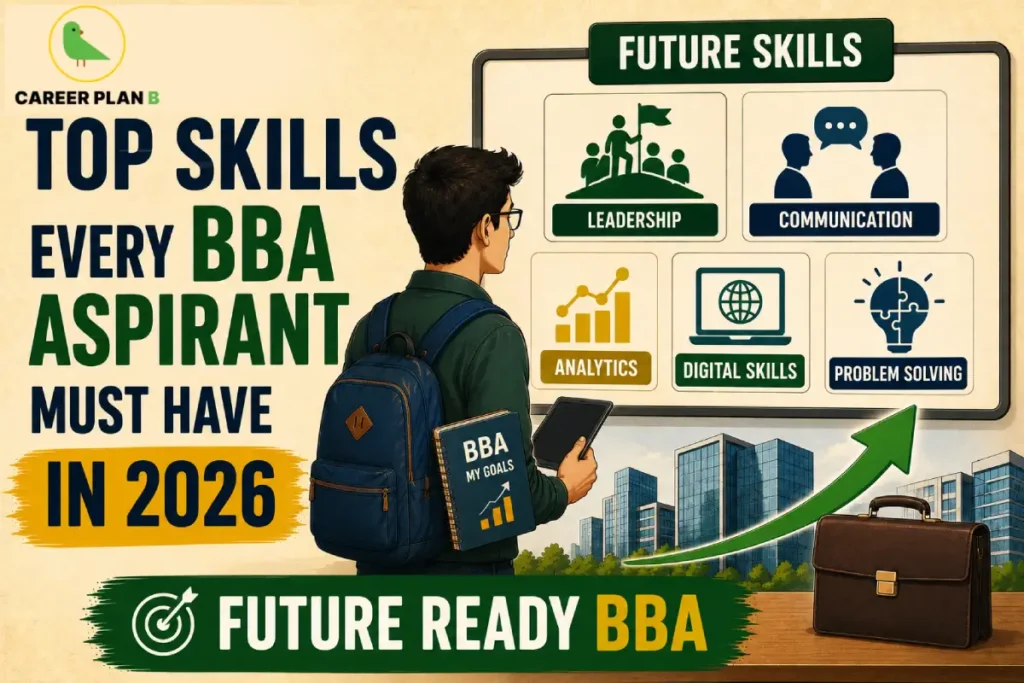
Introduction
Did you know that over 3 lakh students apply for BBA programmes in India every year but only a fraction make it into their dream college?
The Bachelor of Business Administration is one of the most popular undergraduate degrees today. It opens doors to careers in management, marketing, finance, and entrepreneurship. But getting into a good BBA college isn’t just about your 12th board scores. Top colleges want students who already show the potential to become future business leaders.
So what does it actually take? This guide covers the key skills required for BBA aspirants and how you can start building them right now.
Why Skills Matter More Than Marks Alone
Marks get you in the door. Skills decide how far you go.
Top BBA colleges like Delhi University, Christ University, and Symbiosis design their admission process to evaluate more than academics. Group discussions, personal interviews, and written ability tests are all built to assess your real-world readiness.
The good news? These skills can be learned and practised. You don’t need to be a born leader or a maths genius. You just need to start early and stay consistent.
Core Skills Required for BBA Aspirants
1. Business Communication Skills
In a BBA programme, you will constantly present ideas, write reports, and work in teams. Strong communication both spoken and written is non-negotiable.
During GD-PI rounds, assessors watch how clearly you express your views, how you handle disagreement, and whether you listen as well as you speak.
How to build it: Join a debate club, practise mock group discussions, or challenge yourself to explain a business news story to a friend every week.
2. Analytical Skills for BBA
BBA entrance exams like IPMAT, SET, and DU JAT all include quantitative aptitude and data interpretation sections. But analytical thinking goes beyond exam scores; it means you can look at a problem, break it down, and propose a logical solution.
How to build it: Practise quant problems daily, play strategy games, and read case studies from business magazines like Business Today or Forbes India.
3. Leadership and Management Skills
You don’t need to be a CEO to show management skills. Colleges look for students who have taken on responsibilities — as a class captain, event organiser, or sports team leader. These experiences show you can organise, delegate, and deliver.
How to build it: Volunteer for school events, take lead roles in group projects, and document these experiences for your personal statement and interviews.
4. General Awareness
Business doesn’t happen in a vacuum. Understanding current affairs, government policies, market trends, and global events gives you an edge in both GD rounds and interviews. Many BBA entrance exams also include a GK section.
How to build it: Read one business article a day, follow trusted news apps, and maintain a weekly journal of important headlines.
5. Time Management
BBA programmes move fast. You will need to juggle assignments, presentations, projects, and exams — often at the same time. Learning to manage your time well before you even join a programme puts you ahead of most peers.
How to build it: Use a weekly planner, set daily priorities, and practise working to deadlines during your entrance exam preparation.
6. Creativity and Problem Solving
Business is constantly changing. Employers and colleges value students who can think beyond the obvious and come up with fresh solutions. Creativity isn’t just for artists; it’s a core management skill.
How to build it: Explore case study competitions, brainstorm solutions to real business problems, and read about how companies overcame challenges.
For Personalized Guidance
What Do Top BBA Colleges Actually Look For?
Most top colleges use a combination of written tests, group discussions, and personal interviews to evaluate BBA admission requirements. Here’s what each stage assesses:
- Written Test (IPMAT / SET / CUET): Quantitative ability, verbal reasoning, logical reasoning, and general knowledge
- Group Discussion: Communication, teamwork, confidence, and the ability to listen and build on others’ ideas
- Personal Interview: Self-awareness, career clarity, current affairs knowledge, and genuine interest in business
- Academic Profile: Board scores, extracurricular activities, and leadership roles
A Simple BBA Entrance Exam Preparation Plan
You don’t need a complicated strategy. Here’s a practical approach:
- Start quant and verbal practice 6–12 months before your target exam
- Mock-test regularly and review mistakes, not just scores
- Follow at least two reliable news sources daily for GK
- Practise mock GDs with classmates or online groups
- Write a short personal statement draft early to clarify your goals
- Research BBA career opportunities so your interviews reflect genuine purpose
How Career Plan B Helps
Career Plan B supports BBA aspirants through personalised career counselling, PsycheIntel career assessment tests, and tailored career roadmapping.
Whether you need help identifying your strengths, shortlisting colleges, or building your academic profile, Career Plan B gives you a clear, step-by-step path to the right BBA programme.
Get In Touch With Us
Frequently Asked Questions
Q1 What are the most important skills required for BBA aspirants?
Communication, analytical thinking, leadership, time management, creativity, and general awareness are the skills BBA colleges look for most both during admissions and throughout the programme.
Q2 Do I need a commerce background to apply for BBA?
No. Most BBA programmes accept students from science, arts, or commerce streams, as long as you meet the minimum percentage requirement usually 50–60% in Class 12.
Q3 Which entrance exams should I prepare for?
Popular exams include IPMAT (for IIMs), SET (Symbiosis), CUET (Delhi University), NPAT (Narsee Monjee). Target 2–3 exams based on your college preferences.
Q4 How early should I start preparing?
Ideally, start 6–12 months before the exam. Use the first few months to build concepts and the last 2–3 months for mock tests and revision.
Q5 Can extracurricular activities improve my BBA admission chances?
Yes. Leadership roles, sports achievements, community service, and creative pursuits strengthen your academic profile and give you strong material for personal interviews.
Q6 What BBA career opportunities are available after graduation?
BBA graduates can work in marketing, finance, HR, operations, and entrepreneurship. Many also go on to pursue MBA programmes at top B-schools in India and abroad.
Conclusion
The skills required for BBA go well beyond textbook knowledge. Communication, analytical thinking, leadership, general awareness, time management, and creativity; these are the qualities that set successful BBA aspirants apart.
The best time to start building these skills is right now. Whether you’re in Class 10 or already in Class 12, every step you take today brings you closer to the college and career you want.
Ready to take the next step? Connect with Career Plan B for personalised guidance, career assessments, and a roadmap built specifically for your BBA journey.