Team6 · September 30, 2026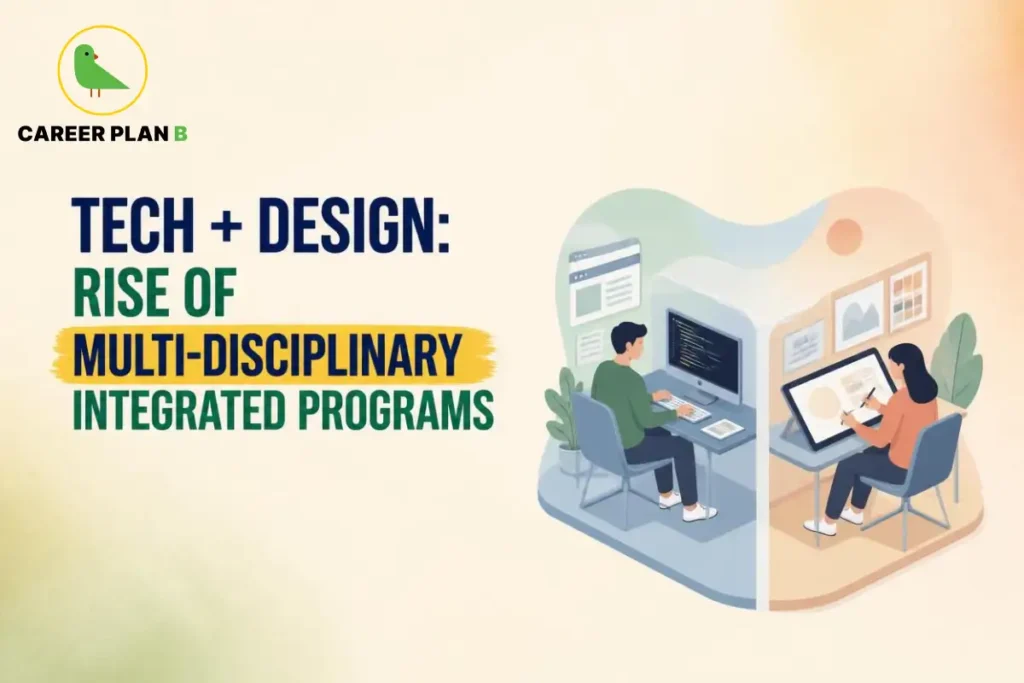
Introduction
Tech plus design used to sit in two entirely separate academic worlds in India, engineering institutes on one side, dedicated art and design schools on the other. That separation has genuinely started breaking down, with some of India’s most technical institutions now running serious, structured design programs of their own.
This guide covers how this multi-disciplinary shift actually works, using real examples of institutions blending technology and design into one coherent academic structure. It looks at why this combination has grown, what these programs actually teach, and who genuinely benefits from choosing this hybrid path.
Why Tech and Design Are Converging Institutionally
Products Now Demand Both Disciplines Together
Modern products, from mobile apps to physical devices, genuinely require deep technical engineering alongside strong design thinking simultaneously. Companies increasingly want graduates who understand both sides well enough to collaborate fluently, rather than two separate teams that struggle to communicate across a real disciplinary gap.
Government Backing Has Strengthened This Convergence
India’s creative-technology sector has real institutional support behind it now. The Union Cabinet approved the National Centre of Excellence for AVGC-XR in September 2024, per an official Press Information Bureau release, backing animation, gaming, and extended reality as a formally recognised growth sector that inherently blends technical and creative disciplines.
The Flagship Example: Design Schools Inside Technical Institutes
How This Model Actually Works
Rather than treating design as entirely separate from engineering, some of India’s top technical institutes now host fully-fledged design schools directly within their own campuses. The IDC School of Design at IIT Bombay, established in 1969, stands as the clearest, most established example of this model in India.
What This Specific Program Actually Offers
IDC runs a four-year Bachelor of Design program, a separate Master of Design program, and a five-year dual B.Des plus M.Des degree specifically, spanning Industrial Design, Communication Design, Interaction Design, Animation, and Mobility and Vehicle Design. Students train inside an institution built primarily around engineering and technology, giving them genuine, ambient exposure to technical thinking throughout their design education.
How Students Enter These Multi-Disciplinary Programs
The Common Entrance Route for Design
Master’s-level admission to programs like IDC’s runs through the Common Entrance Examination for Design, a shared entrance test used across several premier design programs in India. Bachelor’s-level admission processes vary by specific institution, so research your exact target program’s entrance requirements directly.
Why This Differs From Traditional Design School Admission
Unlike standalone design institutes admitting purely on design aptitude, tech-embedded design programs often expect at least baseline comfort with technical and analytical thinking alongside creative skill. This dual expectation shapes both the entrance process and the kind of student who thrives in this specific environment.
What Makes This Combination Genuinely Valuable
Design Solutions Get Grounded in Technical Feasibility
Students trained within a technical institute’s design school learn to design with genuine awareness of engineering constraints and technical feasibility from day one. This produces design work considerably more grounded in what’s actually buildable, compared to design training that develops in isolation from technical thinking.
Technical Thinking Gets Grounded in Human-Centred Design
The reverse benefit matters just as much. Students in this environment absorb genuine design thinking, empathy for the end user, and human-centred problem framing, alongside their technical training, producing graduates who build technology that people can actually use well.
Multi-Disciplinary Tech Plus Design Programs at a Glance
| Aspect | What It Typically Looks Like |
|---|---|
| Institutional model | Design schools embedded within technical institutes, not separate from them |
| Flagship example | IDC School of Design at IIT Bombay, established 1969 |
| Program structure | Separate B.Des, M.Des, and combined dual-degree options |
| Entrance route | Common Entrance Examination for Design at the Master’s level |
| Core advantage | Design grounded in technical feasibility, technology grounded in human-centred thinking |
Who Should Genuinely Consider This Path
Students With Genuine Interest in Both Disciplines
This path suits students with real, dual interest, not those choosing design as a fallback from engineering or vice versa. The combined workload rewards genuine engagement with both technical and creative thinking simultaneously.
Students Targeting Product Design and UX Specifically
Careers in product design, UI/UX, and technology-adjacent design roles benefit particularly strongly from this combined training, since these roles explicitly require fluency across both technical constraints and design principles daily.
Students Considering Roles at the Intersection of Both Fields
Emerging roles blending design and technology, from AR/VR interaction design to automotive design, increasingly value exactly this hybrid training. This program structure positions graduates well for roles that didn’t clearly exist as distinct career paths a decade ago.
Have Any Doubts?
What to Verify Before Choosing This Path
Confirm the Program’s Actual Structure
Not every institution blending “tech and design” in its marketing offers a genuinely integrated program. Research whether design and technical coursework are truly combined, or whether the program simply houses a design school administratively within a technical institute without real curricular integration.
Research Genuine Placement and Career Outcomes
Look at where graduates from your specific target program actually end up, whether in pure design roles, technical roles, or genuinely hybrid ones, to confirm the program delivers on its combined promise in practice, not just on paper.
How Career Plan B Helps
Deciding whether a tech plus design integrated program genuinely fits your interests and goals takes careful, specific research. Career Plan B helps you navigate this through:
- Personalized Career Counselling to confirm genuine dual interest in both technical and design thinking.
- PsycheIntel Career Assessment Tests to evaluate your aptitude across both disciplines honestly.
- Career Roadmapping to plan your entrance preparation for programs like IDC’s specific process.
- Admission & Academic Profile Guidance to strengthen your application for these competitive, hybrid programs.
Get In Touch With Us
Frequently Asked Questions
1. Is a design degree from a technical institute like IIT Bombay as credible as one from NID?
Both carry genuine credibility, though they offer somewhat different strengths. IDC’s design programs benefit from deep technical integration, while NID offers a longer institutional history purely focused on design as its core mission.
2. Do I need a strong technical background to get into a program like IDC?
Not necessarily a formal technical degree, though comfort with analytical and technical thinking genuinely helps, since the program environment expects this alongside creative aptitude throughout your training.
3. What careers specifically benefit from this tech plus design combination?
Product design, UI/UX, automotive design, and emerging AR/VR interaction design roles all particularly reward this specific combination, since they require genuine fluency across both technical constraints and design principles.
4. How do I know if a program’s “tech and design” combination is genuinely integrated?
Research the actual curriculum structure directly, and speak with current students or recent graduates about whether coursework genuinely blends both disciplines, rather than simply housing separate departments within one institution.
Conclusion
Tech plus design integrated programs represent a genuine, growing shift in how India teaches design, moving away from strict separation between technical and creative education. Institutions like IDC School of Design at IIT Bombay show what this convergence looks like in practice, producing graduates fluent in both technical feasibility and human-centred design thinking.
Research your specific target program’s genuine curricular integration and real career outcomes before committing, and choose this path based on authentic dual interest rather than treating it as a fallback from either discipline alone.
Curious whether a tech plus design integrated program fits your genuine interests? Structured career counselling can help you decide with real clarity.