Team6 · August 12, 2026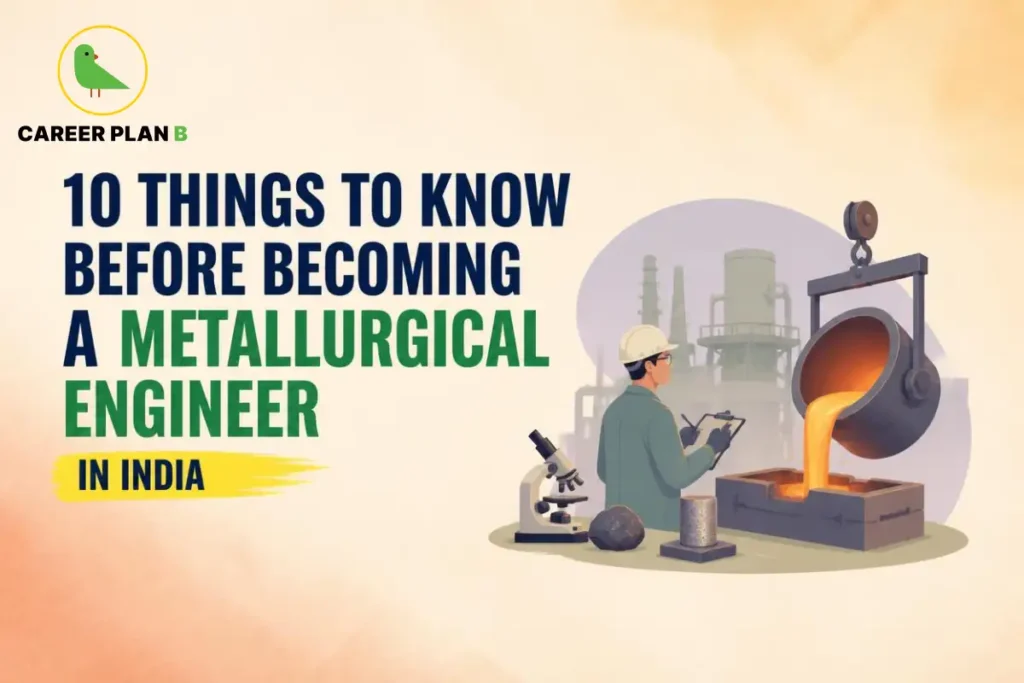
Introduction
Metallurgical engineers sit behind nearly everything built from metal, from steel plants and aerospace components to defence alloys and semiconductor substrates, yet very few students genuinely understand this branch before committing to it. These are the 10 Things to Know Before Becoming a Metallurgical Engineer that most students never encounter until they’re already deep into their degree, often discovering key facts about scope, eligibility, and career reality far too late. Many students confuse this field with general mechanical engineering, completely missing how niche and specialized both the coursework and college options actually are. This blog walks through ten honest, practical things worth knowing before you commit to this path, covering eligibility, scope, and realistic career expectations in depth.
What This Branch Actually Involves and Where You Can Study It
1. It’s Narrower and More Specialized Than General Mechanical Engineering
Metallurgical engineering focuses specifically on the properties, processing, and extraction of metals, rather than the broader machinery and systems focus that defines mechanical engineering. This means your coursework goes deep into metallurgical thermodynamics, material science, mineral processing, and eventually extracting metals from ores, subjects considerably more specialized than a general mechanical curriculum covers.
2. Very Few Institutes Offer This Degree
Unlike mechanical or civil engineering, which nearly every engineering college offers, metallurgical engineering remains genuinely niche, with only select IITs, NITs, and a handful of other institutions providing dedicated programmes. This narrower institutional footprint actually works in your favour competitively, since it means considerably fewer students compete for available seats and, later, for GATE-based PSU positions.
3. The Curriculum Gets Genuinely Technical Fast
By your second year, you’ll already be studying metallurgical thermodynamics and mineral processing, with the third year covering phase transformations, heat treatment, and metal extraction from ores in real depth. The final year shifts toward practical application, including foundry work, non-destructive testing, and corrosion prevention, meaning this degree demands sustained technical engagement rather than easing you in gradually.
Eligibility, Entrance Exams, and the GATE Route
4. Eligibility Starts With Class 12 PCM and JEE
Your metallurgical engineering eligibility begins with Class 12 Physics, Chemistry, and Mathematics, followed by JEE Main for admission to NITs and other centrally funded institutions or JEE Advanced specifically for IIT admission. Several states also run their own entrance exams, like WBJEE, offering additional routes into state engineering colleges offering this specialization.
5. GATE Matters Considerably More in This Branch Than Most
For this specific field, qualifying the Graduate Aptitude Test in Engineering isn’t just one option among several; it’s genuinely central to unlocking the strongest career outcomes, whether that’s postgraduate admission with financial assistance or direct interview calls for prestigious PSU roles. You can verify official exam details through the GATE official website, maintained by the IIT hosting the exam that year, which conducts a dedicated metallurgical engineering paper.
6. PSU Recruitment Is a Genuinely Strong Career Route Here
Major recruiters using GATE scores specifically for metallurgical graduates include BARC, DRDO, BIS, SAIL, IOCL, ONGC, BHEL, NALCO, RINL, and MIDHANI, with starting CTC through this route sometimes reaching as high as ₹17 lakh per annum. Programs must be approved by the All India Council for Technical Education (AICTE), the Government of India’s apex technical education regulator, ensuring your degree carries proper recognition for this GATE PSU recruitment pathway.
Real Career Scope and Who Actually Hires
7. Core Industries Need This Degree More Than You’d Expect
Beyond obvious sectors like steel and mining, metallurgical engineers find genuine demand across automotive, aerospace, defence, and energy industries, since virtually every manufacturing process involving metals needs this specialized expertise somewhere in the pipeline. Companies like Tata Steel, JSW, BHEL, ISRO, and Hindalco regularly recruit graduates from this branch, reflecting how broad this metallurgical engineering scope genuinely extends beyond traditional steel-making alone.
8. Government Research Bodies Are Major Recruiters Too
Beyond production-focused PSUs, research organizations actively hire metallurgical talent for advanced work in materials development. A SAIL metallurgical engineer role, for instance, spans everything from steel production optimization to quality control across India’s largest steel manufacturer, while BARC’s multidisciplinary research spans materials sciences and metallurgy alongside nuclear science, giving graduates access to genuinely cutting-edge research work beyond standard industrial roles.
Honest Salary Expectations and Challenges
9. Salary Expectations Should Be Realistic, Not Inflated
Fresh graduates in core industries like steel, mining, and manufacturing typically earn between ₹4 and ₹6 lakh annually in the private sector, while government roles through GATE follow structured 7th Pay Commission scales, with entry-level positions starting around Pay Level 7, translating to basic pay between ₹44,900 and ₹142,400 monthly, exclusive of allowances. This metallurgical engineer salary India picture is genuinely solid but not extravagant at entry level, growing meaningfully with PSU seniority and specialized research experience over time.
10. This Career Involves Genuinely Demanding Physical and Lab Work
Beyond desk-based analysis, this field often involves working with high-temperature furnaces, handling hazardous materials during extraction and processing, and spending considerable time in labs conducting material characterization and testing. If you’re drawn to purely theoretical or office-based engineering work, this hands-on, sometimes physically demanding side of the profession is worth genuinely considering before committing to this specific branch over a related field like general materials science career India paths.
Career Roles and Growth Path
| Career Stage | Typical Role | Where You Might Work |
|---|---|---|
| Entry-Level | Graduate Engineer Trainee / Assistant Metallurgical Engineer | SAIL, RINL, NALCO, government departments |
| Mid-Level | Metallurgical Engineer / Quality Control Engineer | BHEL, Tata Steel, JSW, DRDO labs |
| Senior-Level | Senior Metallurgist / Materials R&D Lead | BARC, ISRO, large steel and aerospace manufacturers |
How Career Plan B Helps
Career Plan B helps students and professionals make informed career decisions through personalized guidance, career assessments, and structured planning for specialized engineering careers.
Personalized Career Counselling: Provides expert guidance based on individual interests, academic background, skills, and career goals. It helps students understand whether metallurgical engineering aligns with their interests in materials, manufacturing, research, and industrial applications.
Psychometric & Career Assessment Tests: Identify strengths, analytical abilities, technical interests, and suitable career opportunities in areas such as metallurgy, materials science, steel manufacturing, defence research, aerospace, and advanced manufacturing industries.
Career Roadmapping: Creates a clear step-by-step plan covering entrance exam preparation, degree selection, GATE strategy, certifications, internships, and skill development required to build a successful metallurgical engineering career.
Admission & Academic Profile Guidance: Helps students choose the right colleges, courses, entrance pathways, and specialization options while improving their academic profile for opportunities in PSUs, research organizations, and core manufacturing industries.
Get In Touch With Us
Frequently Asked Questions
Q1. Is metallurgical engineering a good career choice in India?
Yes, particularly given steady PSU demand and strong GATE-linked recruitment, though it suits students genuinely interested in materials and processing rather than general mechanical work.
Q2. What’s the difference between metallurgical engineering and materials science?
They overlap significantly and are often taught together, though materials science extends further into polymers, ceramics, and semiconductor materials beyond traditional metals.
Q3. Which colleges offer the best metallurgical engineering programmes?
Select IITs; NITs like NIT Srinagar, and institutions like IIT Indore offer strong programmes, alongside private options like VIT Vellore and SRM Institute of Science and Technology.
Q4. What is the starting salary for a metallurgical engineer?
Private sector fresher pay typically ranges between ₹4 and ₹6 lakh annually, while PSU roles through GATE can start considerably higher, sometimes reaching ₹17 lakh in top-tier positions.
Q5. Is this branch oversaturated or genuinely in demand?
It remains genuinely in demand, with steady PSU recruitment and comparatively less competition than mechanical or civil engineering, due to fewer institutes offering the specialization.
Conclusion
Understanding these 10 things to know before becoming a metallurgical engineer can help you enter this specialized field with genuinely realistic expectations, rather than discovering key facts about scope, eligibility, and daily work only after you’ve already committed years to the degree. This branch offers a narrower, more technically demanding path than general mechanical engineering, but it rewards that specialization with strong PSU recruitment routes, solid research opportunities, and steady demand across India’s core industrial sectors. If these ten points resonate with your genuine interests, particularly the hands-on, technically deep nature of the work, this could be a genuinely rewarding long-term career choice.
If you’d like help figuring out whether this specific path fits you, a conversation with a Career Plan B counsellor can help you plan your next steps with real clarity.