Team Career Plan B · July 17, 2026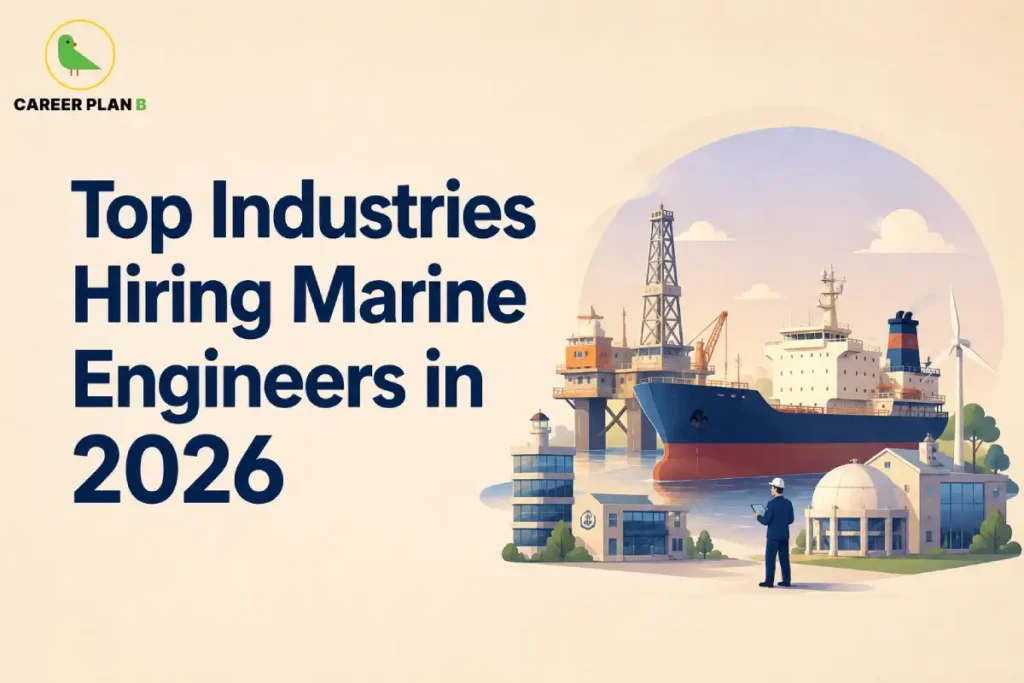
Introduction
There was a time when a Marine Engineering Industries degree had one clear career path: joining a merchant ship and working in the engine room. Today, that is no longer the only option. Marine engineers are now hired across several industries, including shipbuilding, offshore energy, defence, and port infrastructure. This makes it important to understand the top industries hiring marine engineers in 2026 before choosing a career path. This blog explores where these opportunities exist, why they are growing, and how you can prepare yourself for these expanding roles.
Why Marine Engineering Skills Are in Demand Across Multiple Industries
Marine engineers are gaining opportunities beyond traditional shipping because their skills are highly transferable. Their training covers mechanical systems, power generation, thermal management, and safety operations. These skills are valuable in many industries. Marine engineers can work on offshore platforms, support ship construction, or manage technical operations at modern ports. Their ability to handle complex machinery and safety-critical systems makes them suitable for both sea-based and shore-based careers. This wide range of applications is one of the main reasons why marine engineering careers are expanding beyond traditional boundaries.
Top Industries Hiring Marine Engineers in 2026
Marine engineering offers career opportunities across several growing industries. Let’s explore the major sectors where demand is increasing.
1. Commercial Shipping and Merchant Navy
Commercial shipping remains one of the largest employers of marine engineers. Ships require skilled engineers to operate, maintain, and repair complex systems. India handles a major share of global maritime trade. Nearly 95% of India’s trade by volume moves through maritime transport.
Because of this, shipping companies continue to require trained marine engineers. These professionals help ensure safe and efficient vessel operations across international trade routes.
2. Offshore Oil, Gas, and Renewable Energy
Marine engineers also have opportunities in offshore energy industries. These include oil platforms, gas facilities, and renewable energy projects. Offshore wind, tidal energy, and wave energy are gaining attention in India. These projects require professionals who understand marine environments and mechanical systems.
Marine engineers with additional knowledge of renewable energy can access more specialized roles. As the offshore energy sector develops, new career opportunities are expected to grow.
3. Shipbuilding and Ship Repair Industry
The shipbuilding and repair industry is another important career area for marine engineers. India is investing in shipbuilding infrastructure and coastal industrial development. Government initiatives are supporting the growth of shipyards and maritime manufacturing.
Marine engineers are needed for vessel construction, maintenance, testing, and quality control. Those who understand ship design processes and repair operations can find strong opportunities in this sector.
4. Port and Maritime Infrastructure Sector
Modern ports require advanced engineering systems. This has created new opportunities for marine engineers. Programmes like Sagarmala are improving port connectivity, capacity, and technology. These developments require engineers who understand mechanical systems and automation.
Marine engineers can work with cargo handling equipment, port machinery, and maintenance operations. As ports become more automated, technical expertise will become even more valuable.
5. Defense and Government Maritime Roles
Defense is another important sector for marine engineers. Government organizations and naval shipyards require skilled professionals for advanced maritime projects. Marine engineers can contribute to the development and maintenance of naval vessels, submarines, and offshore patrol ships. These roles involve strict safety standards and advanced engineering systems. They also provide opportunities to work on strategically important projects.
However, government and defense careers usually have specific eligibility requirements. Candidates should research the selection process and qualifications early.
6. Marine Classification and Survey Organizations
Marine classification societies and survey organizations also hire experienced marine engineers. These professionals inspect ships and ensure they meet safety and regulatory standards. Their work helps maintain quality across the Marine Engineering Industries. This field requires strong technical knowledge and attention to detail. It is a specialized career option for engineers who enjoy inspection and compliance-related work. With experience, marine engineers can build stable careers in classification and maritime consulting.
How the Blue Economy Is Expanding These Opportunities
The growth of marine engineering careers is closely connected to the blue economy. India is focusing on ocean-based industries, sustainable maritime development, and improved coastal infrastructure. These efforts are creating new opportunities for marine professionals. Government investments in ports, shipbuilding, offshore energy, and maritime technology are expanding the industry. Because of these developments, marine engineers now have more career choices beyond traditional shipping. They can explore opportunities in energy, infrastructure, sustainability, and advanced maritime technologies.
Skills That Make You Employable Across These Industries
To succeed in different marine engineering industries, professionals need a combination of technical and practical skills. Strong knowledge of mechanical and electrical systems remains essential. These skills form the foundation of most marine engineering roles. Adaptability is also important. Different industries use different types of equipment and operational methods.
Marine engineers should also understand safety standards and regulatory requirements. Maritime industries follow strict rules to ensure safe operations. Knowledge of automation and digital monitoring systems can provide an additional advantage. Modern ships, ports, and offshore facilities increasingly use advanced technologies. Communication skills are equally valuable. Marine engineers often work with teams from different technical backgrounds.
Have Any Doubts?
How to Position Yourself for These Opportunities
The expanding career scope of marine engineering creates many possibilities. However, choosing the right direction requires proper planning. Start by understanding marine engineer eligibility requirements. Your entry route can influence your future career options. Students can choose pathways like a four-year marine engineering degree or a Graduate Marine Engineering (GME) course.
Along with academic knowledge, gaining practical exposure is important. Internships and industry training can help you understand different career areas. You can also build additional skills in automation, renewable energy, and shipbuilding processes. Short-term certifications and specialized courses can improve your employability. Keeping track of government initiatives and industry trends is also useful. It helps you identify emerging opportunities early.
How Career Plan B Helps
With multiple career options available for marine engineers, choosing the right path can be challenging. Career Plan B helps students make informed career decisions.
Personalized Career Counselling: Get guidance based on your interests, strengths, and career goals. Understand which marine engineering path matches your ambitions.
Psychometric & Career Assessment Tests: Identify your skills, personality traits, and work preferences. These assessments help you explore suitable career options.
Career Roadmapping: Create a clear career plan with the right skills, certifications, and milestones needed for your chosen industry.
Admission & Academic Profile Guidance: Receive support in selecting suitable courses, colleges, and academic pathways for building a successful marine engineering career.
For Latest Information
Frequently Asked Questions
- Can marine engineers work outside traditional shipping?
Yes. Marine engineers can explore careers in shipbuilding, offshore energy, defence, port infrastructure, and maritime consulting.
- Is offshore renewable energy a good option for marine engineers?
Yes, it is an emerging field with strong future potential. Learning renewable energy systems can help marine engineers access these opportunities.
- Do marine engineers need extra certifications for shipbuilding roles?
A marine engineering degree provides a strong foundation. However, additional training in shipbuilding processes and quality standards can improve career prospects.
- Are government and defense maritime roles difficult to enter?
These roles often have specific eligibility criteria and selection processes. Candidates should check requirements early and prepare accordingly.
- Is port infrastructure a stable career option for marine engineers?
Yes. Continuous investment in port modernization is creating steady demand for engineers with mechanical and maritime knowledge.
Conclusion
The top industries hiring marine engineers in 2026 show how much this field has expanded beyond traditional shipping. Today, marine engineers can build careers in shipping, shipbuilding, offshore energy, defence, and port infrastructure. This wider career scope gives students more flexibility and opportunities. However, success depends on developing strong technical skills and choosing the right career direction. With proper planning and guidance, marine engineers can explore exciting opportunities across the growing maritime industry.