Team6 · October 6, 2026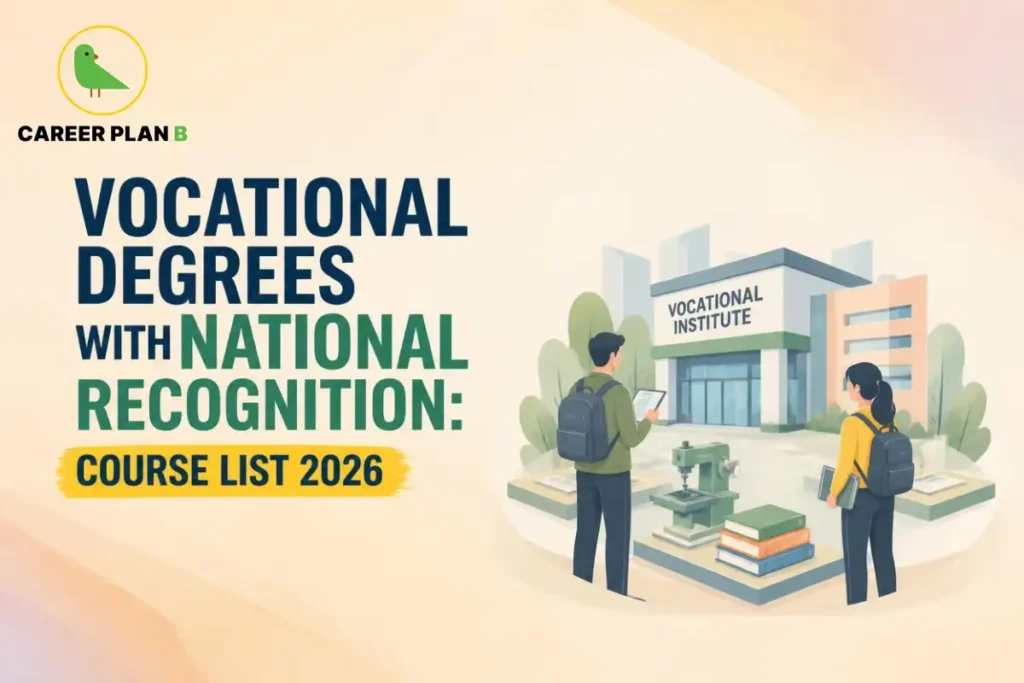
Introduction
Vocational education used to carry an unfair stigma in India, with many people viewing it as a fallback rather than a genuine degree path. That has changed considerably. Today, a formal, government-backed framework gives nationally recognized vocational degrees real, verifiable standing alongside traditional degrees.
This guide covers exactly which vocational qualifications carry genuine national recognition, and through which official body, so your course list rests on verified regulatory facts rather than a training provider’s own marketing claims.
The Official Framework Behind Genuine Recognition
Here’s the foundational fact worth knowing first: the University Grants Commission introduced the B.Voc, Bachelor of Vocational Education, scheme specifically to integrate skill-based vocational training with formal higher education, allowing students to earn a full degree centered on hands-on, industry-relevant skills, according to UGC’s own official guidelines (source: ugc.gov.in). Separately, the National Skills Qualification Framework, coordinated through the National Skill Development Corporation and various sector skill councils, certifies specific vocational qualifications at defined skill levels, with every genuinely recognized qualification listed on India’s official National Qualification Register (source: nqr.gov.in).
Understanding both frameworks matters because they serve slightly different purposes: B.Voc gives you a full, UGC-recognized degree, while NSQF-aligned qualifications certify specific occupational competency, sometimes as a standalone credential, sometimes feeding into a larger degree structure.
Nationally Recognized Vocational Courses: How to Verify Genuine Standing
Nationally recognized vocational courses share a few concrete, checkable markers. A genuine B.Voc programme is offered by a UGC-recognized institution, typically limited to a small number of approved vocational courses per institution rather than an unlimited catalog. A genuine NSQF-aligned qualification appears searchable on the official National Qualification Register, listing the specific qualification pack, sector skill council, and NSQF level. If a course can’t be verified against either of these official records, treat any claim of “national recognition” with genuine skepticism, regardless of how the marketing material phrases it.
B.Voc Courses in India: What the Structure Actually Looks Like
B.Voc courses in India typically run three years, structured with multiple exit points under UGC’s broader credit framework, a certificate after one year, a diploma after two, and the full B.Voc degree after three, allowing students to exit with a formally recognized credential at each stage if their circumstances change. The curriculum blends general education components with focused, industry-linked skill training, often developed in direct consultation with relevant industry bodies, covering fields as varied as retail management, IT and software, healthcare support, food processing, and fashion technology, depending on the specific institution’s approved offerings.
Have Any Doubts?
NSQF Vocational Degrees: Genuine Examples Worth Knowing
NSQF vocational degrees and qualification packs span a genuinely wide range of sectors, each developed by its relevant sector skill council and registered on the National Qualification Register. Confirmed, verifiable examples include the Social Media Executive qualification developed by the Media & Entertainment Skills Council, the Social Media Influencer qualification under the same council, and the Fundamentals of Tea Tasting qualification developed through the Agriculture Skill Council of India in collaboration with the Tea Board of India. Each of these represents a genuine, government-recognized skill credential in a specific, often under-recognized professional field, verifiable directly through official records rather than a training provider’s own claims.
Read more:- Top Vocational & Skill-Based Degree Options: CUET 2026
Skill-Based Degree Programs: Choosing the Right Structure for You
Skill-based degree programs suit students differently depending on their goals. If you want a full degree with genuine national standing and multiple exit flexibility, B.Voc through a UGC-recognized institution is the stronger structural choice. If you want a focused, specific occupational credential, particularly in a niche or emerging field, an NSQF-aligned qualification pack through a recognized sector skill council training partner may serve you better, especially if you’re looking to enter the workforce quickly with a verifiable, specific skill certification rather than a broader degree.
Vocational Courses After 12th: Getting Started the Right Way
Vocational courses after 12th generally require just a Class 12 pass, often from any stream, for both B.Voc admission and most NSQF-aligned qualification programmes, making this a genuinely accessible path regardless of your academic stream. Before enrolling anywhere, verify your specific target course directly. Check UGC’s records for B.Voc institutional recognition or search the National Qualification Register for the exact NSQF qualification pack. Don’t rely on a training provider’s claim that its course is “government recognized” unless you can verify it through a specific, checkable reference.
How Career Plan B Helps
Choosing a genuinely nationally recognized vocational path, and verifying a specific course’s real standing before enrolling, takes more than trusting a provider’s own claims.That’s where Career Plan B comes in.
- Personalized Career Counselling: Helps you evaluate whether a B.Voc degree or a specific NSQF-aligned qualification genuinely fits your goals.
- Psychometric & Career Assessment Tests: Identifies which vocational field genuinely matches your practical skills and interests.
- Career Roadmapping: Builds a realistic plan connecting your chosen vocational qualification to genuine career and further study options.
- Admission & Academic Profile Guidance: Supports you in verifying a specific course’s genuine UGC or NSQF recognition before you commit.
Get In Touch With Us
Frequently Asked Questions
1. What’s the real difference between a B.Voc degree and an NSQF qualification pack?
B.Voc is a full, UGC-recognized three-year degree with multiple exit points, while an NSQF qualification pack certifies a specific occupational skill set, sometimes standalone, sometimes feeding into a larger structure.
2. How can I check if a specific vocational course is genuinely nationally recognized?
Verify B.Voc courses against UGC’s institutional recognition records, and check NSQF-aligned qualifications directly on the National Qualification Register.
3. Do B.Voc courses in India require a specific Class 12 stream?
Generally no. Most B.Voc programmes accept students from any Class 12 stream, focusing eligibility on completion rather than a specific subject combination.
4. Are NSQF vocational degrees respected by employers the same as a traditional degree?
Within their specific occupational field, yes, since they’re developed directly with relevant sector skill councils and industry input, though they certify specific skills rather than broad academic training.
5. What should I do if a training provider claims government recognition I can’t verify?
Treat the claim with genuine skepticism and ask for the specific UGC recognition reference or NSQF qualification pack code, verifiable independently through official records.
Conclusion
Vocational degrees with national recognition genuinely exist through two clear official frameworks, UGC’s B.Voc scheme and NSQF-aligned qualification packs registered on the National Qualification Register, giving these paths real, verifiable standing rather than existing purely on a training provider’s word. Checking any specific course against these official records protects you from investing time and money in an unrecognized programme.
Verify your specific target course’s genuine recognition status directly before enrolling anywhere. If you’d like help choosing the right vocational path and confirming its real national standing, Career Plan B’s counsellors are ready to guide you through it.