Team6 · August 12, 2026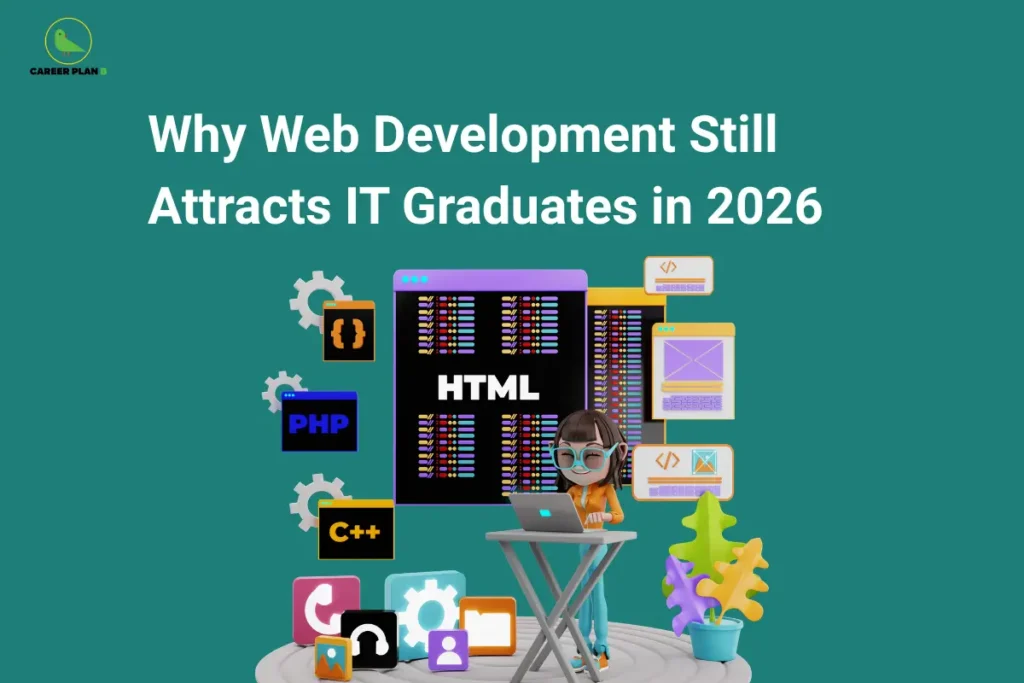
Introduction
Web development has been a cornerstone of the tech world for decades, yet the question remains: Why web development still attracts IT graduates in 2026 when new technologies like AI and cloud computing dominate headlines. The answer lies in the persistent demand for skilled web professionals who can build, maintain, and optimize the digital experiences that power businesses online. According to the U.S. Bureau of Labor Statistics, employment for web developers and digital designers is projected to grow about 7% from 2024 to 2034, much faster than the average for all occupations, with around 14,500 openings expected annually due to retirements and workforce shifts. (Bureau of Labor Statistics)
This blog will unpack why IT graduates still choose web development, the core skills that make this path appealing, the role of certifications, salary expectations, and long‑term career prospects. Whether you’re new to tech or weighing career paths, understanding these elements will help you decide if web development aligns with your goals.
Why Web Development Remains in High Demand
At its heart, web development is about creating the digital interfaces people interact with every day from company websites and e‑commerce platforms to web applications and user dashboards. Demand for these skills continues because nearly every organization, whether a startup or a multinational corporation, needs a strong online presence. The Bureau of Labor Statistics reports that web developers help build and maintain websites, handle performance and capacity challenges, and ensure sites are user‑friendly and responsive across devices. (Bureau of Labor Statistics)
What’s driving this demand? The global shift toward online commerce, remote services, and mobile‑first digital experiences means businesses need developers who can build robust, scalable, and accessible web applications. Unlike many older tech roles that have plateaued, web development continually evolves with new frameworks like React and Node.js and integrations with APIs and cloud platforms. IT graduates who enjoy hands-on coding and real‑world problem solving find this field both stable and dynamic.
Web Development Jobs Fit Well with IT Foundations
For many IT graduates, web development careers for IT graduates feel like a natural extension of their background. IT programs often cover networking basics, scripting languages, databases, and general computing principles all of which help when transitioning into web development. In practice, web developers use languages and tools such as HTML, CSS, JavaScript, and SQL to create and manage websites or web applications. These tools build on foundational IT knowledge, so students who grasp system logic and problem‑solving find it easier to pick up web dev essentials.
Web developers can specialize in front‑end development, which focuses on what users see and interact with, or back‑end development, which powers site logic and data flow. Full‑stack developers combine both, offering versatility that many employers highly value. Working in web development also offers creative satisfaction; building a functional site that users enjoy can be deeply rewarding blending technical skill with user‑centric thinking.
Have Any Doubts?
Essential IT Skills for Web Development Success
To succeed in web development, IT graduates need a mix of technical and soft skills that extend their foundational knowledge:
Web development starts with core programming languages like HTML for structure, CSS for style, and JavaScript for interactivity. Frameworks such as React (front‑end) or Node.js (back‑end) streamline complex development tasks. Understanding databases (SQL or NoSQL) ensures web applications can store, retrieve, and manage data efficiently. Skills in version control (e.g., Git) help developers manage code and collaborate smoothly with teams.
Beyond technical abilities, effective communication, collaborative problem solving, and the ability to learn continuously are crucial. Web development is not static; technologies, frameworks, and best practices shift rapidly. Graduates who enjoy learning new tools and applying them creatively tend to thrive in this field.
Certifications That Boost Web Development Careers
While formal degrees provide a solid base, web development certifications help IT graduates stand out in competitive job markets. Certifications can validate skills to employers and demonstrate commitment to ongoing professional growth. Examples include:
- Front‑End Certifications: Such as JavaScript, React, or UX/UI related certificates that show mastery of interactive site design.
- Back‑End Certifications: Cover server‑side languages like Node.js, Python, or databases.
- Full‑Stack Developer Certifications: Programs that blend front‑end and back‑end skills.
- Cloud & Deployment Certifications: Certifications in AWS, GCP, or Azure help developers understand how web applications run at scale.
Certifications especially those that bridge development and cloud environments signal to employers that candidates are ready for real‑world challenges. They complement portfolios and project experience, giving IT graduates an edge when applying for roles.
Salary Expectations for Web Developers
Salary remains a compelling reason why web development still attracts IT graduates. According to the U.S. Bureau of Labor Statistics, the median annual wage for web developers and digital designers was around $90,930 in May 2024, substantially above the median for all occupations. (Bureau of Labor Statistics)
In practical terms, entry‑level web developers often start with competitive salaries that grow quickly with experience and specialization. Full‑stack developers or those with cloud experience tend to earn more, particularly in tech hubs or global markets. Freelancing or remote work opportunities further expand earning potential, with skilled developers able to command strong rates for project‑based or contract work.
Career Growth and Long‑Term Opportunities
Web development isn’t just a starting career; it’s a path with clear growth opportunities. Many professionals move from junior developer roles to senior developer, full‑stack lead, web architect, or even technical manager positions as they gain experience and strategic insight into systems architecture. Others pivot into related areas like mobile app development, cloud engineering, or DevOps, using their web foundation as a springboard.
Specializations in areas like progressive web apps, e‑commerce platforms, and responsive design further deepen career prospects. For example, building applications optimized for mobile and desktop experiences gives developers a niche that many businesses urgently need.
How Career Plan B Helps
Deciding why web development still attracts IT graduates and how to succeed in this field can be overwhelming without guidance. Career Plan B supports IT graduates by offering personalized career counselling tailored to strengths and interests, Psycheintel and career assessment tests to uncover aptitudes, certification guidance aligned with market demand, and detailed career roadmapping to help individuals plan a strategic path into high‑demand web development roles. This kind of structured support transforms uncertainty into actionable steps toward career success in web development.
For Latest Information
Frequently Asked Questions (FAQs)
Q1. Is web development still a good career choice for IT graduates?
Yes web development roles are projected to grow faster than the average for all occupations, with solid annual openings and competitive salaries.
Q2. What skills should IT graduates focus on for web development?
Learning HTML, CSS, JavaScript, frameworks like React or Node.js, and tools like Git helps graduates build strong web development portfolios.
Q3. Do I need a degree to become a web developer?
Not always. While a degree helps, employers increasingly value portfolios, certifications, and hands‑on project experience.
Q4. Can web developers work remotely?
Yes, many web developer positions offer remote or hybrid work, making it appealing for flexible career lifestyles.
Q5. What is the salary range for web developers in 2026?
Median salaries for web developers remain high, generally above the median for all occupations, reflecting strong market demand and value for skilled professionals.
Conclusion
So, why do web development still attract IT graduates? Because it combines practical earning potential, consistent demand, creative problem solving, and clear paths for growth. IT graduates can leverage their foundational skills in systems and logic to build engaging, functional web applications that businesses need. By investing in key skills, earning relevant certifications, and planning their path strategically with support from tools like Career Plan B graduates can launch and grow rewarding careers that remain relevant in a rapidly evolving digital landscape. Whether building client websites, dynamic web apps, or scalable e‑commerce platforms, web development offers a future‑proof journey for IT graduates in 2026 and beyond.