Team6 · July 17, 2026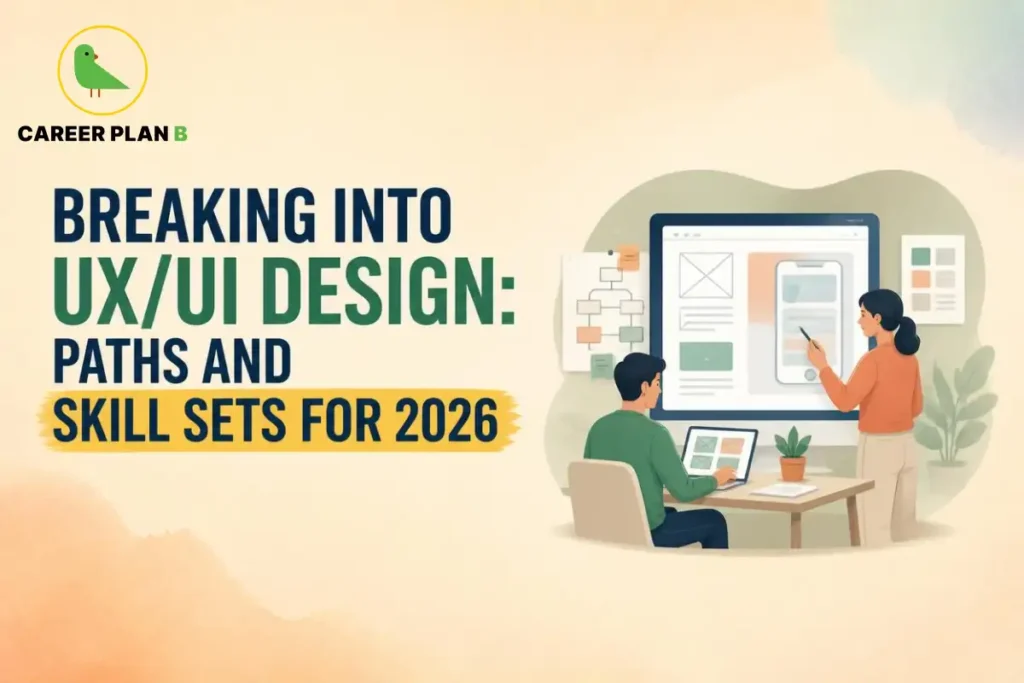
Introduction
Have you ever used an app or website that simply felt intuitive? Every button was easy to find, the navigation was effortless, and the overall experience kept you engaged. That seamless interaction is the result of thoughtful work by UX/UI designers, who combine creativity, psychology, and technology to build digital products people enjoy using.As India’s digital economy continues to expand, UX/UI design has become one of the country’s fastest-growing career fields. Companies across fintech, e-commerce, healthcare, education, gaming, and SaaS are actively hiring designers who can create user-centred experiences. The rise of AI-powered products and mobile-first applications has further increased the demand for skilled professionals.
This guide explores how to start a UX/UI design career in India in 2026. It covers recognised education pathways, trusted certification platforms, essential technical and design skills, portfolio-building strategies, and the qualities employers seek when hiring entry-level UX/UI designers.
Why UX/UI Design Is a Strong Career Choice Right Now
UX/UI design combines problem-solving with visual and human-centred thinking. As more services move online, companies need designers who make digital products easy and pleasant to use.
India’s design education ecosystem has grown to support this shift. The Skill India Digital Hub now offers a structured UI/UX Design Bootcamp under its official skilling platform.
This kind of government-backed skilling option gives students a credible, structured way to enter the field. It works alongside traditional design degrees.
Formal Education Paths Into UX/UI Design
Several recognised government institutes offer structured design degrees relevant to UX/UI. The IDC School of Design at IIT Bombay is the only dedicated design school within the IIT system.
IDC offers an M.Des specialisation in Interaction Design, which covers UX/UI principles in depth. Admission runs through the Common Entrance Exam for Design (CEED), a nationally recognised design entrance test.
The National Institute of Design, a statutory institute under the Ministry of Commerce and Industry, also offers relevant programmes. These include communication design and interaction design specialisations useful for UX/UI careers.
Skilling Platforms: A Faster Route Into the Field
Not everyone wants a full design degree, and that is completely fine. Several government-backed skilling platforms offer a faster, more accessible entry point.
The Skill India Digital Hub’s UI/UX Design Bootcamp runs fully online and includes hands-on projects. These cover research, wireframing, prototyping, and usability testing.
The FutureSkills Prime initiative offers UX Design as one of its recognised pathways. It is backed by the Ministry of Electronics and Information Technology. This gives students a second credible, government-linked skilling route.
Core Skill Sets Employers Expect in 2026
Breaking into UX/UI design requires a specific mix of research, design, and communication skills. Employers consistently expect the following areas of competence.
- User research: conducting interviews, surveys, and competitive analysis to understand real user needs
- Wireframing and prototyping: turning ideas into structured layouts and interactive models
- Usability testing: running tests with real users to identify friction and improve designs
- Design tools: working confidently with industry-standard design and collaboration software
- Portfolio building: documenting your thinking process, not just final visuals
A strong portfolio, backed by real case studies, often matters as much as formal qualifications.
Common Roles You Can Target After Building These Skills
Once you build these core skills, several job titles become realistic entry points. Understanding these roles helps you focus your learning and portfolio work.
- UX Designer: focuses on research, user flows, and overall product structure
- UI Designer: focuses on visual design, layouts, and interface details
- Interaction Designer: focuses on how users move through and interact with a product
- Product Designer: combines UX and UI skills to own a product’s full design experience
- UX Researcher: focuses specifically on user interviews, testing, and behavioural insights
Many professionals start in one of these roles and later specialise further as they gain experience.
How to Start: A Step-by-Step Roadmap
Building a UX/UI design career works best with a clear, structured approach.
- Pick your entry route. Decide between a formal design degree or a faster skilling bootcamp based on your goals.
- Build core skills. Focus on research, wireframing, prototyping, and usability testing early on.
- Use official platforms. Explore the Skill India Digital Hub and FutureSkills Prime for structured, credible training.
- Create real projects. Build two to three strong case studies instead of scattered practice files.
- Keep learning. Design trends and tools evolve quickly, so treat learning as ongoing, not one-time.
This roadmap works for students choosing between degrees and professionals switching careers.
Benefits, Challenges, and What the Data Says
UX/UI design offers strong long-term relevance as more industries go digital. Government-recognised education and skilling routes are also expanding steadily.
However, official sources do not publish a single consolidated salary dataset for UX/UI roles in India. Instead of estimating figures, this guide encourages you to verify current compensation trends directly. Check placement cells at recognised institutes and official skilling platform pages.
Challenges include building a strong portfolio early and keeping up with evolving tools. Standing out in a growing, popular field is another hurdle. Structured guidance can help you move through these challenges faster.
The Future of UX/UI Design Careers Toward 2030
Design education in India continues to formalise, with more institutes offering dedicated interaction design tracks. Government-backed skilling platforms are also expanding their design-related course catalogues.
This points toward UX/UI design becoming an increasingly structured, recognised career path rather than an informal, self-taught one. Early movers who build strong portfolios now stand to benefit the most.
How Career Plan B Helps
Understanding which UX/UI education path fits you can feel overwhelming without guidance. Career Plan B simplifies this through:
- Personalised Career Counselling: matching your academic stream and interests to the right UX/UI entry route
- Psycheintel Career Assessment Tests: determining whether your strengths align better with research-led, visual, or technical UX/UI roles
- Admission and Academic Profile Guidance: helping you identify recognised design institutes and government-backed skilling platforms
- Structured Career Roadmapping: a clear step-by-step plan toward your target UX/UI role, including portfolio milestones
For Latest Information
Frequently Asked Questions
Q1. Do I need a design degree to become a UX/UI designer?
No official rule mandates a design degree for UX/UI roles. Many professionals enter through structured skilling bootcamps instead.
Q2. What is the fastest way to break into UX/UI design?
Government-backed skilling platforms like Skill India Digital Hub and FutureSkills Prime offer faster, structured routes than a full degree.
Q3. Which government institutes offer UX/UI-relevant design degrees?
IDC School of Design at IIT Bombay and the National Institute of Design both offer relevant programmes. These cover interaction and communication design.
Q4. Is a portfolio more important than certification?
Yes, in most cases. Employers value demonstrated thinking and real projects alongside any certification you hold.
Q5. Can students from non-design backgrounds enter UX/UI design?
Yes. Many successful designers come from arts, commerce, or technical backgrounds and build skills through structured courses.
Q6. How do I choose between a degree and a bootcamp?
Consider your timeline, budget, and whether you prefer deep formal training or a faster, skills-first entry route.
Conclusion
Breaking into a UX/UI design career in 2026 no longer requires following just one fixed path. Formal education routes like the IDC School of Design at IIT Bombay and the National Institute of Design (NID) provide comprehensive, industry-recognised training in interaction design, user experience, and visual communication. At the same time, government-backed skilling platforms such as Skill India Digital Hub and FutureSkills Prime offer flexible, affordable, and practical learning opportunities for aspiring designers. Whether you choose a degree programme or a structured bootcamp, success depends on building strong research, design, and problem-solving skills while creating a portfolio that showcases real-world projects and case studies.
Ready to find the UX/UI path that fits your interests and career goals? Connect with a Career Plan B counsellor for personalised guidance on choosing the right learning pathway, building an impressive portfolio, and creating a step-by-step roadmap to launch a successful UX/UI design career.