Careerplanb · July 30, 2026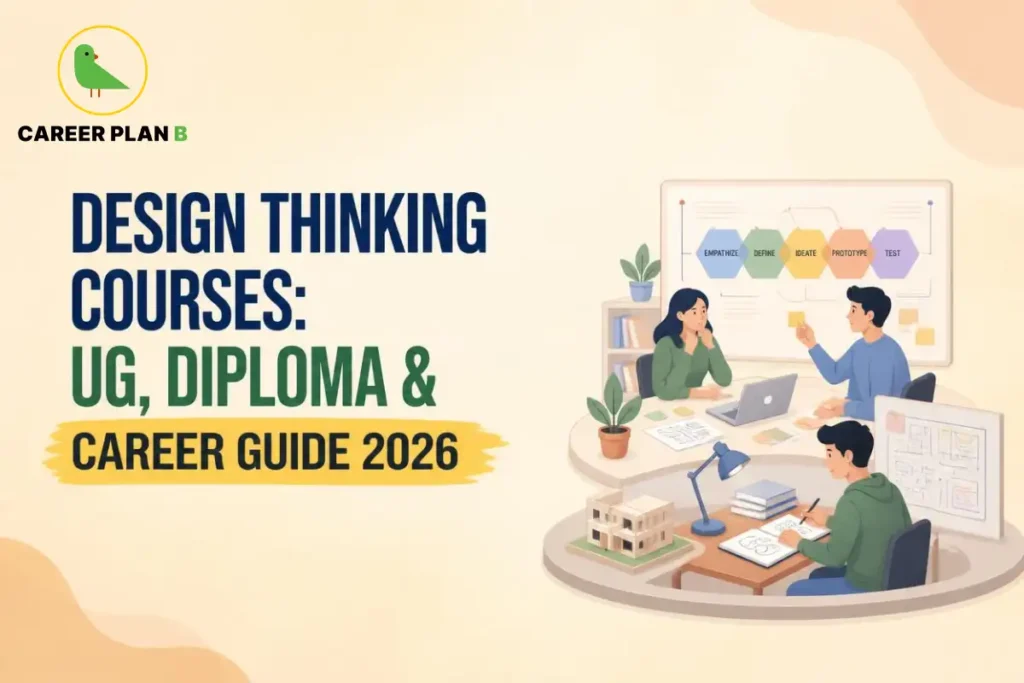
Introduction
Not every designer sketches logos or picks paint colours. Some redesign how a hospital admits patients, or how a banking app actually makes sense to use. That invisible, structural kind of problem-solving is exactly what a genuine Design Thinking Course teaches, regardless of your background.
So how is this different from traditional design education, and where does it actually lead? This guide breaks down UG, diploma, and certification options inside a real Design Thinking Course, plus honest career scope. Read on, because your knack for “fixing broken systems” finally has a name.
What Exactly Is Design Thinking, and Why Does It Matter?
Design thinking is a structured, human-centred approach to solving problems. Rather than focusing purely on visual outcomes, it emphasises deeply understanding user needs, testing ideas quickly, and refining solutions through repeated iteration.
Consequently, this methodology now applies across genuinely diverse fields, including technology, healthcare, business strategy, and public policy. Therefore, unlike graphic or fashion design, design thinking is less about a specific creative output and more about a transferable problem-solving mindset.
How Is Design Thinking Different From Other Design Courses?
Traditional design courses, like graphic design or interior design, typically train students in specific visual or spatial skills using dedicated software tools. In contrast, design thinking focuses on process and methodology, teaching students how to approach any problem systematically, regardless of the final output’s form.
Confused about your next steps? Get a personalized roadmap tailored to your career goals.
Design Thinking Courses After 12th: What Are Your Options?
Unlike NIFT or NID admissions, design thinking does not follow one rigid, standardised entrance path. Instead, several genuinely accessible routes exist for students at different stages.
| Course Type | Duration | Best Suited For |
|---|---|---|
| Certificate in Design Thinking | Weeks to a few months | Quick, focused introduction to core concepts |
| UG Programme with Design Thinking Modules | 3 to 4 years | Students wanting design thinking within a broader degree |
| Diploma in Design Thinking & Innovation | 6 months to 1 year | Focused, practical skill-building alongside another degree |
| Corporate or Executive Certification | Weeks, often online | Working professionals applying it within existing roles |
Notably, admission for most certificate and diploma-level design thinking courses remains genuinely simple. Typically, candidates need only Class 12 completion from a recognised board, without requiring the specialised aptitude tests used for programmes like NID’s DAT or NIFT’s entrance exam.
Do I Need a Design Background to Take These Courses?
Not at all. Design thinking genuinely welcomes students and professionals from any background, including business, engineering, healthcare, and the humanities. Therefore, this openness is exactly what makes it distinct from more technical, tool-heavy design disciplines.
Suggested blog:- Career Scope After BBA Design Thinking: 10 Innovation Paths to Success
Design Thinking Certification: Which Options Are Actually Worth Pursuing?
Certification quality and depth vary considerably across providers. Understanding these differences genuinely helps you choose wisely based on your goals.
- University-affiliated certificate programmes – offered by design institutes, covering structured, in-depth methodology training
- Online platform certifications – flexible, self-paced options covering design thinking fundamentals and case studies
- Corporate innovation workshops – shorter, intensive programmes aimed at applying design thinking within existing business roles
- Bootcamp-style intensives – compressed, hands-on programmes focused on rapid prototyping and real project work
Consequently, students should match their certification choice to their actual goal. A quick online module suits casual exploration, while a comprehensive, project-based programme genuinely builds portfolio-ready skill for career transitions.
What Does a Design Thinking Course Actually Teach?
Strong programmes build several genuinely distinct, practical skills rather than abstract theory alone. Here is what most quality courses cover.
- Empathy and User Research – understanding real user needs through interviews and observation
- Problem Framing – defining the actual challenge clearly before jumping to solutions
- Ideation Techniques – generating and evaluating diverse creative solutions systematically
- Rapid Prototyping – building quick, testable versions of ideas rather than perfecting one concept upfront
- Iterative Testing – refining solutions based on genuine user feedback, repeatedly
Notably, this framework genuinely transfers across industries. Therefore, a student trained in design thinking can apply identical core principles whether working on a healthcare app, a retail experience, or a public policy initiative.
What Career Scope Does This Field Actually Offer?
This is usually the central question for students and parents alike. Fortunately, design thinking skills open doors across genuinely diverse, well-paying roles.
- UX Researcher or Designer – applying human-centred design specifically to digital products
- Innovation Consultant – helping organisations solve complex business problems creatively
- Product Manager – using design thinking to guide product development and user experience decisions
- Service Designer – redesigning processes and experiences across healthcare, banking, or public services
- Design Strategy Lead – embedding design thinking methodology within larger organisational teams
How Much Can You Actually Earn With Design Thinking Skills?
After completing a focused certification, professionals typically start around three to four lakh rupees annually. However, this figure grows considerably when design thinking is combined with specialised skills like UX design or product management, since these hybrid profiles command notably stronger compensation as experience builds.
How Should You Actually Choose the Right Course?
Not every design thinking course delivers equal depth. Therefore, evaluate your options carefully before enrolling.
- Prioritise courses with real project work, since applying the methodology to an actual problem matters more than theory alone
- Check instructor and institutional credibility, favouring programmes affiliated with recognised design or business institutes
- Consider pairing it with a specialisation, such as UX design or product management, for stronger career outcomes
- Research alumni outcomes specifically, rather than relying on general course descriptions alone
A Word of Caution Before You Enrol
Always verify a course provider’s genuine credibility and instructor background before paying fees. Additionally, remember that design thinking alone often works best paired with a specific domain skill, since employers typically hire for both the methodology and a tangible area of application together.
How Career Plan B Helps
Deciding whether a Design Thinking Course genuinely fits your interests takes more than curiosity about innovation buzzwords alone.This is where Career Plan B can help by offering:
- Personalised Career Counselling: Provides expert guidance based on individual interests, skills, and career goals, helping you judge whether design thinking genuinely fits your strengths.
- Psychometric & Career Assessment Tests: Identifies strengths, personality traits, and suitable career opportunities, useful for confirming genuine aptitude for structured, creative problem-solving.
- Career Roadmapping: Creates a clear step-by-step plan to achieve academic and professional goals, including which specialisation to pair with design thinking skills.
- Admission & Academic Profile Guidance: Helps in selecting the right courses and colleges and improving academic profiles, so your certification choice stays genuinely outcome-driven.
Get In Touch With Us
Frequently Asked Questions
1. What is the eligibility for Design Thinking Courses After 12th?
Most certificate and diploma-level courses require only Class 12 completion from a recognised board, without needing specialised design entrance exams.
2. Is Design Thinking different from graphic or product design?
Yes, it focuses on a structured problem-solving methodology applicable across industries, rather than specific visual or spatial design skills alone.
3. Do I need a creative background to pursue design thinking?
No, this field genuinely welcomes students from business, engineering, healthcare, and humanities backgrounds, not just traditional creative fields.
4. What is the average salary after a Design Thinking Certification?
Entry-level roles typically start around three to four lakh rupees annually, growing considerably when combined with specialised skills like UX design.
5. Can working professionals pursue design thinking courses too?
Yes, several corporate and executive certification programmes exist specifically for professionals applying design thinking within their current roles.
Conclusion
Design thinking offers a genuinely valuable, transferable skill set for students who enjoy solving complex problems creatively, without needing traditional artistic talent. As organisations across healthcare, technology, and business increasingly seek human-centred problem-solvers, this field provides real, growing career opportunities for those willing to build genuine methodology alongside a specific domain skill.
If you are still weighing whether this cross-disciplinary path suits you, thoughtful guidance can bring real clarity before you commit time and effort. The right combination of structured thinking and practical application can turn genuine curiosity into a sustainable career. Talk to a Career Plan B counsellor today to see if design thinking is the right path for you.