Careerplanb · July 30, 2026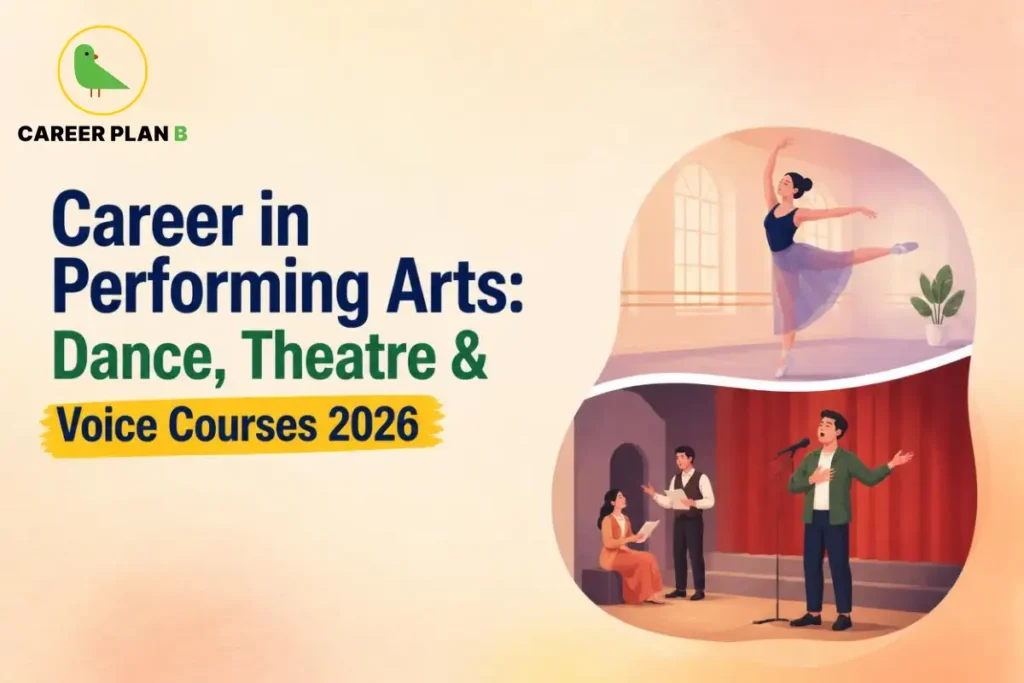
Introduction
India has celebrated dance, music, and theatre since ancient mythology first described court performers as treasured artists. That same creative energy now genuinely translates into structured careers. Today, Performing Arts Courses train students seriously in dance, theatre, and voice, turning raw talent into professional, employable skill.
So, does formal training actually matter in a field built on natural talent and passion? This guide breaks down real course options, eligibility, and honest career scope. By the end, Performing Arts Courses will feel like a genuinely practical path, not just a passionate hobby.
Why Are Performing Arts Genuinely Becoming a Structured Career Path?
India’s entertainment industry keeps expanding through film, television, OTT platforms, and live events. Consequently, demand for trained dancers, actors, and voice artists has grown considerably beyond traditional stage performance alone.
Furthermore, performing arts education genuinely builds skills beyond the stage itself. Structured training improves physical health, emotional intelligence, and confidence, benefits that extend well into other professional and personal contexts as well.
Do You Need Prior Training Before Enrolling?
Not always. While prior training in dance, music, or theatre is genuinely preferred at many institutions, it remains optional rather than mandatory. Therefore, admission often depends more on demonstrated aptitude during auditions than on years of formal prior background.
Confused about your next steps? Get a personalized roadmap tailored to your career goals.
Dance Courses After 12th: What Are Your Options?
Dance education in India spans classical, folk, and contemporary forms, offered through several distinct academic structures. Understanding these options genuinely helps you choose the right entry point.
| Course Type | Duration | Focus Area |
|---|---|---|
| Bachelor of Performing Arts (Dance) | 3 to 4 years | Performance-focused, intensive practical training |
| BA in Performing Arts (Dance) | 3 years | Balanced theory and practice, history and aesthetics |
| BFA in Dance | 3 to 4 years | Studio-based, intensive creative training |
| Certificate or Diploma in Dance | Few months to 2 years | Focused technique-building alongside another degree |
Notably, dance curriculum typically covers history, choreography, movement technique, and increasingly, dance on camera, reflecting how digital platforms have genuinely reshaped performance opportunities. Therefore, students today train for both live stage work and screen-based choreography.
Is Classical Training Still Relevant Alongside Contemporary Dance?
Yes, genuinely so. Classical forms remain deeply respected and often form the technical foundation even for students pursuing contemporary or commercial dance careers. Therefore, most strong programmes teach classical technique first, before layering contemporary and camera-based styles on top.
Theatre and Drama Courses: What Do They Actually Teach?
Theatre training builds genuinely comprehensive performance skills, extending well beyond acting alone. Strong programmes cover both onstage craft and behind-the-scenes production knowledge.
- Acting Technique – character development, script analysis, and stage presence
- Voice and Speech – vocal projection, diction, and dialogue delivery
- Stagecraft and Direction – understanding production design, lighting, and directorial vision
- History of Indian and Western Theatre – contextualising performance within broader cultural traditions
- Script Writing – developing original material alongside performance skill
Notably, many theatre programmes now include film orientation and camera acting alongside traditional stage training. Consequently, graduates genuinely prepare for both live theatre and screen-based acting careers, rather than choosing one path exclusively at the start.
How Important Is Voice Training Specifically?
Genuinely essential. Voice and speech training teaches projection, clarity, and emotional range, skills that separate amateur performances from professional ones. Therefore, even students focused primarily on dance or screen acting benefit considerably from dedicated voice training.
What Does a BPA Course Actually Cover Overall?
The Bachelor of Performing Arts remains India’s most established performing arts degree, typically spanning three to four years. It offers specialisations across dance, music, and theatre, letting students focus deeply on their chosen discipline.
How Is BPA Different From BFA in Performing Arts?
BPA is genuinely performance-focused, emphasising stage-ready technique and intensive practice. In contrast, BFA typically emphasises broader creative and studio-based training, while BA programmes balance theory, history, and criticism alongside practical performance work. Therefore, choosing between them depends on whether your priority is pure performance skill or a more theory-integrated education.
What Career Opportunities Do These Courses Actually Lead To?
This field offers genuinely diverse roles, extending well beyond simply performing on stage. Depending on your specific specialisation, several distinct directions exist.
- Professional Dancer or Choreographer – performing and creating choreography for stage, film, or television
- Theatre or Film Actor – performing across theatre, television, web series, and film
- Voice-Over Artist – lending voice to animation, dubbing, advertisements, and digital content
- Dance or Drama Teacher – training the next generation of performers at schools or academies
- Arts Administrator or Event Manager – managing productions, festivals, and cultural events
Has OTT Growth Genuinely Expanded Opportunities Here?
Yes, considerably. The growth of OTT platforms and digital media has genuinely expanded career opportunities well beyond traditional film and television alone. Consequently, graduates now find opportunities across web series, digital content creation, and voice-over work for streaming platforms as well.
What Salary Can You Actually Expect in Performing Arts?
Compensation varies considerably based on talent, exposure, and industry opportunities, more so than in many other fields. However, current data offers a realistic picture for planning your career path.
How Does Income Actually Vary Across Roles?
Average starting salaries for performing arts graduates typically range between two and ten lakh rupees annually, depending heavily on specific role, city, and production scale. Meanwhile, content creator earnings vary further, influenced by audience engagement, platform monetisation, and brand partnerships, rather than a fixed salary structure alone.
How Should You Actually Choose the Right Institute?
Not every performing arts programme delivers equal training quality or industry connection. Therefore, evaluate your options carefully before committing years of study.
- Prioritise institutes with genuine stage or screen exposure, since actual performance experience matters more than classroom theory alone
- Check faculty background, favouring instructors with real professional performance or industry experience
- Prepare seriously for auditions, since admission often depends more on demonstrated skill than academic marks alone
- Research alumni outcomes specifically, rather than relying on general institute reputation alone
A Word of Caution Before You Apply
Always verify an institute’s genuine accreditation and current curriculum details directly through its official website before applying. Additionally, remember that success in performing arts depends heavily on persistence and continuous practice, not purely on formal credentials alone.
How Career Plan B Helps
Deciding whether Performing Arts Courses genuinely fit your talent and temperament takes more than passion for the stage alone.This is where Career Plan B can help by offering:
- Personalised Career Counselling: Provides expert guidance based on individual interests, skills, and career goals, helping you judge whether dance, theatre, or voice genuinely fits your strengths.
- Psychometric & Career Assessment Tests: Identifies strengths, personality traits, and suitable career opportunities, useful for confirming genuine creative and performance aptitude.
- Career Roadmapping: Creates a clear step-by-step plan to achieve academic and professional goals, including which performing arts specialisation to pursue.
- Admission & Academic Profile Guidance: Helps in selecting the right courses and colleges and improving academic profiles, so your audition preparation stays genuinely focused.
Get In Touch With Us
Frequently Asked Questions
1. What is the eligibility for Performing Arts Courses after 12th?
Most institutes require Class 12 completion from any stream, with admission often based on auditions alongside academic marks rather than marks alone.
2. Do I need prior dance or acting experience to apply?
Not always mandatory, though prior training is genuinely preferred at many institutions and can strengthen your audition performance considerably.
3. What is the difference between BPA, BA, and BFA in performing arts?
BPA is performance-focused with intensive practical training, BA balances theory and practice, while BFA emphasises intensive studio-based creative work.
4. What career opportunities exist after performing arts courses?
Graduates can work as dancers, choreographers, actors, voice-over artists, teachers, or arts administrators across theatre, film, television, and digital platforms.
5. What is the average salary after a performing arts degree?
Starting salaries typically range between two and ten lakh rupees annually, varying considerably based on role, city, and individual talent and exposure.
Conclusion
Performing arts has genuinely evolved from an unstructured, talent-only path into a well-defined, trainable career, spanning dance, theatre, and voice work. With India’s entertainment industry expanding across film, OTT, and live events, this field offers real, growing opportunities for students willing to build genuine technical skill alongside their natural creative instinct.
If you are still weighing whether this expressive, demanding path suits you, thoughtful guidance can bring real clarity before you commit years of training. The right course, chosen carefully, can turn genuine artistic passion into a sustainable, professional career. Talk to a Career Plan B counsellor today to see if performing arts is the right path for you.