Team5 · July 31, 2026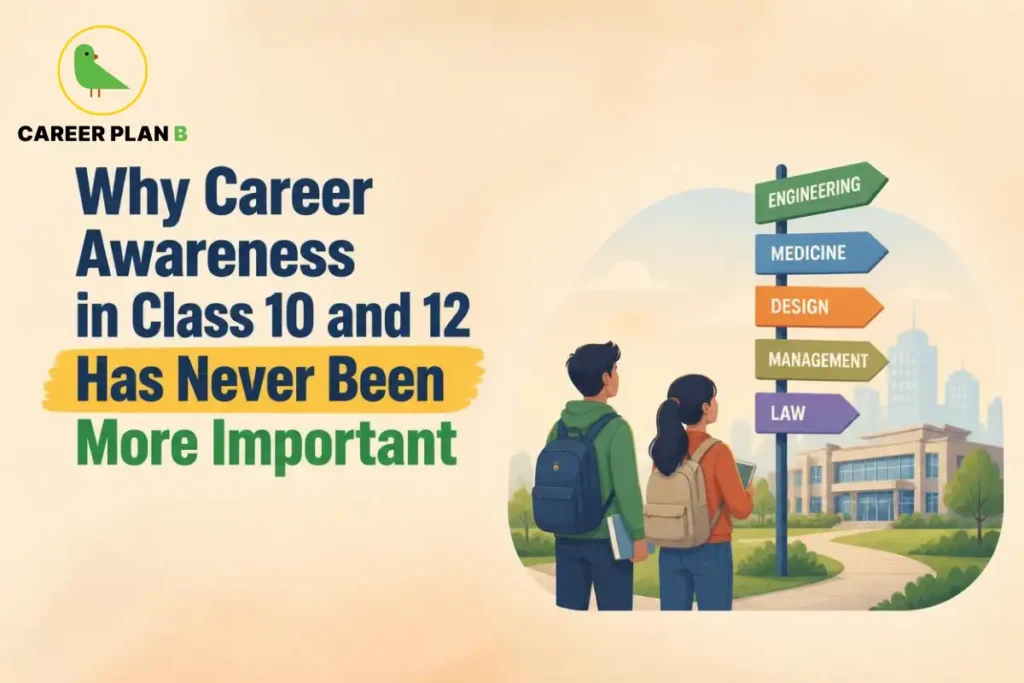
Introduction
Choosing a stream after Class 10 used to feel like a simple checkbox exercise. Career awareness in Class 10 and 12 now carries far more weight, as India’s system moves toward earlier decision-making. This guide covers why this shift is happening, and how students can build genuine awareness before choosing.
Why Career Awareness in Class 10 and 12 Matters More Today ?
The National Education Policy 2020 underscores counselling as a key component of the educational framework. It calls for a holistic approach to career guidance, built around each student’s interests and strengths following the Central Board of Secondary Education circular on career guidance standards.
This marks a shift from generic stream advice toward guidance rooted in individual aptitude, delivered earlier in schooling.
Government Career Guidance Initiatives in Schools
Under NEP 2020 and Samagra Shiksha, schools are meant to access trained career counselling support at the block level. Guidance sessions follow a regular cycle.
This structure aims to bring consistent, trained career guidance closer to students. It replaces guesswork and informal advice alone.
The Career Guidance Book: 500 Career Cards
The Department of School Education and Literacy, working with NCERT and UNICEF India, released a Career Guidance Book. It features 500 detailed career cards.
Each card covers a role’s responsibilities, required qualifications, entry pathways, and scholarship options, spanning STEM, non-STEM, and skill-based career tracks. This gives students structured, comparable information before they commit to a stream. The resource also covers 21 career domains, letting students explore beyond the handful of options they usually hear about.
How This Ties Into Stream and Subject Choice
NEP 2020 ‘s push against rigid stream separation means Class 10 and 12 choices no longer lock students in permanently. Students can now combine subjects across science, commerce, and humanities through flexible credit structures at the undergraduate level.
Early career awareness helps students use this flexibility deliberately. Rather than picking a stream by default, they can align subject choices with their real strengths and interests.
The Real Cost of Uninformed Career Choices
Choosing a stream without proper guidance can lead to real setbacks later. Students may realise only after board exams that a chosen stream does not match their actual aptitude or interest.
Correcting this mid-course is often harder and more time-consuming than getting informed guidance early. Structured career guidance at the Class 10 and 12 stage aims to reduce exactly this kind of late, costly correction.
How Students Can Build Career Awareness Early
- Use school-provided career guidance resources, including career cards and counsellor sessions, before finalising a stream.
- Research the entrance exams and structured paths each stream typically leads toward.
- Speak with professionals in fields of interest to understand real day-to-day work.
- Take a structured career aptitude assessment rather than relying on assumptions alone.
- Revisit your choice periodically, since NEP 2020’s flexible credit system allows some course correction later.
Have Any Doubts?
Benefits, Challenges, and What the Data Says
Structured career guidance gives students access to consistent, comparable information rather than fragmented advice from varied sources. Government-backed resources like the Career Guidance Book reduce this information gap directly.
However, no official dataset precisely quantifies how many students later regret their Class 10 or 12 stream choice. Figures claiming a specific mismatch percentage usually come from private surveys, not verified government data. Treat such numbers as indicative only.
Common challenges include uneven access to trained career counsellors across schools, particularly in rural areas. Expanding the Academic Resource Person network remains a work in progress.
How Career Plan B Helps
Making a stream or career decision in Class 10 or 12 can feel overwhelming without structured support. Career Plan B simplifies this through:
- Personalised Career Counselling: matching your interests and strengths to the right stream and long-term career direction
- Psycheintel Career Assessment Tests: identifying your genuine aptitude before you commit to a stream choice
- Admission and Academic Profile Guidance: helping you understand entrance exams and NEP 2020’s flexible subject combinations
- Structured Career Roadmapping: a clear step-by-step plan from stream choice to a well-informed long-term career
For Latest Information
Frequently Asked Questions
Q1.Why is career awareness important in Class 10 and 12 specifically?
These years mark key stream and subject decisions that shape entrance exam preparation and early career direction.
Q2.What government resources help with career guidance in schools?
The NCERT-UNICEF Career Guidance Book and Samagra Shiksha’s Academic Resource Person network both offer structured support.
Q3.Can I change my career direction after choosing a stream?
Yes. NEP 2020’s flexible credit system allows some subject combination and course correction at the undergraduate level.
Q4.Do all schools have access to career counselors?
Coverage is expanding through Samagra Shiksha, but access remains uneven, particularly in rural and under-resourced schools.
Q5.Is there official data on how many students regret their stream choice?
No official dataset precisely tracks this. Treat figures from private surveys on stream regret as indicative only.
Q6.How can I get structured career guidance if my school lacks it?
You can use NCERT’s Career Guidance Book independently, or seek support through private career counselling services.
Conclusion
Career awareness in Class 10 and 12 is no longer optional guidance on the side. It is a structured part of India’s education reforms, backed by dedicated counsellors and resources like the Career Guidance Book.
Building this awareness early gives students a real advantage. They can choose a stream based on genuine fit, not default assumptions.
Connect with Career Plan B today to build informed career awareness before your next big academic decision.