Careerplanb · August 17, 2026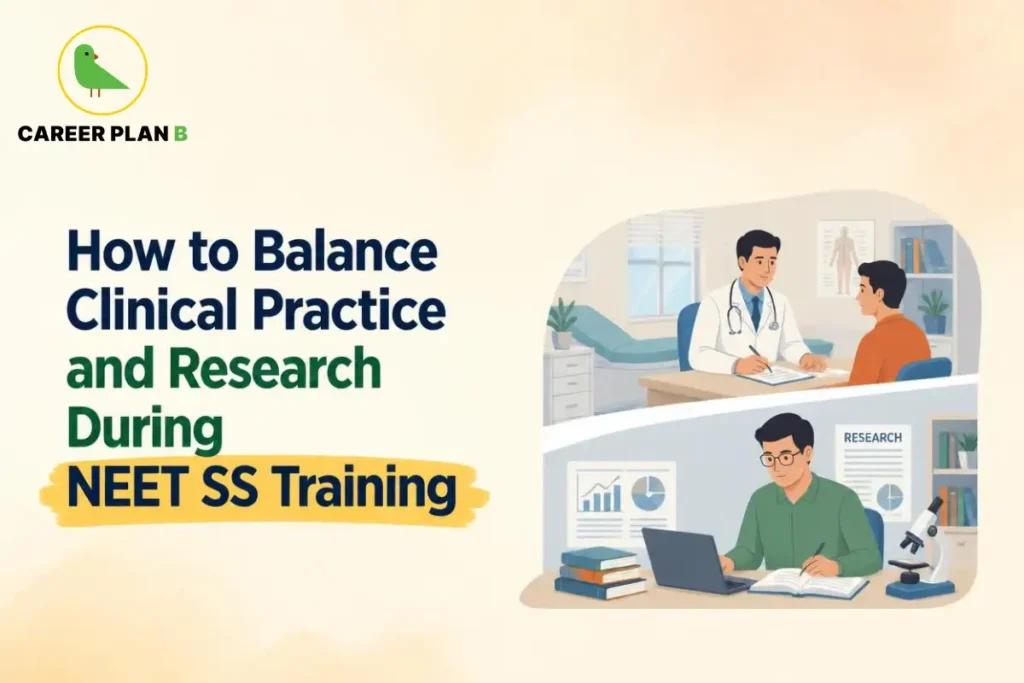
Introduction
Getting into DM or MCh is a huge win. But once training starts, a new challenge shows up fast: balancing clinical practice and research neet ss style, on top of long duty hours.
Your OPD, IPD, and surgical workload doesn’t slow down. Neither do your thesis deadlines. Under NMC’s rules, research isn’t optional during super specialty training, it’s mandatory. Getting good at balancing clinical practice and research neet ss demands early is what separates a stressful residency from a manageable one.
This guide breaks down the real challenge, and gives you practical ways to handle both sides without burning out.
Understanding the Dual Responsibility
DM and MCh residents carry two full-time jobs at once. One is patient care. The other is academic research. Neither one waits for the other.
Clinical Rotations, Emergency Duties, and Call Hours vs Thesis Deadlines
Clinical rotations during dm mch training eat up most of your week. Add emergency duties and night calls, and free time shrinks fast.
Meanwhile, your thesis has its own timeline. Data collection, analysis, and writing don’t pause just because your ward is full. This is the core of thesis and clinical duty balance dm mch residents struggle with every single year.
The NMC Mandate: Paper Publications and Conference Presentations
This isn’t just informal pressure from your department. Under the National Medical Commission’s Postgraduate Medical Education Regulations 2023 (PGMER-2023), Regulation 5.2(iii) states that all broad specialty and super specialty students must undertake thesis-related research and write a thesis. You can read the regulation directly on the NMC’s official website.
The dissertation also carries real weight in your final marks, it counts for 5% of your total clinical, practical, and viva voce marks. Some universities and departments now also expect a conference presentation or paper submission before you’re cleared for your final exam, so check your specific university’s current requirement early, not in your final year.
Smart Research Strategies for DM MCh Clinical Training and Research
Once you accept that research is mandatory, the real question becomes: how do you make it manageable? Good dm mch clinical training and research strategy comes down to smart choices early on.
Selecting High-Yield DM MCh Thesis Topics
Picking the right dm mch thesis topics early saves you months later. Retrospective studies, using existing patient records, are usually faster to complete than prospective studies, which need fresh data collected over time.
If your training window is tight, lean toward a retrospective design tied to a clinical question you already see often in your ward. It keeps your data collection realistic and your topic clinically relevant.
Getting Quick Ethics Committee Approvals
Delays at the Ethics Committee stage can eat months off your timeline. Submit your proposal early, in your first few months, not after you’ve already started collecting data.
Keep your protocol simple and well-documented. A clear, focused proposal moves through review faster than a broad, ambitious one.
Leveraging Institutional Research Cells and Biostatisticians
Most institutes have a research cell or in-house biostatistician, and most residents never use them until it’s almost too late. These teams can help you refine your study design, calculate sample size correctly, and run your statistical analysis properly the first time.
Book time with them early. It saves you from redoing analysis later under deadline pressure.
Have Any Doubts?
How to Do Research During DM MCh: Practical Time Management Tips
Figuring out how to do research during dm mch really comes down to consistent, small blocks of time rather than waiting for a big free stretch that never comes.
Allocate Dedicated Weekly Hours
Set aside a fixed few hours each week, even just 5 to 7, purely for literature review or data collection. Treat this block like a clinical commitment, not something to skip when the ward gets busy.
Consistency beats intensity here. A steady weekly rhythm moves your thesis forward more reliably than occasional long sessions.
Use Downtime During Calls and Post-Duty Hours
Quiet stretches during night calls, or the hour right after a duty ends, are often wasted time. Use them for smaller tasks, reading an abstract, drafting a paragraph, organising your references.
This is a realistic part of neet ss residency research work balance. You’re not finding extra hours in the day, you’re using the ones already there more deliberately.
NEET SS Thesis Guidelines and Research Publication Requirements
Every super specialty programme follows neet ss thesis guidelines set by NMC, but exact submission timelines and formatting rules can vary slightly by university. Always confirm your specific institute’s deadline calendar at the start of your training, not close to submission.
The broader dm mch research publication requirements now often extend beyond just the thesis. Many departments expect at least one conference presentation or manuscript submission before your final exam eligibility is confirmed, so plan your research timeline with that in mind from year one.
How to Publish Research Papers During DM MCh
If you’re wondering how to publish research papers during dm mch, start with a realistic target: a case report or small case series is often more achievable in your training window than a large original research paper.
Work with your mentor to identify a journal that fits your topic and timeline, and don’t underestimate how long peer review can take. Submitting early in your training, not in your final months, gives you room for revisions.
Super Specialty Training Schedule India: Where Research Actually Fits
The typical super specialty training schedule india follows is heavy on service commitments in the early months, with research expected to build steadily alongside it, not after it. Waiting until your final year to start research is one of the most common, avoidable mistakes residents make.
Mapping your thesis milestones against your rotation schedule at the very start of training makes work life balance during neet ss training genuinely achievable, rather than a last-minute scramble.
Read more:-Scholarship for Medical Students in India: Medical PG, NEET PG & Financial Aid Guide
Career Impact: Why This Balance Matters Long-Term
A strong publication record does more than satisfy an NMC requirement. It directly shapes your career options after training, especially if you’re aiming for academic or premier institute roles.
How Career Plan B Helps
Balancing DM/MCh training with mandatory research is genuinely demanding, and having a clear plan from the start makes a real difference. Here’s how personalised guidance can help.
- Personalized Career Counselling: Guidance on structuring your training years around both clinical growth and research milestones.
- Psychometric & Career Assessment Tests: Assessments to help you understand your working style under high academic and clinical pressure.
- Career Roadmapping: A plan connecting your thesis and publication record to your long-term academic or clinical goals.
- Admission & Academic Profile Guidance: Support understanding NMC’s current thesis and publication requirements before your training begins.
Get In Touch With Us
Frequently Asked Questions
Q1. What are the NMC mandatory research publication requirements for DM and MCh residents?
Under PGMER-2023, thesis is mandatory (5% of clinical/practical/viva marks). Many universities also expect a conference presentation or manuscript, confirm your institute’s rule.
Q2. How can super specialty residents select high-yield thesis topics with manageable timelines?
Pick a retrospective study tied to a case you see often. Retrospective designs finish faster than prospective ones in a tight window.
Q3. What strategies help super specialty doctors manage long surgical hours and academic writing?
Fixed weekly blocks (5–7 hours) beat waiting for free time. Small writing tasks during calls or post-duty add up too.
Q4. How can I leverage institutional biostatisticians and research cells during NEET SS residency?
Book time with your research cell early, not after data collection. They help with design, sample size, and analysis, saving rework later.
Q5. What role does research publication play in getting faculty jobs at premier institutes like AIIMS?
It’s a genuine differentiator for faculty roles, signalling research capability beyond clinical skill for teaching and leadership positions.
Conclusion
Balancing clinical practice and research neet ss training demands isn’t about finding extra hours nobody has. It’s about planning your thesis and publications alongside your clinical schedule from day one, not scrambling in your final year.
Start early, use your institute’s resources, and treat research as part of your training, not a separate burden. If you’d like help planning your DM/MCh journey with both clinical growth and research milestones in mind, Career Plan B’s counsellors can walk you through it.