Team2 · August 27, 2026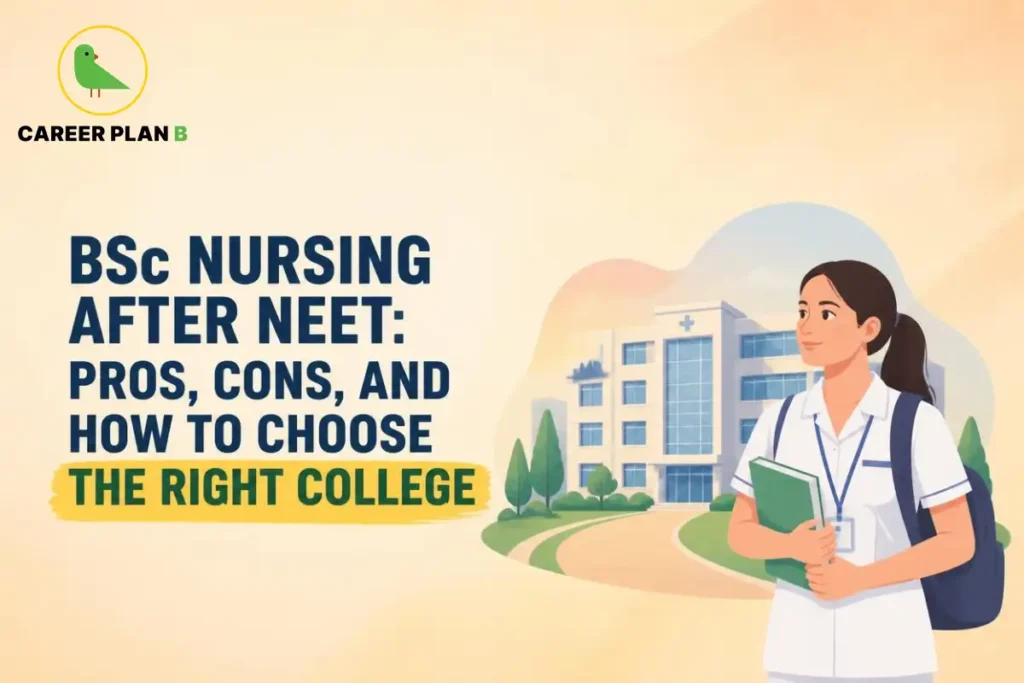
Introduction
If you cleared NEET but didn’t get the MBBS seat you hoped for, BSc Nursing is a genuine, respected path worth serious consideration — not a fallback option, but a distinct healthcare career with its own real value. But here’s an important, current nuance: whether you actually need NEET for BSc Nursing depends heavily on which state and which type of institution you’re targeting, and this has been shifting recently as more states adopt NEET as a requirement.
This blog gives you an honest look at the genuine pros and cons of this path, clarifies exactly where NEET applies and where it doesn’t, and offers a real framework for choosing a college — without an unverifiable “top colleges” ranking.
BSc Nursing After NEET: Understanding the Current, Mixed Landscape
Here’s the honest picture on BSc Nursing After NEET admission in 2026: it is not uniformly required nationwide, but its footprint has been expanding. Per the Indian Nursing Council (INC), the national regulatory body for nursing education and practice under the Ministry of Health & Family Welfare, admission criteria for BSc Nursing are actually set at the state and institutional level, not centrally mandated by INC itself. This creates genuine variation:
- NEET is mandatory for AIIMS, JIPMER, and other central government institutions’ BSc Nursing programs.
- NEET is mandatory for the Military Nursing Service (MNS) BSc Nursing program run by the Armed Forces Medical Services.
- Several states have recently made NEET mandatory for their state-run nursing colleges — Haryana, for instance, announced NEET UG as mandatory for BSc Nursing admission from the 2026-27 academic year, alongside paramedical and physiotherapy courses.
- Many private and state nursing colleges continue to admit through merit-based selection or their own entrance tests, without requiring NEET.
Is NEET Required for BSc Nursing: A State-by-State Reality
Since Is NEET Required for BSc Nursing genuinely depends on your specific target, here’s how to think about it:
- Central government institutions (AIIMS, JIPMER, PGIMER) – NEET is required, no exceptions.
- Check your specific state’s current policy directly – Since states like Haryana have recently shifted to mandatory NEET, and other states may follow or may continue with merit-based admission, this is genuinely a moving target requiring current verification, not assumption based on last year’s rules.
- Private and deemed universities – Often accept either NEET scores, their own entrance test, or direct merit-based admission — verify per institution.
- Military Nursing Service – Requires NEET as a mandatory first-stage filter, followed by additional assessments (Test of General Intelligence & General English, psychological assessment, interview, and medical examination).
BSc Nursing Pros and Cons: An Honest Weighing
Here’s a genuine look at BSc Nursing Pros and Cons:
Genuine advantages:
- Strong, consistent healthcare sector demand – Nursing remains one of the most reliably in-demand healthcare roles in India, with both government and private hospital expansion driving ongoing need.
- Broader eligibility than MBBS – Even where NEET is required, nursing seats are considerably more numerous than MBBS seats, meaning a NEET score that wouldn’t secure an MBBS seat can still lead to a genuine, respected healthcare degree.
- Clear postgraduate pathway – BSc Nursing graduates can pursue M.Sc Nursing and further specializations, building a genuine long-term career ceiling within nursing leadership, education, or specialized clinical practice.
- International mobility potential – Nursing qualifications, particularly from well-recognized INC-affiliated institutions, can support opportunities to work abroad, given global nursing shortages in many countries.
Genuine trade-offs:
- Physically and emotionally demanding work – Clinical training and eventual practice involve genuinely demanding shift work, direct patient care responsibilities, and emotional resilience requirements.
- Compensation varies significantly – As with other healthcare fields we’ve covered honestly, there’s no single official salary figure; government and private sector pay, and pay by seniority, vary considerably.
- Longer program duration – A 4-year commitment, similar to many other healthcare degrees, requiring sustained commitment before you begin earning.
Have Any Doubts?
BSc Nursing Without NEET Options
If NEET isn’t part of your plan, here’s what genuinely remains available as BSc Nursing Without NEET Options:
- Private and deemed universities using their own entrance tests or merit-based admission – A substantial and genuine option, though institutional quality varies, so verify recognition and infrastructure carefully.
- State nursing colleges in states that haven’t (yet) mandated NEET – Since this varies by state and is actively shifting, check your specific state’s current policy directly rather than relying on older information.
- GNM (Diploma in Nursing) as an alternative entry point – As covered in earlier analysis, this diploma-level path remains genuinely NEET-free nationally, with a pathway to upgrade to Post-Basic BSc Nursing later if you choose.
How to Choose a BSc Nursing College
Rather than an unverifiable “top colleges” list, here’s How to Choose a BSc Nursing College using genuine, checkable criteria:
- Confirm INC and relevant State Nursing Council affiliation directly – This is non-negotiable; only INC-recognized programs lead to valid professional registration.
- Check clinical training infrastructure – Nursing is intensely practical; verify the quality and accessibility of hospital tie-ups for clinical placements, not just classroom facilities.
- Ask about faculty-to-student ratios in clinical settings specifically – Given how hands-on this training is, oversized clinical groups can genuinely compromise your practical skill development.
- Verify the admission mode for your specific target state and institution type – NEET-required, own entrance test, or merit-based — confirm this directly rather than assuming.
- Check post-graduation registration support – A good institution should clearly guide you through State Nursing Council registration, a mandatory step to legally practice.
Read more:- Is NEET mandatory for Allied Health & Nursing Courses in 2026?
BSc Nursing Eligibility and Admission 2026
Here’s the baseline BSc Nursing Eligibility and Admission 2026, regardless of the specific admission mode you end up pursuing:
- Class 12 pass with Physics, Chemistry, Biology, and English as compulsory subjects, from a recognized board.
- Minimum aggregate marks, generally around 45-50% (with relaxation for reserved categories per standard norms).
- Age requirement – Typically minimum 17 years, with variation by institution on upper age limits.
- Medical fitness – Given the physically demanding nature of clinical training and practice.
Read More – B.SC Nursing Careers In India.
How Career Plan B Helps
Navigating BSc Nursing’s genuinely mixed, state-dependent admission landscape — and choosing the right college — is exactly where Career Plan B helps you avoid outdated assumptions.
- Personalized Career Counselling: We help you honestly weigh nursing’s genuine demands and rewards against your interests and temperament.
- Psychometric & Career Assessment Tests: Our assessments confirm whether hands-on, patient-facing healthcare work genuinely suits your strengths.
- Career Roadmapping: We map out your path clearly, including current NEET requirements for your specific target state and institutions.
- Admission & Academic Profile Guidance: We help you verify INC affiliation, clinical infrastructure, and your specific state’s current admission policy before you commit.
Get In Touch With Us
Frequently Asked Questions
- Is NEET mandatory for all BSc Nursing admissions in India?
No, not uniformly. It’s mandatory for central institutions (AIIMS, JIPMER) and an increasing number of states (like Haryana from 2026-27), but many private and some state colleges still admit through merit or their own entrance tests. Verify your specific state and target institution directly.
- What are the genuine advantages of BSc Nursing after NEET?
Nursing seats are considerably more numerous than MBBS seats, meaning a NEET score insufficient for MBBS can still lead to a respected, in-demand healthcare degree with strong long-term career potential.
- Can I pursue nursing without ever taking NEET?
Yes, through GNM (Diploma in Nursing), which remains genuinely NEET-free nationally, or through BSc Nursing programs at institutions/states that don’t require NEET.
- What should I check before choosing a specific BSc Nursing college?
Confirm INC and State Nursing Council affiliation, assess clinical training infrastructure and hospital tie-ups, and verify the actual admission mode required for that specific institution.
- Is nursing a financially stable career choice?
There’s no single official salary figure, since pay varies by sector, seniority, and location. However, nursing offers consistent demand and a clear postgraduate specialization pathway that can strengthen long-term earning potential.
Conclusion
BSc Nursing after NEET is a genuine, valuable path — but “after NEET” doesn’t mean NEET is universally required, since admission rules vary meaningfully by state and institution type, and continue to shift as more states adopt NEET requirements. The smartest approach is verifying your specific state and target college’s current policy directly, then evaluating institutions on genuine clinical infrastructure and recognition rather than any unverified ranking.
If you’re navigating BSc Nursing admission and want help verifying current requirements and choosing the right college, Career Plan B is here to help you plan with real, current clarity.