Team6 · September 7, 2026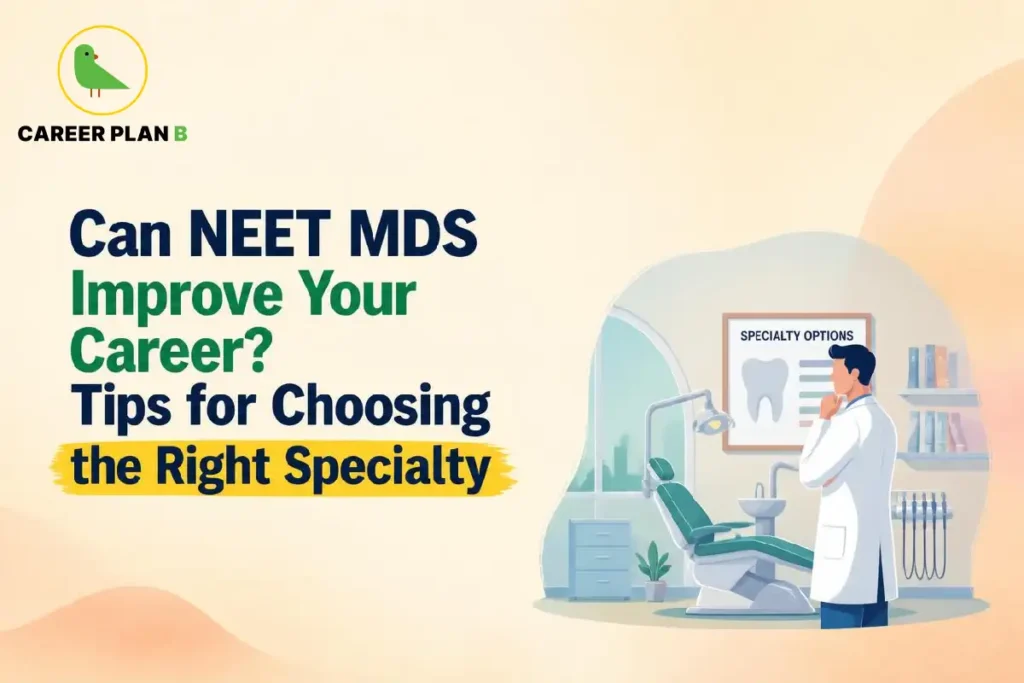
Introduction
You’ve finished your BDS. Now comes the real question. Is it actually worth putting yourself through another exam, another round of study, for an MDS? NEET MDS career improvement is a genuine possibility, but it isn’t automatic just because you clear the exam.
The specialty you choose matters just as much as clearing the exam itself, sometimes more. This guide walks through what NEET MDS actually requires, using the National Board of Examinations in Medical Sciences’ own process, and how to pick a specialty based on real fit, not just rank or trend. The goal is a genuinely useful decision, not just clearing one more exam for its own sake.
Does an MDS Genuinely Improve Your Career?
The honest answer is: it depends heavily on the specialty and how you use it. An MDS opens doors a BDS alone doesn’t, including teaching positions, specialised private practice, and senior roles in larger dental setups.
But an MDS in a specialty that doesn’t genuinely interest you rarely pays off the way people expect. NEET MDS career improvement comes from the combination of the degree and genuine engagement with your chosen field, not the degree alone.
What NEET MDS Actually Requires
Eligibility and Exam Structure
You’ll need a BDS degree from a recognised university, along with registration from your State Dental Council. A full one-year rotating internship also needs to be complete by the specified deadline.
The exam itself runs as a computer-based test, split into two parts. Part A covers basic sciences, and Part B covers clinical dental subjects, with the clinical section carrying heavier weight overall.
How MDS Counseling Works
Once results are out, counseling follows a structure similar to NEET UG. The Medical Counselling Committee runs counseling for 50% All India Quota MDS seats, while state authorities handle the remaining seats separately.
This means, just like NEET UG, a seat allotment isn’t the same as admission. You’ll still need to report, verify documents, and complete the admission process fully within the deadline.
Choosing the Right Specialty: What Actually Matters
Match Your Specialty to Real Interest, Not Just Rank
Many students choose a specialty based purely on what their rank allows, rather than genuine interest in the field. This often backfires years into practice, once the initial excitement of “getting in” fades.
Think honestly about which BDS clinical rotations you actually enjoyed, not just performed well in. Genuine interest sustains you through years of specialised, sometimes repetitive clinical work far better than prestige alone.
Specialties Worth Understanding Before You Choose
Orthodontics and Prosthodontics remain popular for their strong private practice potential. Oral and Maxillofacial Surgery offers a more hospital-integrated, surgical career path.
Periodontics, Conservative Dentistry, and Pedodontics each offer distinct daily work, from gum-focused treatment to root canal specialisation to child-focused dental care. Research each one’s actual daily practice, not just its perceived prestige.
Common Mistakes in Specialty Selection
Choosing a specialty purely because it has higher perceived demand, without genuine interest, is a common trap. So is ignoring the actual infrastructure and equipment investment some specialties require for independent practice later.
Another mistake is underestimating how much a specialty’s daily work differs from BDS-level exposure. A rotation you enjoyed briefly may look very different as a full specialised career.
Have Any Doubts?
Step-by-Step Roadmap to Choose Well
- Reflect honestly on which BDS rotations you genuinely enjoyed, not just scored well in.
- Research each specialty’s real daily work, not just its reputation or income potential.
- Talk to practising specialists about what their actual week looks like.
- Consider the setup cost and infrastructure each specialty needs for future practice.
- Rank your specialty choices during counseling based on genuine fit, not rank alone.
Benefits, Challenges, and What the Data Says
NEET MDS runs through a real, structured process, with clear eligibility rules published directly by NBEMS. This isn’t an informal or ambiguous system.
However, no official source tracks exactly how much an MDS improves income or career satisfaction across every specialty. Claims comparing specialties by outcome usually come from anecdotes, not one verified dataset. Treat such comparisons as indicative only.
A real challenge is that some specialties demand significant equipment investment for independent practice later, a cost worth researching before committing to that path.
How Career Plan B Helps
Deciding whether NEET MDS career improvement is worth pursuing, and which specialty to choose, can feel overwhelming. Career Plan B makes this easier through:
- Personalised Career Counselling: helping you weigh genuine interest against practical factors like setup cost
- Psycheintel Career Assessment Tests: checking which specialty’s daily work genuinely suits your strengths
- Admission and Entrance Exam Guidance: helping you understand NEET MDS eligibility and counseling clearly
- Structured Career Roadmapping: a clear plan from your BDS to a specialty that genuinely fits your goals
For Latest Information
Frequently Asked Questions
Q1. Does an MDS always lead to better career outcomes than a BDS alone?
Not automatically. It depends heavily on the specialty chosen and how genuinely it’s pursued afterward.
Q2. What is the eligibility for NEET MDS?
A BDS degree from a recognised university, State Dental Council registration, and a completed one-year internship.
Q3. How does MDS counseling actually work?
Similar to NEET UG. MCC runs 50% All India Quota counseling, while states handle the remaining seats separately.
Q4. How should I choose between competing specialty options?
Prioritise genuine interest and real daily work over rank alone, since interest sustains you longer term.
Q5. Is there official data comparing career outcomes across specialties?
No official dataset tracks this precisely. Treat any specialty-comparison claims from other sources as indicative only.
Q6. Do all specialties require similar setup investment for private practice?
No. Some specialties need significant equipment investment, worth researching before making your final choice.
Conclusion
NEET MDS career improvement is real, but it isn’t automatic just because you clear the exam and get a seat. The degree opens doors, genuinely. What actually determines whether it improves your career is the specialty you choose, and whether that choice comes from real interest or just whatever your rank happens to allow.
Take the time most students skip: talk to specialists actually practising in your shortlisted fields, understand the real daily work involved, and be honest about which BDS rotations you genuinely connected with. Rank matters for getting a seat. Genuine fit matters for building a career you don’t regret a decade in.
If you’re heading into NEET MDS counseling soon, don’t rush your specialty choices the way you might rush a college list. This decision shapes years of daily work ahead, and it deserves the same careful thought you gave to clearing the exam itself.
Connect with Career Plan B today to choose an MDS specialty that genuinely fits your strengths and goals.