Deepti · October 23, 2026
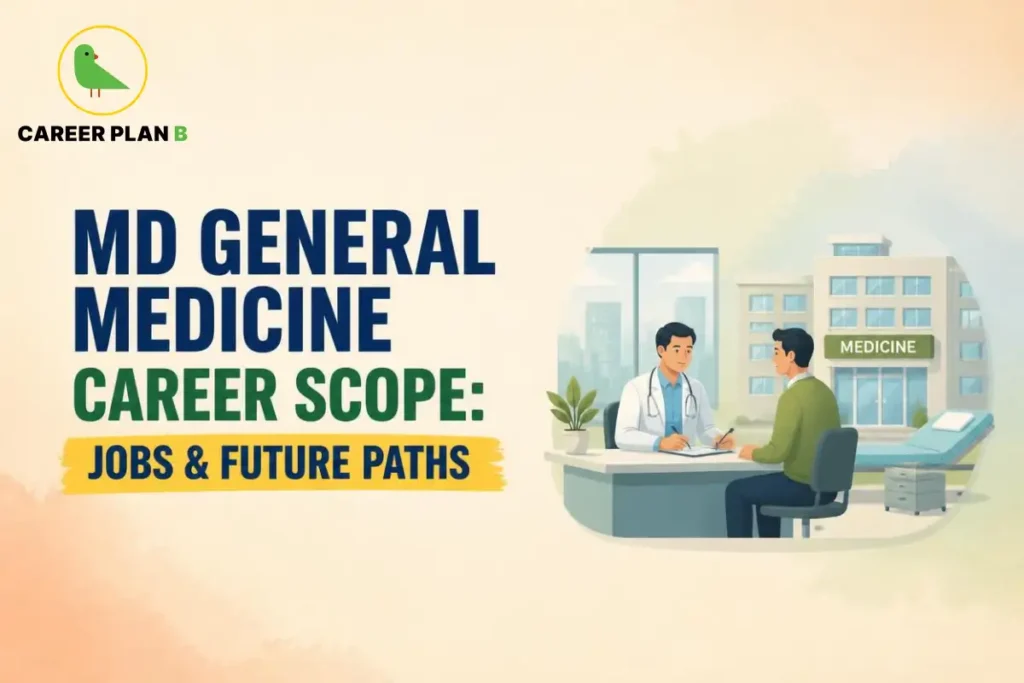
The MD General Medicine Career Scope in India covers hospital practice, private clinics, medical teaching, research, and super-speciality training. For NEET PG aspirants who enjoy diagnosing complex conditions and managing adult patients, this branch offers several long-term career paths. The right choice depends on your clinical interests, preferred work setting, and future goals. What can you do after MD General Medicine, and which opportunities can help you build a rewarding medical career?
What Is the Career Scope of MD General Medicine?
MD General Medicine trains doctors to diagnose and manage a wide range of adult medical conditions. Physicians assess symptoms, interpret investigations, plan treatment, manage chronic diseases, and handle medical emergencies within their competence.
The National Medical Commission’s MD General Medicine postgraduate training curriculum emphasises clinical skills, comprehensive patient care, emergency management, ethical practice, research, and teaching. These competencies support several employment options across the healthcare sector.
The career scope after MD General Medicine extends beyond routine consultations. Doctors can pursue hospital-based clinical roles, private practice, academic medicine, research, or eligible super-speciality programmes.
What Are the Main Career Options After MD General Medicine?
The MD General Medicine Career Options suit doctors who want to combine clinical knowledge with patient care, diagnosis, and long-term disease management.
1. Consultant Physician or Internal Medicine Specialist
Hospitals and multispeciality clinics employ General Medicine specialists to assess patients with complex or undiagnosed conditions. Consultants manage diabetes, hypertension, infectious diseases, respiratory illnesses, and other medical disorders.
Their responsibilities include reviewing investigations, adjusting treatment plans, coordinating with other specialists, and monitoring recovery. Experienced physicians can lead medical units or take on departmental responsibilities.
2. Hospitalist and Inpatient Care Specialist
Hospitalists focus on the care of admitted patients. They monitor clinical progress, coordinate investigations, review medication plans, and work with surgeons and other specialists.
Large hospitals may offer roles in internal medicine wards, inpatient services, and medical units. Doctors who enjoy continuous patient management can consider this career path.
3. Emergency and Critical Care Roles
General Medicine specialists can contribute to emergency assessments, acute medical care, and hospital critical care services. Their skills in diagnosing and stabilising patients support these responsibilities.
Some advanced critical care positions require additional training, relevant experience, or specific qualifications. Candidates should verify the eligibility requirements for each role before applying.
4. Private Practice and Specialist Clinics
Private practice offers doctors greater control over their consultation schedules and patient care models. A General Medicine specialist can establish a clinic, join an existing practice, or consult through a multispeciality healthcare facility.
Physicians often manage chronic conditions, conduct follow-up consultations, and guide patients on preventive healthcare. Independent practice also requires business planning, ethical patient management, and the ability to build patient trust.
5. Medical Teaching and Research
Doctors who enjoy academics can explore teaching roles at medical colleges after meeting the applicable faculty eligibility requirements. These positions involve teaching students, supervising clinical learning, and contributing to academic work.
Clinical research offers another option. Qualified doctors can participate in clinical studies, medical research projects, pharmaceutical research, and evidence-based healthcare initiatives, depending on the role’s requirements.
For Personalized Guidance
Where Can You Find MD General Medicine Job Opportunities?
MD General Medicine Job Opportunities exist across public and private healthcare settings. The following table outlines common employment routes.
| Workplace | Potential job roles |
|---|---|
| Government hospitals | Medical specialist, physician, and eligible specialist posts |
| Private hospitals | Consultant physician, associate consultant, and internal medicine specialist |
| Multispeciality hospitals | Inpatient physician and eligible critical care-related roles |
| Medical colleges | Faculty and clinical teaching positions |
| Research organisations | Clinical research and investigator roles |
| Private clinics | Independent physician or clinic-based specialist |
Doctors should track official recruitment notices from government departments, public hospitals, medical colleges, and research institutions.
For example, the Indian Council of Medical Research (ICMR) published a 2026 recruitment notice for five Specialist Grade III (Medicine) posts at Bhopal Memorial Hospital and Research Centre. The advertisement specified a Level 11 pay matrix of ₹67,700–₹2,08,700. This is an official pay-scale example for a particular recruitment, not a guaranteed salary for every General Medicine specialist. Candidates must also meet the advertised qualifications and experience requirements. Read the official ICMR recruitment notice.
What Is the Salary After MD General Medicine?
The MD General Medicine Salary depends on the employer, location, experience, clinical responsibilities, and employment arrangement.
Government specialist posts follow the applicable pay matrix and recruitment conditions. Private hospitals may offer fixed salaries, performance-linked compensation, or other employment terms. Independent practitioners earn through consultations and other permitted professional services, so their income can vary with patient volume, expenses, and practice maturity.
The ICMR recruitment notice provides one verified government-sector reference: Level 11 with a pay range of ₹67,700–₹2,08,700 for the advertised Specialist Grade III (Medicine) posts. The upper figure represents the scale’s maximum, not the starting salary or a guaranteed monthly earning.
Candidates should compare the actual offer, allowances, working hours, duties, and benefits rather than rely on a single industry-wide estimate.
How Can Your Career Progress After MD General Medicine?
The career after MD General Medicine can follow different routes based on a doctor’s interests and experience.
- Early career: Join a hospital as a physician or eligible medical specialist, apply for Senior Residency positions, or pursue another suitable clinical role.
- Mid-career: Develop expertise in complex cases, build a patient base, teach medical students, or take on greater hospital responsibilities.
- Long-term growth: Lead clinical teams, establish a successful practice, pursue research, or complete additional specialist training.
Senior Residency can strengthen clinical and academic experience, but it is not a mandatory step for every medical job. Faculty appointments require compliance with the applicable NMC regulations and eligibility criteria.
Clinical judgement, communication, ethical practice, continuing education, and professional experience can support steady career growth.
What Are the Future Options After MD General Medicine?
Doctors who want to focus on a specific area of medicine can explore DM or DrNB super-speciality training. Potential fields include:
- Cardiology
- Neurology
- Nephrology
- Endocrinology
- Medical Gastroenterology
- Medical Oncology
- Critical Care Medicine
The NBEMS NEET-SS information bulletin explains the super-speciality entrance process and eligible feeder broad specialities. The bulletin identifies General Medicine as an eligible feeder for Endocrinology and Critical Care Medicine, among other pathways governed by the relevant eligibility rules.
Doctors must check the current feeder-qualification requirements for their chosen speciality. Eligibility can differ across courses and admission sessions.
Fellowships and focused clinical training can also help doctors develop expertise in selected areas, subject to the programme’s entry requirements.
What Is the Future Scope After MD General Medicine in India?
The future scope after MD General Medicine rests on the specialty’s broad role in adult healthcare. Physicians diagnose conditions that affect multiple organ systems, manage long-term illnesses, and coordinate care when patients need input from different specialists.
This versatility creates potential career paths in hospitals, private clinics, medical education, research, and further specialisation. Individual prospects depend on clinical competence, local opportunities, employer requirements, experience, and willingness to pursue additional training.
A doctor who enjoys diagnostic reasoning and ongoing patient relationships may prefer General Medicine over a narrower clinical specialty. Aspirants who prefer another style of practice can compare their interests with other clinical branches. Career Plan B’s guide to Top Private MD Emergency Medicine Colleges in Uttarakhand 2026 offers a related look at a specialty focused on acute and emergency care.
How Career Plan B Helps
Choosing a medical career involves more than selecting a popular speciality.
- Personalized Career Counselling helps you explore suitable career directions.
- PsycheIntel and Career Assessment Tests help you understand your interests and strengths.
- Admission and Academic Profile Guidance supports informed academic decisions.
- Career Roadmapping helps you plan clinical experience, further training, and long-term professional growth.
Get In Touch With Us
Frequently Asked Questions
Q1. What are the best Career Options After MD General Medicine?
Consultant physician roles, private practice, government specialist posts, medical teaching, research, and eligible super-speciality programmes offer several career paths.
Q2. What is the Career Scope of MD General Medicine in India?
The specialty offers opportunities in hospitals, clinics, government healthcare, medical colleges, research, and further specialist training. Individual prospects depend on experience and qualifications.
Q3. What are the main Career Opportunities After MD General Medicine outside hospitals?
Doctors can consider independent practice, medical teaching, clinical research, and suitable healthcare research roles. Each position has specific eligibility requirements.
Q4. What Future Options After MD General Medicine can lead to super-specialisation?
Eligible doctors can pursue DM or DrNB programmes in fields such as cardiology, neurology, nephrology, endocrinology, and other recognised super-specialities. Check the current feeder-qualification rules for the chosen course.
Q5. What affects the Future Scope After MD General Medicine?
Clinical skills, experience, professional interests, location, employment opportunities, and additional qualifications influence career prospects.
Conclusion
The MD General Medicine Career Scope offers more than one path to professional growth. You can build a career in clinical practice, private healthcare, teaching, research, or super-speciality medicine. Which direction fits your strengths and long-term goals? Explore your options with Career Plan B and create a career roadmap that matches your ambitions.