Deepti · October 23, 2026
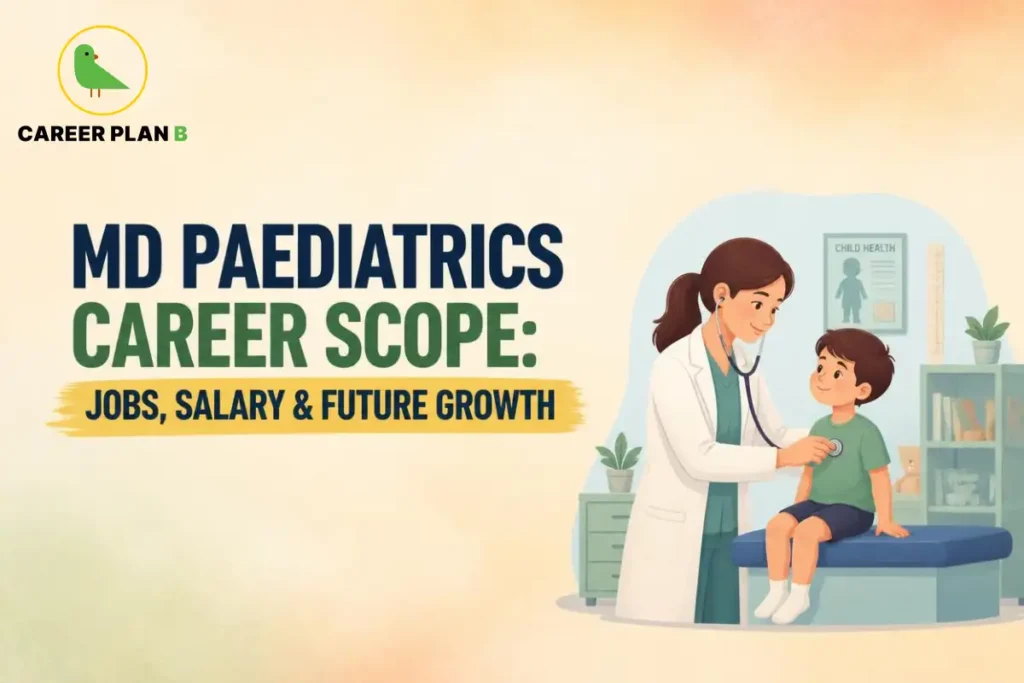
The MD Paediatrics Career Scope in India covers government hospitals, private healthcare, medical teaching, research and private practice. Doctors can also pursue advanced training in neonatology, paediatric cardiology and other specialised fields. The right path depends on your clinical interests, work preferences and long-term goals. Should you choose MD Paediatrics for its career flexibility or pursue further specialisation?
What Does MD Paediatrics Career Scope Include?
MD Paediatrics trains doctors to care for newborns, infants, children and adolescents. The National Medical Commission (NMC) curriculum covers healthy-child care, childhood illnesses, emergency treatment, intensive care, preventive healthcare and family-centred care. You can review the official MD Paediatrics curriculum to understand the training requirements.
The qualification prepares doctors for clinical work across outpatient departments, inpatient wards, neonatal intensive care units (NICUs) and paediatric intensive care units (PICUs). It also builds a foundation for teaching, research and further studies after MD Paediatrics.
What Are the Main MD Paediatrics Career Options in India?
Doctors can choose from several MD Paediatrics career options based on their skills, interests and preferred workplace.
1. Government Jobs After MD Paediatrics
Government healthcare offers clinical and academic career pathways. You can explore opportunities in:
- Government medical colleges and teaching hospitals.
- District hospitals and public healthcare facilities.
- Government children’s hospitals and specialised medical institutes.
- Public health programmes focused on newborn and child health.
Senior residency can help you gain additional clinical experience and strengthen your academic profile. You can apply for teaching positions when you meet the relevant qualification and experience requirements. Government recruitment notices specify eligibility, pay scales, age limits and other conditions for each post.
2. Private Jobs After MD Paediatrics
Private healthcare offers MD Paediatrics hospital jobs across multispeciality hospitals, children’s hospitals and maternity hospitals with paediatric departments.
Common roles include:
- Paediatrician or junior consultant.
- Senior resident or registrar.
- Hospital consultant.
- Neonatal or paediatric critical care clinician, subject to the role’s requirements.
- Medical educator or clinical researcher.
These roles offer different levels of responsibility. A hospital paediatrician may handle routine consultations, vaccinations and childhood illnesses. A doctor in a tertiary-care hospital may manage critically ill children and complex medical conditions.
3. Teaching, Research and Public Health
Doctors who enjoy academics can work towards medical college teaching positions. Clinical research offers opportunities to study childhood diseases, medicines, vaccines and treatment outcomes. Public health programmes allow paediatricians to contribute to child nutrition, disease prevention and maternal-child healthcare initiatives.
These paths expand MD Paediatrics Employment Opportunities beyond routine clinical practice.
Is MD Paediatrics Private Practice a Good Option?
MD Paediatrics private practice suits doctors who want to build an independent clinical practice and develop long-term relationships with families.
You can establish a paediatric clinic, join an existing practice or work as a visiting consultant. Common services include growth monitoring, vaccination, preventive health checks and treatment for childhood illnesses.
Private practice requires more than clinical knowledge. You must manage patient communication, referrals, equipment, staffing, clinic expenses and applicable registration requirements. Your income also depends on location, consultation fees, patient numbers and operating costs.
Many doctors prefer hospital employment during the early years of their careers. They gain experience, build professional networks and understand local healthcare needs before opening a clinic.
What Are the MD Paediatrics Salary and Stipend in India?
The MD Paediatrics Salary depends on your experience, employer, location, clinical responsibilities and additional qualifications. Government roles follow the applicable pay rules, while private employers set compensation according to their employment structure.
MD Paediatrics Stipend During Residency
MD Paediatrics residents receive a stipend according to the rules of their institution and applicable regulations. There is no single stipend figure that applies uniformly across India.
A Bihar PGMAC 2025–26 official fee document lists the following monthly stipend amounts for postgraduate students at the institution covered by the notice:
| Training year | Monthly stipend |
|---|---|
| First year | ₹82,000 |
| Second year | ₹90,200 |
| Third year | ₹99,220 |
These figures provide an institution-specific example, not a national MD Paediatrics stipend rate. Check your target institution’s latest official notification before making financial plans.
For Personalized Guidance
MD Paediatrics Salary After Qualification
Government recruitment provides a useful reference for doctors entering hospital employment. An official AIIMS Bilaspur recruitment notice lists a minimum basic pay of ₹67,700 per month at Level 11 for eligible non-academic senior residents, plus National Professional Allowance (NPA) and admissible allowances.
This figure represents a specific government senior resident post. It does not represent the take-home salary of every paediatrician. The gross amount depends on applicable allowances and deductions.
Private hospitals may offer fixed salaries, on-call payments or other compensation arrangements. Consultants with extensive experience, specialised training or established practices may follow different earning models. Private practice revenue also differs from personal income after expenses.
Check official employer advertisements for current salary details. Compare working hours, clinical exposure, location, allowances and career progression alongside the advertised pay.
What Further Studies After MD Paediatrics Can You Pursue?
Further studies after MD Paediatrics can help you develop expertise in a specific area. Doctors may pursue recognised super-speciality training, fellowships, research qualifications or additional clinical training.
Super Specialisation After MD Paediatrics
Possible advanced pathways include:
- Neonatology
- Paediatric cardiology
- Paediatric gastroenterology
- Paediatric nephrology
- Paediatric neurology
- Paediatric endocrinology
- Paediatric critical care
- Paediatric haemato-oncology
The availability and eligibility requirements differ across programmes. Check the current NMC list of postgraduate courses for recognised pathways and the relevant feeder qualifications.
Fellowship After MD Paediatrics
A fellowship can provide focused clinical training in a particular field. The National Board of Examinations in Medical Sciences (NBEMS) lists specialised Fellow of National Board (FNB) pathways, including paediatric gastroenterology, paediatric haemato-oncology, paediatric nephrology and paediatric urology.
Review the official NBEMS fellowship information for available disciplines, eligibility requirements and programme details. Doctors should confirm the current admission criteria before choosing a course.
You do not need a fellowship to build a successful general paediatric practice. Further training makes sense when your career goals require deeper expertise in a specific field.
What Is the Future Scope of MD Paediatrics?
The MD Paediatrics Future Scope includes general clinical practice, neonatal care, critical care, developmental assessment, adolescent health, teaching and research. Advances in diagnostics and treatment also create opportunities for doctors who develop skills in specialised paediatric services.
Emerging areas include developmental and behavioural health, paediatric subspecialities, preventive healthcare and appropriate teleconsultation services. The NMC curriculum recognises changing disease patterns, technological advances and the growing role of specialised care in medical practice.
Career growth may follow several routes:
MD Paediatrics → Senior Residency or Hospital Practice → Consultant or Faculty Role → Advanced Specialisation or Leadership
Your career prospects after MD Paediatrics depend on clinical competence, experience, communication skills, additional training and local employment needs. A subspeciality can open specific opportunities, but it does not guarantee higher income or quicker career growth.
NEET PG aspirants can also explore Career Plan B’s guides to the Uttarakhand NEET PG Seat Matrix and Rajasthan NEET PG Seat Matrix when reviewing course availability. Seat availability answers a different question from long-term career suitability.
How Career Plan B Helps
Career Plan B supports informed medical career decisions through Personalized Career Counselling, PsycheIntel and Career Assessment Tests, Admission and Academic Profile Guidance, and Career Roadmapping.
These services help aspirants and postgraduate doctors compare clinical interests, preferred work settings and future goals.
The guidance can help you build a clearer plan for your professional journey.
Get In Touch With Us
FAQs
Q1. What is the career after MD Paediatrics in India?
Career After MD Paediatrics can include government hospitals, private hospital jobs, teaching, clinical research, public health and private practice. You can also pursue advanced training.
Q2. What are the government jobs after MD Paediatrics?
Government Jobs After MD Paediatrics include eligible senior resident, specialist and medical teaching positions in public institutions. Each recruitment notice specifies the required qualifications and experience.
Q3. What are the future options after MD Paediatrics?
Future Options After MD Paediatrics include general paediatric practice, hospital consultancy, neonatology, paediatric critical care, teaching and research. Your interests can guide the choice.
Q4. Which specialisation can I pursue after MD Paediatrics?
Specialization After MD Paediatrics can include recognised super-speciality courses or suitable fellowships in fields such as paediatric cardiology, gastroenterology, nephrology and haemato-oncology. Check the relevant eligibility rules.
Q5. What is the salary after MD Paediatrics?
MD Paediatrics Salary varies by employer, location, experience, qualifications and role. Check current government recruitment notices and hospital offers for reliable figures.
Q6. Is an internship compulsory after MD Paediatrics?
The compulsory rotating medical internship forms part of MBBS training before postgraduate study. MD Paediatrics involves postgraduate residency. Doctors may pursue senior residency or fellowships after qualification, depending on their career goals.
Conclusion
The MD Paediatrics Career Scope offers several paths, from hospital practice and government service to private clinics and advanced specialisation. Which path matches your strengths and long-term goals? Compare the work, training requirements and earning potential before making your choice. Connect with Career Plan B for personalised career guidance and plan your next step with confidence.