Team Career Plan B · September 22, 2026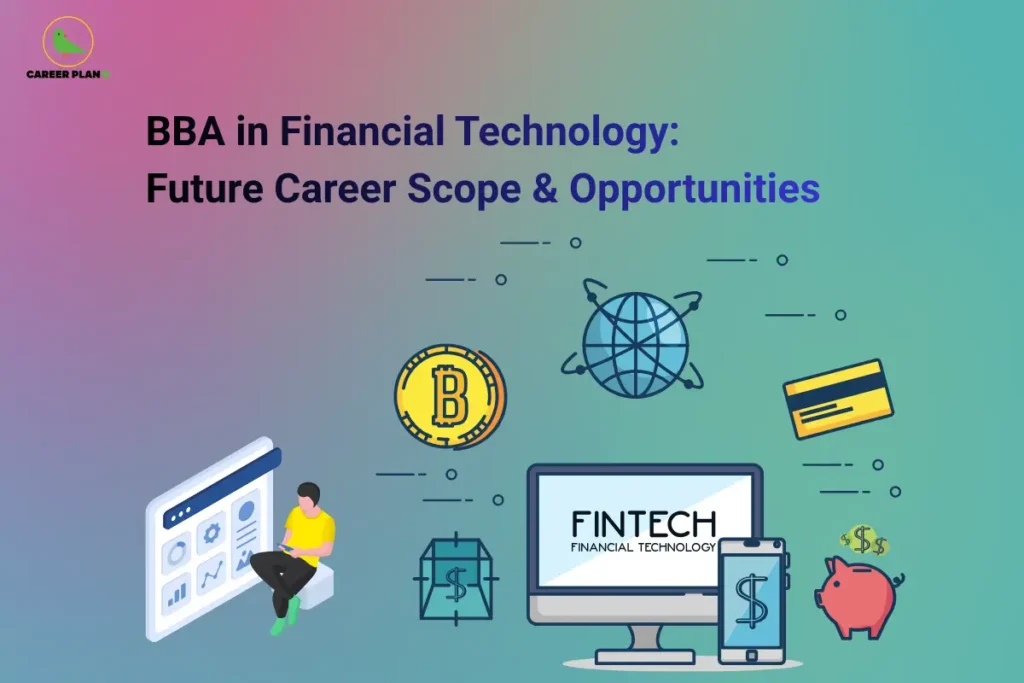
Introduction
Imagine working in an industry that’s disrupting trillion-dollar financial systems. Imagine building payment apps used by millions. Also Imagine earning ₹6-10 LPA right out of college in a field where demand far exceeds supply. For BBA in Financial Technology graduates, this reality is happening right now.
The world is changing fast. Fintech is everywhere—in mobile payments, digital wallets, lending platforms, investment apps, and insurance technology. Every day, new fintech jobs are created. Every week, more companies realize they need fintech professionals.
Here’s what most people get wrong: they think only engineers can work in fintech. That’s not true. Banks and fintech companies need professionals who understand both financial technology and business strategy. They need leaders who can speak the language of APIs and the language of profit.
A BBA in Financial Technology gives you exactly that. You learn how fintech works. You learn how to use it for business. Also You become valuable to any company in the digital finance revolution.
The numbers are stunning. According to McKinsey, It the fintech market will grow to $310 billion by 2027. But there aren’t enough professionals to fill these positions. That’s your opportunity.
In this blog, we’ll show you the real career paths waiting for you. We’ll tell you what you can earn. We’ll explain why companies are desperate to hire digital finance degree holders. Whether you’re still in school or thinking about changing careers, this guide will show you why investing in fintech education is one of the smartest moves you can make today.
Why Choose a BBA in Financial Technology?
The traditional BBA teaches you business fundamentals. A BBA in Financial Technology takes it further—it’s business education for the digital finance era.
Think of it this way: banks don’t just need fintech developers; they need professionals who understand both the technology and the financial implications. A BBA in Financial Technology graduate can speak the language of both programmers and portfolio managers.
Why is this degree gaining traction?
- Industry Demand: Every financial institution—banks, insurance companies, investment firms, payment processors—is going digital. They need professionals who understand how to implement, manage, and scale fintech solutions.
- Competitive Edge: You’re not just learning to build fintech products; you’re learning to strategize, manage budgets, understand regulatory frameworks, and lead cross-functional teams in the financial sector.
- Future-Proof Career: Fintech isn’t a trend—it’s the foundation of modern finance. Traditional banks are investing billions in fintech infrastructure. Startups are disrupting the industry. Companies need talented professionals to navigate both.
- Diverse Opportunities: Whether you want to work in product development, compliance, operations, or strategy, a BBA in Financial Technology opens doors across the financial ecosystem.
Read More:- Career in FinTech Entrepreneurship After BBA: 10 Innovation-Driven Paths to Digital Finance Success
Top Career Paths After BBA in Financial Technology
After completing your BBA in Financial Technology, you won’t be limited to one career path. Here are the most rewarding and in-demand roles:
Fintech Product Manager
As a Fintech Product Manager, you’ll lead the development and launch of digital financial products. Your job involves understanding customer pain points, designing solutions, and bringing them to market.
What you’ll do:
- Define product vision and strategy for fintech solutions
- Conduct market research and identify customer needs
- Work with development teams to build payment apps, lending platforms, or investment tools
- Analyze competitor offerings in the fintech space
- Measure product success and iterate based on user feedback
Why it’s perfect for BBA graduates: This role is tailor-made for BBA graduates who understand both technology and financial markets. You’ll be the bridge between engineers and business stakeholders.
Digital Payments Specialist
If you love understanding how money moves, a Digital Payments Specialist role might be your calling. You’ll develop and manage payment solutions that process billions of transactions.
What you’ll do:
- Design and optimize payment gateways and mobile wallets
- Work with banks and payment processors to integrate systems
- Analyze payment trends and user behavior
- Develop fraud detection and security protocols
- Manage relationships with merchants and financial institutions
Why it’s perfect for you: A BBA in Financial Technology gives you the business acumen that many pure tech professionals lack—you’ll understand why payment systems matter and how they impact the economy.
Fintech Business Analyst
As a Fintech Business Analyst, you’ll bridge the gap between financial business needs and technology solutions. Your job involves understanding what problems a bank or fintech company faces and recommending solutions.
What you’ll do:
- Analyze financial processes and identify where fintech can add value
- Work with stakeholders to define project requirements
- Evaluate different fintech platforms and tools
- Monitor implementation and measure business impact
- Present insights to senior management and regulators
Why it’s perfect for BBA graduates: This role leverages your business understanding while allowing you to work with cutting-edge financial technology.
Compliance & Risk Officer (Fintech)
As regulations around fintech become increasingly complex, companies desperately need Compliance & Risk Officers who understand both finance and technology.
What you’ll do:
- Develop compliance frameworks for fintech products
- Monitor regulatory changes (RBI, SEBI guidelines)
- Ensure fintech operations meet legal and financial regulations
- Conduct risk assessments for digital financial services
- Train teams on compliance standards and best practices
Why it’s perfect for you: Your BBA background combined with fintech knowledge makes you invaluable in this high-demand, high-paying role. Compliance specialists are among the highest-paid professionals in fintech.
Fintech Data Analyst
Fintech Data Analysts turn financial data into actionable insights that drive business decisions and improve customer experience.
What you’ll do:
- Analyze financial data to identify trends and patterns
- Build dashboards and reports for executives
- Use data to optimize user experience and reduce churn
- Conduct A/B testing on fintech platforms
- Develop predictive models for customer behavior and fraud detection
Why it’s perfect for BBA graduates: You combine financial knowledge with data analysis skills to become indispensable to any fintech organization.
Fintech Operations Manager
Fintech Operations Managers ensure that fintech platforms run smoothly, securely, and efficiently at scale.
What you’ll do:
- Oversee day-to-day fintech platform operations
- Manage relationships with technology vendors and financial partners
- Optimize operational efficiency and reduce costs
- Ensure system uptime and security standards
- Coordinate between product, engineering, and compliance teams
Why it’s perfect for you: Your business training makes you ideal for managing the complex operations of modern fintech companies.
Salary & Job Market Outlook for Fintech Professionals
Let’s talk about the money—because yes, fintech careers pay exceptionally well.
Entry-Level Salaries (0-2 years experience):
- Fintech Product Manager: ₹7-11 LPA (India) | $65,000-90,000 (USA)
- Digital Payments Specialist: ₹6-9 LPA (India) | $60,000-85,000 (USA)
- Fintech Business Analyst: ₹5-8 LPA (India) | $55,000-80,000 (USA)
Mid-Career Salaries (3-5 years experience):
- Fintech Product Manager: ₹14-20 LPA | $110,000-160,000
- Digital Payments Specialist: ₹12-18 LPA | $100,000-145,000
- Fintech Business Analyst: ₹10-15 LPA | $90,000-130,000
Senior-Level Salaries (5+ years experience): Many professionals move into leadership roles (Director, VP, Head of Product/Operations) with salaries exceeding ₹25-40 LPA or $180,000-300,000+. Many also launch their own fintech startups.
Note: These are the approximate salary figures, it might vary industry to industry.
Which Industries Are Hiring?
| Industry | Demand Level | Key Roles |
|---|---|---|
| Digital Banking & Payments | Very High | Product Manager, Payments Specialist, Business Analyst |
| Investment & Wealth Tech | Very High | Portfolio Manager, Investment Analyst, Data Analyst |
| Insurance Tech (InsurTech) | High | Product Manager, Claims Analyst, Operations Manager |
| Lending & Credit Tech | High | Loan Analyst, Risk Officer, Business Developer |
| Blockchain & Crypto Finance | High | Compliance Officer, Business Analyst, Product Manager |
| Traditional Banking | Very High | Digital Transformation Manager, Fintech Liaison |
Global Opportunities:
Don’t limit yourself to your home country. Fintech professionals are in global demand:
- USA: New York (financial hub), San Francisco, Austin—major fintech centers
- Europe: London, Berlin, Amsterdam—thriving fintech ecosystems
- Asia: Singapore, Hong Kong, Tokyo—emerging fintech powerhouses
- India: Bangalore, Mumbai, Delhi—fastest-growing fintech startup hub globally
Remote work opportunities are abundant. Many fintech companies offer flexible work arrangements, allowing you to work for international fintech firms from anywhere.
For Personalized Guidance
Essential Skills You’ll Need for Fintech Careers
A BBA in Financial Technology teaches you a mix of technical and business skills. Here’s what employers look for:
Technical Skills:
- Financial Systems: Understanding of banking systems, payment networks, settlement processes
- Data Analysis: Excel, SQL, Tableau, Power BI for financial analytics
- APIs & Integration: Knowledge of how different fintech systems connect
- Cybersecurity Basics: Understanding encryption, secure transactions, fraud prevention
- Cloud Platforms: AWS, Google Cloud for fintech infrastructure
Business Skills:
- Deep understanding of financial markets and products
- Knowledge of regulatory frameworks (RBI, SEBI, FATF guidelines)
- Risk management and compliance mindset
- Project management in regulated environments
- Understanding of customer behavior and market trends
Soft Skills (Often Overlooked but Crucial):
- Communication—explaining complex financial concepts simply
- Attention to detail—fintech operates on precision and trust
- Teamwork—collaborating across finance and tech teams
- Adaptability—fintech regulations and technologies evolve constantly
- Problem-solving—creating solutions for complex financial problems
How Career Plan B Helps
At Career Plan B, we understand that choosing a fintech career path requires clarity about your strengths and the industry landscape. That’s where we come in.
Personalized Career Counselling: Our experts help you identify which fintech career path aligns with your strengths and interests whether that’s product management, payments, compliance, or data analysis.
Psycheintel and Career Assessment Tests: Unsure if fintech is right for you? Our scientific assessments evaluate your aptitude for technical roles, financial acumen, and career fit in the fintech industry, giving you clarity before you invest time and money.
Career Roadmapping: We create a personalized roadmap showing you the fintech skills to develop, certifications to pursue (like CFA, FRM, or fintech-specific credentials), and timeline to reach your career goals in this dynamic industry.
Whether you’re starting your BBA in Financial Technology or already enrolled, Career Plan B ensures you’re making informed decisions and maximizing your career potential in this transformative field.
Get In Touch With Us
Frequently Asked Questions
Q1: Is a BBA in Financial Technology better than a B.Tech in Computer Science?
Both are valuable, but they offer different paths. A B.Tech in CS gives you deeper technical knowledge for building fintech systems, while a BBA in Financial Technology gives you business and financial context alongside technology knowledge. Choose based on whether you prefer technical depth or business-finance balance.
Q2: What’s the average job placement rate for BBA in Financial Technology graduates?
Top institutions report 90-96% placement rates, with most graduates placed within 2-3 months of graduation. Average packages range from ₹6-10 LPA for entry-level roles, with many offers from fintech startups, banks, and payment companies.
Q3: Can I pursue further studies after a BBA in Financial Technology?
Absolutely. Many graduates pursue an MBA in Finance or Business, specialized fintech certifications (CFA, FRM), or MS degrees in Financial Technology. Some launch their own fintech startups or transition into investment banking and venture capital.
Q4: Which companies actively hire BBA in Financial Technology graduates?
Fintech startups (Razorpay, BharatPe, Paytm), traditional banks (HDFC, ICICI, Axis), payment processors (Google Pay, PhonePe), digital brokers (Zerodha), and insurance companies all hire aggressively from BBA in Fintech programs.
Q5: Is coding essential for BBA in Financial Technology careers?
For roles like Fintech Product Manager or Business Analyst, coding isn’t essential—strong analytical and business skills matter more. For technical roles, coding is valuable. Your BBA curriculum will teach you enough technical knowledge to decide which path suits you best.
Conclusion
A BBA in Financial Technology isn’t just an education; it’s your ticket to one of the most dynamic, rewarding, and future-proof careers available today. The demand for fintech professionals is exploding, salaries are highly competitive, and the opportunities span every financial institution and geography.
Whether you aspire to be a Fintech Product Manager launching the next revolutionary payment app, a Digital Payments Specialist managing billions in transactions, or a Compliance Officer ensuring fintech companies operate responsibly, this degree gives you the foundation and credibility to succeed.
The fintech revolution is happening now. The question isn’t whether fintech will transform banking and finance; it already is. The question is: will you be part of that transformation?
Ready to launch your fintech career? Explore BBA in Financial Technology programs at top institutions, and remember—Career Plan B is here to guide you through every step of your career journey. Your future in fintech starts today. Let’s shape the future of finance together.