Team6 · November 2, 2026
Introduction
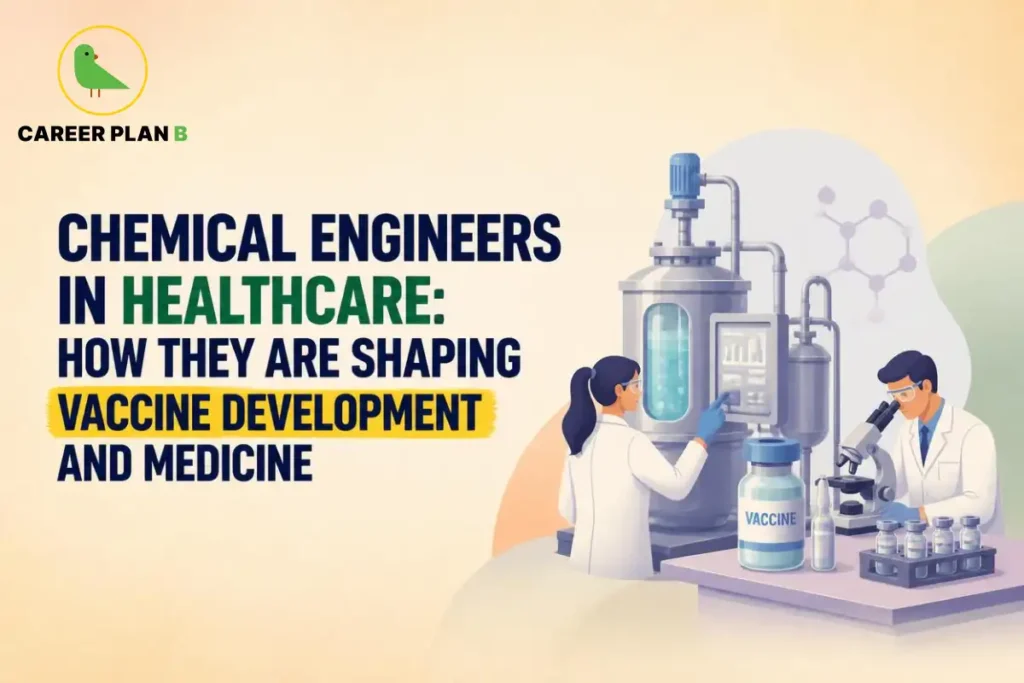
When India administered over two billion COVID-19 vaccine doses in record time, the world celebrated the achievement as a public health miracle. But behind every single dose, the fermentation tank that grew the viral antigen, the purification system that isolated it, the formulation process that stabilised it, and the fill-and-finish line that packaged it stood a chemical engineer.
Chemical engineers in healthcare are among the most consequential yet least publicly recognised contributors to modern medicine. They are the professionals who bridge the gap between a scientific discovery made in a laboratory and a life-saving medicine or vaccine that reaches billions of people at scale.
From designing the bioreactors that produce monoclonal antibodies to optimising the purification systems that extract active pharmaceutical ingredients, and from ensuring GMP compliance in vaccine manufacturing plants to developing the drug delivery systems that make medicines more effective, chemical engineers in healthcare are shaping the future of human health in ways that are profound and far-reaching.
This blog explores exactly how chemical engineers contribute to healthcare and vaccine development, the career opportunities this creates in India and globally, and why this intersection of engineering and medicine is one of the most exciting and impactful career spaces available to science students today.
What Is the Role of Chemical Engineers in Healthcare?
The role of chemical engineers in pharma and healthcare is far broader than most students realise. Chemical engineering principles, process design, scale-up, thermodynamics, fluid mechanics, and mass transfer are directly applicable to the most critical challenges in healthcare manufacturing.
Chemical engineers in the healthcare sector work across four primary domains:
1. Drug and Vaccine Manufacturing
Designing, optimising, and scaling up the industrial processes that produce medicines and vaccines from small-molecule drugs to complex biologics and live-attenuated vaccines.
2. Medical Device and Diagnostic Manufacturing
Engineering the materials, coatings, and production processes used in medical devices, diagnostic kits, and drug delivery systems like inhalers, transdermal patches, and implantable devices.
3. Bioprocess Engineering and Fermentation
Developing and managing the biological production systems bioreactors, fermenters, and cell culture systems that grow the microorganisms, cells, and viruses needed to produce biologics, biosimilars, and vaccines.
4. Quality, Regulatory Compliance, and Process Validation
Ensuring that every manufacturing process meets the stringent quality and safety standards required by national and international regulatory authorities is a domain that is growing rapidly as India’s pharma industry targets global markets.
How Chemical Engineers Contribute to Vaccine Development
Chemical engineering in vaccine development is perhaps the most vivid example of how this discipline contributes directly to saving human lives. The journey from a vaccine candidate discovered in a laboratory to a product administered to millions of people is an engineering challenge of extraordinary complexity, and chemical engineers lead it at every stage.
1. Bioreactor Design and Fermentation Scale-Up
Most vaccines are produced using biological systems: bacteria, yeast, insect cells, mammalian cells, or viral vectors grown in controlled bioreactors. Chemical engineers design these bioreactor systems, optimise growth conditions (temperature, pH, dissolved oxygen and nutrient feeding) and scale up from laboratory flasks holding a few litres to industrial bioreactors holding tens of thousands of litres.
2. Downstream Processing and Purification
Once the vaccine antigen or viral vector is produced in the bioreactor, it must be separated from thousands of other biological components: cell debris, proteins, DNA, and growth media. This downstream processing involves centrifugation, filtration, chromatography, and ultrafiltration all processes designed and optimised by bioprocess engineering and healthcare specialists.
3. Vaccine Formulation and Stability Engineering
A purified vaccine antigen must be formulated into a stable, safe, and effective final product. This involves adding adjuvants to boost immune response, stabilisers to prevent degradation, and preservatives where necessary and engineering the formulation to remain stable under storage and transport conditions that may include extreme temperatures and long supply chains.
4. Fill-and-Finish Manufacturing
The final stage of vaccine production, filling purified, formulated vaccine into vials or syringes under sterile conditions, is a highly engineered process that demands cleanroom design expertise, aseptic processing knowledge, and rigorous quality validation. Chemical engineers design and manage these critical fill-and-finish operations.
Case Study: India’s COVID-19 Vaccine Manufacturing Achievement
India’s ability to produce billions of COVID-19 vaccine doses through institutions like the Serum Institute of India and Bharat Biotech was fundamentally enabled by chemical and bioprocess engineering expertise. The scale-up of Oxford-AstraZeneca vaccine production at Serum Institute and the development of Covaxin by Bharat Biotech in collaboration with the Indian Council of Medical Research (ICMR) represented extraordinary feats of bioprocess engineering.
Chemical Engineers in Pharmaceutical and Biotech Manufacturing
Beyond vaccines, the role of chemical engineers in pharma manufacturing spans the entire spectrum of modern medicine.
API and Drug Formulation Manufacturing
Active Pharmaceutical Ingredients (APIs), the chemically active components of medicines, are produced through complex multi-step chemical synthesis or biotechnological processes. Chemical engineers design and optimise these synthesis routes, manage reactor conditions, and develop the separation and purification processes that produce pharmaceutical-grade APIs at commercial scale.
Drug manufacturing and chemical engineering are inseparable at this level; every tablet, capsule, injectable, and topical medicine requires process engineering expertise to manufacture consistently and safely at scale.
Biologics and Biosimilars Production
India is one of the world’s leading producers of biosimilars, biological medicines that are highly similar to already-approved reference biologics. The Department of Biotechnology (DBT) under the Government of India has invested significantly in building India’s biologics manufacturing capability through initiatives like the National Biopharma Mission.
Chemical engineers in biotechnology are central to this biosimilar revolution, designing the cell culture systems, purification trains, and analytical methods that ensure biosimilar products match the quality and efficacy of their reference medicines.
GMP Compliance and Process Validation
India’s pharmaceutical manufacturers are increasingly seeking US FDA, EMA, and WHO GMP approvals to access premium global markets. This approval process is deeply engineering-intensive, requiring detailed process validation, equipment qualification, and quality system documentation. The Central Drugs Standard Control Organisation (CDSCO) is India’s national regulatory authority for pharmaceuticals.
Key Employers in Healthcare for Chemical Engineers
Pharmaceutical bioprocessing careers in India span a wide range of organisations from global pharmaceutical giants to government research institutions and innovative biotech startups.
Top Private Sector Companies:
- Serum Institute of India, the world’s largest vaccine manufacturer by volume
- Biocon Limited India’s leading biologics and biosimilars company
- Sun Pharmaceutical Industries India’s largest pharmaceutical company
- Cipla Limited known for affordable generics and respiratory medicines
- Dr. Reddy’s Laboratories strong in APIs and complex generics
- Bharat Biotech: leading vaccine developer and manufacturer
- Lupin Pharmaceuticals’ significant presence in the US generic drug market
Government Research Institutions:
- Indian Council of Medical Research (ICMR): national body for biomedical research.
- The Council of Scientific and Industrial Research (CSIR) has multiple laboratories active in pharmaceutical and bioprocess research.
- Department of Biotechnology (DBT) funds and coordinates biotechnology research and manufacturing initiatives.
Global Opportunities:
Chemical engineers with chemical engineering careers and life sciences expertise are in high demand globally, particularly in the USA, UK, Ireland, Singapore, and Switzerland in roles spanning biologics manufacturing, vaccine process development, regulatory affairs, and clinical supply chain management.
Career Paths and Job Roles in Healthcare for Chemical Engineers
The chemical engineering career in life sciences offers a rich and diverse range of specialised roles:
| Job Role | Primary Responsibility |
|---|---|
| Bioprocess Engineer | Designing and optimising bioreactor and fermentation systems |
| Vaccine Production Engineer | Managing large-scale vaccine manufacturing operations |
| Formulation Development Scientist | Developing stable drug and vaccine formulations |
| Downstream Processing Engineer | Designing purification and separation systems for biologics |
| Validation Engineer | Executing equipment and process qualification protocols |
| Regulatory Affairs Specialist | Managing GMP compliance and drug approval submissions |
| Quality Assurance Engineer | Maintaining manufacturing quality systems and audits |
| R&D Process Development Scientist | Scaling up laboratory processes to commercial production |
Salary Expectations in India:
- Entry Level (0–3 years): ₹3.5 – ₹6.5 LPA
- Mid Level (3–8 years): ₹8 – ₹16 LPA
- Senior Level (8+ years): ₹18 – ₹35 LPA
- Global roles in biologics and vaccine engineering, particularly in the USA and Europe command significantly higher compensation packages
Higher Studies Options:
- M.Tech in Bioprocess / Pharmaceutical Engineering via GATE: Top institutions include IIT Bombay, IIT Delhi, IIT Kharagpur, and IISc Bangalore.
- M.S. or Ph.D. abroad in chemical engineering, bioprocess engineering, or pharmaceutical sciences
- MBA in Pharmaceutical Management or Healthcare Operations for those targeting leadership roles
Why Healthcare Is a Growing Sector for Chemical Engineers
The chemical engineering career in life sciences has never offered more opportunity than it does today, driven by powerful structural trends in India and globally.
India’s Biologics and Biosimilars Boom
India is positioning itself as a global hub for biosimilar manufacturing. The government’s Production Linked Incentive (PLI) Scheme for Pharmaceuticals, specifically incentivises the production of complex biologics and high-value medicines, creating sustained demand for bioprocess and pharmaceutical engineering expertise.
Expanding Public Healthcare Infrastructure
India’s Ayushman Bharat programme, is expanding healthcare access to hundreds of millions of Indians, driving increased demand for affordable, domestically manufactured medicines and vaccines.
Global Pandemic Preparedness Investment
Post-COVID, governments worldwide are investing in vaccine manufacturing infrastructure and pandemic preparedness capabilities. This investment is creating significant new demand for chemical engineers in biotechnology and vaccine manufacturing roles across multiple countries.
Ageing Global Population
The global ageing population is driving increased demand for complex biologics, monoclonal antibodies, gene therapies, and targeted cancer treatments that require sophisticated bioprocess engineering to manufacture. This demographic trend will sustain strong demand for pharmaceutical bioprocessing careers well into the 2030s and beyond.
Have Any Doubts?
Skills Required to Succeed in Healthcare Chemical Engineering
Building a successful career at the intersection of drug manufacturing and chemical engineering requires a specific combination of technical knowledge and professional competencies.
Technical Skills:
- Bioreactor design and bioprocess scale-up
- Downstream processing: chromatography, ultrafiltration, centrifugation
- GMP, GDP, and GLP regulatory frameworks as governed by CDSCO
- Process validation IQ, OQ, PQ protocols
- Aseptic processing and cleanroom engineering
- Bioprocess simulation tools: SuperPro Designer, MATLAB, DeltaV
Professional and Soft Skills:
- Meticulous attention to detail in healthcare manufacturing; errors have direct patient safety consequences
- Strong technical documentation and scientific writing
- Cross-functional collaboration with pharmacists, microbiologists, and regulatory teams
- Analytical thinking and structured problem-solving
Emerging Competencies:
- Continuous bioprocessing and single-use bioreactor technology
- AI-driven process analytical technology (PAT) in pharmaceutical manufacturing
- Cell and gene therapy manufacturing fundamentals
- Knowledge of US FDA, EMA, and WHO GMP requirements for global market access
How Career Plan B Helps
Choosing a career at the intersection of chemical engineering in healthcare and life sciences requires deep self-awareness, understanding whether your aptitude, interests, and long-term goals align with the unique demands of pharmaceutical and bioprocess engineering. Career Plan B offers personalised career counselling for science and engineering students, PsycheIntel career assessment tests to evaluate your fit for a chemical engineering career in life sciences roles, and structured career roadmapping that helps you identify the right specialisation, target institutions, and build a clear, confident path toward a rewarding healthcare engineering career. Their admission and academic profile guidance ensures you make strategic decisions from college selection and GATE preparation to higher studies planning and industry entry.
For Latest Information
Frequently Asked Questions (FAQs)
1. What do chemical engineers do in vaccine development?
Chemical engineering in vaccine development spans the entire manufacturing process from bioreactor design and fermentation scale-up to purification, formulation, and fill-and-finish operations. Chemical engineers ensure that vaccine production processes are efficient, consistent, and compliant with international quality and safety standards.
2. Which companies in India hire chemical engineers for healthcare roles?
Top employers include the Serum Institute of India, Biocon, Sun Pharma, Cipla, Dr. Reddy’s Laboratories, Bharat Biotech, and Lupin. Government research institutions like ICMR, CSIR, and DBT-funded organisations also offer significant opportunities for chemical engineers in healthcare and biotech research roles.
3. Is bioprocess engineering the same as chemical engineering?
Bioprocess engineering in healthcare is a specialisation within chemical engineering that focuses specifically on biological production systems: fermentation, cell culture, enzyme engineering, and downstream processing of biological products. All bioprocess engineers have a chemical engineering foundation, but not all chemical engineers specialise in bioprocessing.
4. What higher studies options are best for chemical engineers interested in healthcare?
An M.Tech. in Bioprocess Engineering or Pharmaceutical Engineering through GATE is the most common postgraduate pathway in India. Internationally, M.S. or Ph.D. programmes in chemical engineering with a biotechnology or pharmaceutical focus at universities in the USA, UK, Ireland, or Singapore are highly valued by global healthcare employers.
5. How has COVID-19 changed career opportunities for chemical engineers in healthcare?
The pandemic dramatically accelerated investment in vaccine manufacturing infrastructure, biologics production capacity, and pharmaceutical supply chain resilience globally and in India. This has created sustained new demand for chemical engineers with bioprocess, vaccine manufacturing, and GMP compliance expertise that continues well beyond the pandemic period.
Conclusion
The contribution of chemical engineers in healthcare to human wellbeing is immense, and it continues to grow every year. They play a vital role in developing vaccines, manufacturing biologic medicines, producing biosimilars, and supporting next-generation gene therapies. Their work helps make life-saving treatments safer, more effective, and accessible to millions of people worldwide.
India’s position as the world’s pharmacy, along with its growing focus on biologics, biosimilars, and vaccine manufacturing, has created exciting opportunities for chemical engineers. As a result, chemical engineering in vaccine development and healthcare has become one of the most impactful and future-ready career paths for engineering students.
If you are passionate about science, manufacturing, and improving human health, this field offers a rewarding career with real-world impact. With the right skills and guidance, you can help shape the future of healthcare while building a successful engineering career.
Ready to explore whether a chemical engineering career in healthcare is right for you? Visit Career Plan B and take a personalised career assessment to start building your path toward a life-changing career in healthcare engineering.