Team6 · July 9, 2026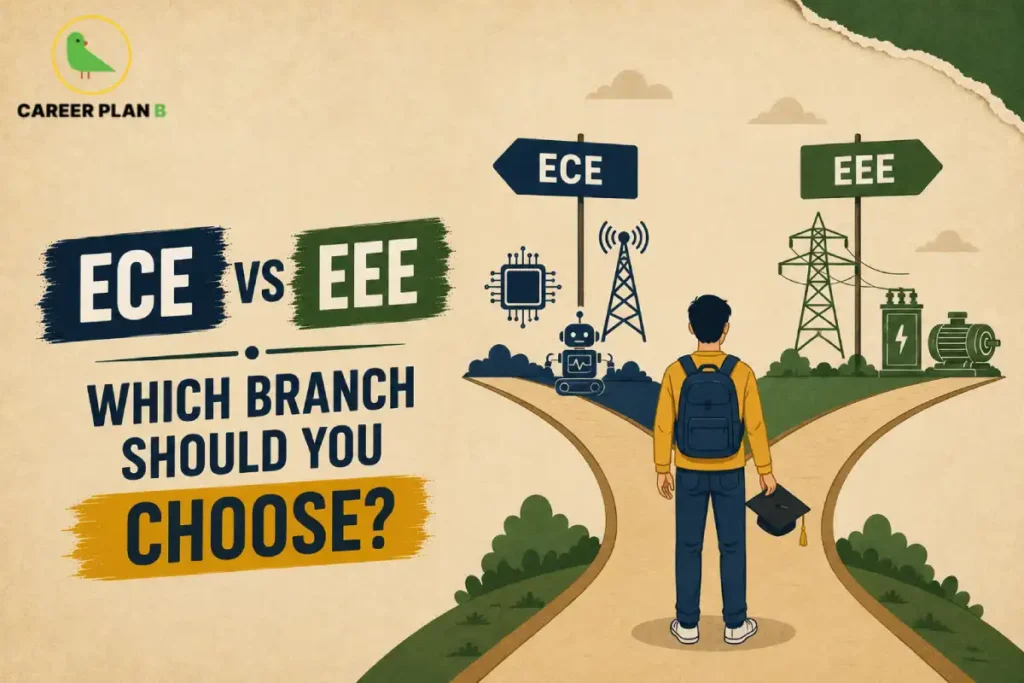
Introduction
You just cleared your JEE or state-level entrance exam. Congratulations! But now comes a question that stumps thousands of engineering aspirants every year: ECE vs EEE – which one should I pick?
Both branches sound similar. Both deal with electronics. Both promise solid career paths. And yet, they are fundamentally different in focus, scope, and the kind of professional they shape you into.
If you are standing at this crossroads right now, you are in the right place. This blog breaks down everything you need to know about ECE vs EEE, from syllabus and skills to career scope, salary, and who each branch is truly meant for so you can walk into that counselling form with full confidence.
What Is ECE: Electronics and Communication Engineering?
Electronics and Communication Engineering (ECE) is a branch that sits at the intersection of electronics, signals, and communication systems. It focuses on designing, developing, and testing electronic circuits, devices, and communication networks.
Core subjects in ECE include:
- Analog and Digital Electronics
- Signals and Systems
- VLSI Design
- Embedded Systems
- Wireless Communication and Telecom Networks
- Microprocessors and Microcontrollers
- Digital Signal Processing (DSP)
ECE students typically end up working with technologies like 5G networks, semiconductor chips, satellite communication, the Internet of Things (IoT), and consumer electronics. It is a branch that leans heavily toward communication, computing, and miniaturised electronic systems.
What Is EEE: Electrical and Electronics Engineering?
Electrical and Electronics Engineering (EEE) is a broader branch that covers both heavy electrical systems and electronic circuits. Think of it as the branch that powers the world literally.
Core subjects in EEE include:
- Electric Circuits and Networks
- Power Systems and Power Electronics
- Electrical Machines
- Control Systems
- High Voltage Engineering
- Industrial Drives and Automation
- Renewable Energy Systems
EEE students often work in power generation, transmission, energy management, industrial automation, and core electrical infrastructure. It is the branch behind every power grid, electric vehicle, and large-scale industrial plant.
ECE vs EEE: Key Differences at a Glance
Which Has a Better Career Scope: ECE or EEE?
This is the heart of the engineering branch selection debate, and honestly, both branches offer excellent career scope just in different directions.
Career Scope in ECE
The career scope in ECE is vast, especially in today’s tech-driven world. ECE graduates are in demand across the following:
- Telecom companies like Airtel, Jio, and BSNL
- Semiconductor and VLSI firms like Intel, Qualcomm, and Texas Instruments
- IT and software companies like Infosys, TCS, and Wipro (for software roles)
- Defence and Space organisations like DRDO and ISRO
- Consumer electronics companies and IoT startups
The rise of 5G, AI chips, autonomous vehicles, and smart devices means ECE professionals will only grow more valuable over time.
Career Scope in EEE
The career scope in EEE is equally strong, particularly in the government and core industrial sector. EEE graduates can explore:
- Public Sector Undertakings (PSUs) like NTPC, BHEL, and Power Grid Corporation of India
- Renewable energy companies working on solar and wind power
- Industrial automation and robotics firms
- Railway and Defence sectors via UPSC IES (Engineering Services Examination)
- Electric vehicle (EV) companies, which are booming in India right now
EEE is especially strong for students targeting government jobs and PSU recruitments through GATE, which is conducted by IITs and IISc under the Ministry of Education.
ECE vs EEE: Salary and Job Opportunities
When it comes to ECE vs EEE salary and jobs, here is a realistic snapshot for fresh graduates in India:
| Feature | ECE (Electronics & Comm.) | EE (Electrical Engineering) |
|---|---|---|
| Avg. Entry Salary | ₹5 – ₹12 LPA | ₹4.5 – ₹9 LPA |
| Top Private Pay | ₹15 – ₹40+ LPA (VLSI, FAANG) | ₹10 – ₹25 LPA (Automation, EV) |
| PSU Pay (GATE) | ₹12 – ₹25 LPA (CTC) | ₹12 – ₹25 LPA (CTC) |
| Higher Studies | Very strong (AI/ML, VLSI) | Strong (Smart Grids, Renewables) |
| Core Focus | Semiconductors, 5G, IoT, Embedded | EVs, Power Grids, Renewables |
ECE tends to offer higher salaries in the private tech sector, especially for VLSI and embedded systems roles. EEE, on the other hand, offers exceptional stability and pay through PSU and government roles.
You can check official PSU recruitment notifications directly on AICTE India or individual PSU websites for updated openings.
Have Any Doubts?
Who Should Choose ECE? Who Should Choose EEE?
Choosing the best engineering branch for students is never about what sounds cooler; it is about where your strengths and interests truly lie.
Choose ECE if you:
- Are fascinated by gadgets, mobile technology, and communication networks
- Enjoy programming and want to combine it with hardware
- Are interested in AI, IoT, semiconductors, or space technology
- Want to explore global opportunities in the tech industry
Choose EEE if you:
- Are drawn to power systems, energy, and large-scale infrastructure
- Want a stable government or PSU career
- Are interested in electric vehicles or renewable energy
- Prefer working with physical electrical systems over software-heavy roles
Still unsure? That is completely normal, and that is exactly where the right guidance can change everything.
How Career Plan B Helps
Choosing between ECE and EEE is not just about comparing subjects; it is about understanding yourself first. Career Plan B helps students make this decision with clarity through personalised career counselling, psychometric and career assessment tests, and career roadmapping sessions. Their experts guide you based on your aptitude, interests, and long-term goals, so your branch selection is rooted in self-awareness, not guesswork.
For Latest Information
Frequently Asked Questions (FAQs)
Q1. Is ECE better than EEE for getting into IT companies?
Yes, ECE graduates tend to have a slight edge in IT company placements due to their exposure to programming and digital systems. However, EEE graduates can also get into IT roles with the right skill set.
Q2. Which branch is better for GATE and PSU jobs?
Both are eligible for GATE, but EEE has a broader presence in PSU recruitments, especially in the power and energy sector. ECE is strong for PSUs like ISRO, DRDO, and BEL.
Q3. Can ECE students work in the power sector?
ECE students can work in specific roles within the power sector, such as control systems and automation, but core electrical roles are better suited for EEE graduates.
Q4. Which branch has more scope abroad, ECE or EEE?
ECE has slightly more international demand, particularly in the US and Germany, for roles in semiconductors, VLSI, and communication systems. EEE is valued in energy and industrial sectors globally.
Q5. Does AICTE approve both ECE and EEE programmes equally?
Yes, both branches are approved and regulated by AICTE (All India Council for Technical Education), ensuring standardised curriculum and institutional quality across India.
Conclusion
At the end of the day, the ECE vs EEE debate does not have a universal winner because the best branch is the one that aligns with your interests, aptitude, and career goals.
If you love communication tech, software integration, and the fast-moving world of gadgets and networks, ECE is your calling. If you are passionate about power, energy, and building the infrastructure that runs industries and cities, EEE is where you belong.
Do not make this decision based on what your friends are choosing or what ranks seem popular. Make it based on who you are and where you want to be in 10 years.
Need help figuring that out? Visit Career Plan B and take the first step toward a career that is truly built for you.