Team6 · November 2, 2026
Introduction
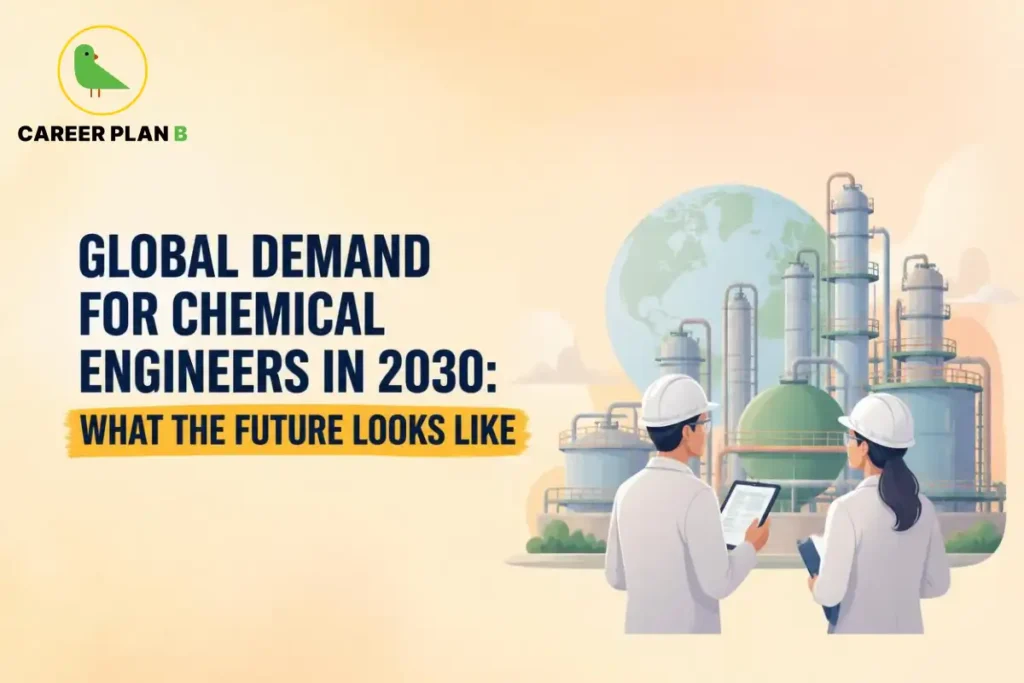
By 2030, the world will be in the middle of the most significant industrial transformation in modern history. The energy transition from fossil fuels to renewables, the global push toward net-zero emissions, the rise of biologics and advanced pharmaceuticals, and the acceleration of sustainable manufacturing are all converging at the same moment, and they all need one type of engineer more than almost any other.
The global demand for chemical engineers in 2030 is not just growing; it is diversifying across sectors, geographies, and technological frontiers that did not even exist a decade ago. From designing green hydrogen plants in Germany to optimising biosimilar manufacturing in Singapore, from building carbon capture systems in Canada to developing sustainable plastics in the UAE, chemical engineers are at the centre of the industries shaping tomorrow’s world.
This blog explores what the global demand for chemical engineers in 2030 truly looks like: which countries are hiring, which sectors are growing fastest, what salaries look like worldwide, and how Indian chemical engineering students and graduates can position themselves to compete and succeed on the global stage.
Why Chemical Engineers Will Be in High Global Demand by 2030
The future of chemical engineering globally is being driven by a powerful convergence of megatrends, each of which places chemical engineers at the heart of the solution.
The Energy Transition
The world is moving away from fossil fuels toward renewable energy sources: solar, wind, hydrogen, and biofuels. But renewable energy is not just about putting up solar panels. It requires chemical engineers to design hydrogen production systems, develop better battery electrolytes, create fuel cells, and build the industrial infrastructure for a low-carbon economy.
Sustainability and Net-Zero Mandates
Governments across the world from the European Union to India to the USA have committed to ambitious carbon reduction targets. Meeting these targets requires cleaner industrial processes, carbon capture technologies, sustainable materials, and circular economy systems. These are all domains where chemical engineering expertise is irreplaceable.
Advanced Manufacturing and Biotechnology
The rise of personalised medicine, biologics, gene therapies, and advanced materials is creating entirely new manufacturing paradigms. Chemical engineers with expertise in bioprocess engineering, polymer science, and nanomaterials are in exceptional demand across the pharmaceutical, semiconductor, and advanced materials sectors.
Food and Water Security
By 2030, the global population will approach 8.5 billion people. Feeding and providing clean water to this population at scale requires chemical engineers working in food processing technology, water treatment systems, and agricultural chemical innovation.
These megatrends collectively ensure that chemical engineering career opportunities abroad will be among the most robust and diverse of any engineering discipline through 2030 and beyond.
Top Countries Hiring Chemical Engineers in 2030
1. United States of America
The USA remains the world’s largest employer of chemical engineers across pharmaceuticals, petrochemicals, semiconductor manufacturing, environmental engineering, and clean energy.
The U.S. Bureau of Labour Statistics projects steady employment growth for chemical engineers, with particularly strong demand in biotechnology, environmental services, and advanced manufacturing.
The average annual salary for chemical engineers in the USA ranges from USD 85,000 to USD 140,000, with senior professionals in specialised sectors earning significantly more.
2. Germany
Germany is Europe’s industrial powerhouse and home to the world’s leading speciality chemicals sector, including global giants like BASF, Bayer, Evonik, and Lanxess. The country’s aggressive green hydrogen strategy and commitment to carbon neutrality by 2045 are creating massive new demand for chemical engineers in clean energy and sustainable chemistry.
The German Federal Employment Agency (Bundesagentur für Arbeit). Chemical engineers in Germany earn between EUR 55,000 – EUR 95,000 annually.
3. Canada
Canada’s vast energy resources oil sands, natural gas, and hydropower combined with its growing clean technology sector make it a strong destination for chemical engineering jobs worldwide. Environmental engineering, water treatment, and LNG processing are particularly active areas.
Immigration pathways for skilled engineers are managed through Immigration, Refugees and Citizenship Canada (IRCC). Chemical engineers in Canada earn between CAD 70,000 – CAD 115,000 annually.
4. United Arab Emirates and Saudi Arabia
The Gulf region is undergoing a dramatic economic transformation, diversifying away from pure oil dependence toward petrochemicals, speciality chemicals, clean energy, and advanced manufacturing. Saudi Arabia’s Vision 2030 plan, overseen by the Vision 2030 Secretariat, outlines this transformation. Chemical engineers are central to this industrial diversification agenda.
Average salaries for chemical engineers in the UAE range from AED 120,000 to AED 250,000 annually, often with additional tax-free benefits.
5. Australia
Australia’s mining and minerals processing sector, LNG industry, and growing environmental engineering market make it a strong destination for chemical engineers, particularly those with expertise in hydrometallurgy, water treatment, and process engineering. The Australian Government’s Department of Employment and Workplace Relations tracks in-demand occupations. Chemical engineers in Australia earn between AUD 85,000 – AUD 130,000 annually.
6. Singapore and South Korea
Both countries are investing heavily in advanced semiconductor manufacturing, speciality chemicals, and pharmaceutical bioprocessing sectors that require chemical engineering expertise in precision process design, cleanroom engineering, and materials science. These are rapidly emerging as top destinations for in-demand engineering careers in 2030.
Emerging Sectors Driving Global Demand for Chemical Engineers
The chemical engineering emerging sectors that will define demand through 2030 go well beyond traditional oil, gas, and pharmaceuticals.
1. Green Hydrogen Production
Green hydrogen produced by electrolysis of water using renewable electricity is considered the fuel of the future for heavy industry, transportation, and energy storage. Chemical engineers are essential for designing electrolysers, hydrogen purification systems, storage infrastructure, and fuel cell technology. The International Energy Agency (IEA) tracks global hydrogen developments.
2. Carbon Capture, Utilisation and Storage (CCUS)
Capturing CO₂ from industrial emissions and either storing it underground or converting it into useful products is a critical technology for meeting global net-zero targets. Chemical engineers design the absorption systems, compression units, and conversion reactors that make CCUS possible at an industrial scale.
3. Biofuels and Sustainable Aviation Fuel (SAF)
The aviation sector responsible for approximately 2.5% of global CO₂ emissions is investing heavily in sustainable aviation fuel made from biological feedstocks. Chemical engineers with bioprocess and fermentation expertise are in high demand across this rapidly growing sector.
4. Advanced Semiconductor Manufacturing
Semiconductor fabrication relies heavily on chemical engineering principles: chemical vapour deposition, etching processes, photolithography chemistry, and ultra-pure materials handling. As the global chip shortage drives massive semiconductor manufacturing investment, chemical engineers are finding exciting new opportunities in this high-technology sector.
5. Circular Economy and Sustainable Materials
Designing plastics that are genuinely biodegradable, developing chemical recycling processes for waste polymers, and creating bio-based alternatives to petroleum-derived materials are all areas where chemical engineering scope in 2030 is expanding significantly.
6. Pharmaceutical Biologics and Continuous Manufacturing
The shift from batch to continuous pharmaceutical manufacturing, combined with the biologics revolution, is creating sustained global demand for chemical engineers with bioprocess and pharmaceutical process engineering expertise.
Chemical Engineering Salary Worldwide: A Comparison
Here is a snapshot of chemical engineering salary worldwide across major hiring countries:
| Country | Entry Level | Mid Level | Senior Level |
|---|---|---|---|
| USA | USD 65,000 – 85,000 | USD 90,000 – 120,000 | USD 130,000 – 180,000 |
| Germany | EUR 45,000 – 58,000 | EUR 62,000 – 85,000 | EUR 90,000 – 120,000 |
| Canada | CAD 58,000 – 75,000 | CAD 80,000 – 105,000 | CAD 115,000 – 150,000 |
| UAE | AED 90,000 – 130,000 | AED 150,000 – 200,000 | AED 220,000 – 300,000 |
| Australia | AUD 65,000 – 85,000 | AUD 90,000 – 115,000 | AUD 125,000 – 160,000 |
| India | ₹3.5 – 6 LPA | ₹8 – 16 LPA | ₹18 – 35 LPA |
These figures highlight a significant salary premium for chemical engineers who build global careers, reinforcing why investing in international education, professional certifications, and global-readiness skills pays substantial long-term dividends.
Have Any Doubts?
How Indian Chemical Engineers Can Go Global
India produces one of the largest pools of chemical engineering graduates in the world, but competing successfully for chemical engineer jobs worldwide requires deliberate preparation and strategic positioning.
1. Higher Studies Abroad via GRE
A master’s or Ph.D. from a reputed university in the USA, Germany, Canada, or Australia dramatically improves global employability. Strong GRE scores, research publications, and internship experience are essential for competitive applications to top programmes.
2. GATE for Indian Postgraduate Foundation
For students planning to first complete an M.Tech in India before going abroad, GATE remains the essential gateway.
3. Professional Certifications
Global professional bodies like the Institution of Chemical Engineers (IChemE) and the American Institute of Chemical Engineers (AIChE) offer internationally recognised credentials that significantly enhance a chemical engineer’s global profile and employability.
4. Specialisation in High-Demand Areas
Developing expertise in green hydrogen, carbon capture, pharmaceutical bioprocessing, or semiconductor process chemistry rather than remaining a generalist dramatically improves competitiveness for global roles.
5. Language Skills
For Germany and other European destinations, basic proficiency in the local language alongside English significantly improves both employability and quality of life abroad.
Skills That Will Define Chemical Engineers in 2030
Building a globally competitive chemical engineering career opportunities abroad profile requires mastery of both foundational and emerging competencies.
Technical Skills:
- Process simulation ASPEN Plus, HYSYS, MATLAB, COMSOL
- Bioprocess and fermentation engineering
- Green chemistry and life cycle assessment
- Carbon capture and hydrogen system design
- Semiconductor process chemistry fundamentals
Professional Skills:
- Cross-cultural communication and global team collaboration
- Technical project management and cost engineering
- Scientific writing and research publication
- Data analytics and AI-driven process optimisation
Emerging Competencies:
- Digital twin technology for industrial process design
- Computational fluid dynamics (CFD) for reactor and equipment design
- Knowledge of international GMP, ISO, and environmental standards
- Sustainability reporting and ESG (Environmental, Social, Governance) frameworks
How Career Plan B Helps
Navigating the path toward a global chemical engineering career requires more than academic preparation; it requires a clear understanding of your strengths, the right specialisation choice, and a well-planned strategy for higher studies or international job applications. Career Plan B offers personalised career counselling for engineering students, PsycheIntel career assessment tests to identify your aptitude and ideal specialisation within chemical engineering, and structured career roadmapping that helps you build a concrete plan toward global opportunities. Whether you are preparing for GATE, planning an MS abroad, or exploring chemical engineering career opportunities abroad, Career Plan B’s admission and academic profile guidance ensures you take the right steps at the right time toward a truly world-class career.
For Latest Information
Frequently Asked Questions (FAQs)
1. Which country has the highest demand for chemical engineers in 2030?
The USA, Germany, Canada, the UAE, and Australia are projected to have the highest demand for chemical engineers through 2030. Each country has strong demand in different sectors: the USA in pharma and semiconductors; Germany in speciality chemicals and green hydrogen; Canada in energy and environmental engineering; and the UAE in petrochemicals and clean energy transition.
2. Which sectors will create the most chemical engineering jobs globally by 2030?
The chemical engineering emerging sectors expected to create the most jobs by 2030 include green hydrogen production, carbon capture and storage, biofuels and sustainable aviation fuel, advanced semiconductor manufacturing, pharmaceutical biologics, and circular economy and sustainable materials development.
3. How can Indian chemical engineers compete for global jobs?
Indian chemical engineers can improve global competitiveness through higher studies abroad (MS or Ph.D.), professional certifications from IChemE or AIChE, specialisation in high-demand areas like green hydrogen or bioprocessing, strong GRE and GATE scores, and practical internship or research experience in internationally recognised institutions.
4. Is chemical engineering future-proof as a career choice?
Absolutely. The future of chemical engineering globally is exceptionally strong. The energy transition, sustainability mandates, pharmaceutical innovation, and advanced manufacturing all depend on chemical engineering expertise, making it one of the most resilient, adaptable, and genuinely future-proof engineering disciplines available today.
Conclusion
The global demand for chemical engineers in 2030 is not a future projection; it is already being shaped today by the energy transition, sustainability mandates, pharmaceutical innovation, and the rise of advanced manufacturing across every major economy in the world.
For Indian chemical engineering students and graduates, this global momentum represents an extraordinary opportunity to build careers that are not just financially rewarding but genuinely impactful on a world scale. The countries are hiring, the sectors are growing, and the salaries are compelling.
But seizing these opportunities requires deliberate preparation, the right specialisation, the right higher studies strategy, the right professional credentials, and the right career roadmap built around your individual strengths and goals.
The chemical engineering scope in 2030 is vast. The question is whether you are ready to claim your place in it.
Ready to build a globally competitive chemical engineering career? Visit Career Plan B today and take a personalised career assessment to start mapping your path to the world stage.