Deepti · August 12, 2026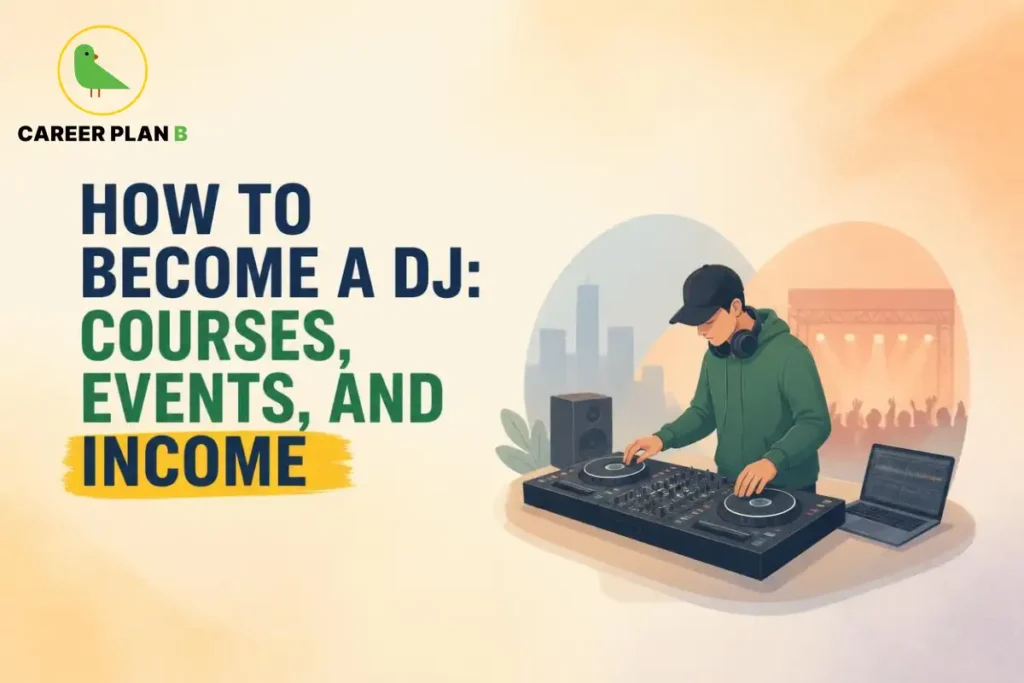
Introduction
How to become a DJ is a question a surprising number of music-obsessed students ask quietly, often assuming there’s no “real” path into it beyond raw talent and luck. In reality, DJing has grown into a structured, if still informally regulated, career within India’s broader entertainment and events industry — supported by skilling initiatives, a genuine club and festival circuit, and increasingly, formal audio engineering education. This blog breaks down the actual training routes, how DJs earn money, and what a realistic career trajectory looks like.
Is DJing a Formally Regulated Career in India?
To be upfront: there is no government degree or licensing requirement specifically for DJs in India, similar to other performance-based entertainment careers. What does exist is a structured Media and Entertainment Sector Skill Council (MESC), set up under the National Skill Development Corporation (NSDC), which develops skilling standards for various roles across India’s media and entertainment industry, including audio and sound-related job roles. While DJing itself isn’t always a distinct NSQF job role, sound engineering and audio production — skills that directly support a DJ career — increasingly are.
Training Pathways Into DJing
Private DJ academies and audio production schools — The most common entry point, offering hands-on training in mixing, beatmatching, music production software, and equipment handling, typically over a few weeks to a few months.
Sound engineering diploma/certificate programmes — A more technical route, covering audio production, mixing, and music technology in greater depth, useful for DJs who also want to produce original music or work in studio production.
MESC/NSDC-aligned audio and sound courses — Where available, these carry a government-linked skilling credential under the broader Media and Entertainment Sector Skill Council framework, adding a layer of credibility beyond a purely private certificate.
Self-taught practice with gig experience — Many working DJs, especially in the electronic and hip-hop scenes, build skill through home practice and progressively bigger gigs — starting with small bars, college fests, and private parties before larger clubs and festivals.
DJ Training Routes: Quick Comparison
| Route | Focus | Typical Duration | Best For |
|---|---|---|---|
| Private DJ academy | Mixing, beatmatching, live performance skills | Weeks to a few months | Fast, practical entry into performance-ready skills |
| Sound engineering diploma | Audio production, mixing, music technology | 6 months to 1 year | DJs who also want to produce original music |
| MESC/NSDC-aligned audio courses | Government-linked skilling standards in audio/sound roles | Varies | Building a more formally recognised skilling credential |
| Self-taught + gig experience | Real performance exposure, audience reading | Ongoing, builds over years | Highly self-motivated learners building a live portfolio |
Core Skills Beyond Mixing Music
- Music curation and genre knowledge — understanding what a specific crowd, venue, or event wants is often more valuable than technical mixing skill alone
- Reading a live audience — adjusting energy and song choice in real time based on crowd response
- Basic music production — many successful DJs also produce original tracks or remixes, which meaningfully boosts bookings and recognition
- Equipment and technical troubleshooting — controllers, mixers, and venue sound systems vary, and DJs are expected to adapt quickly
- Networking and self-promotion — like most performance careers, consistent bookings depend heavily on relationships with club owners, event organisers, and other artists
For Personalized Guidance
Where DJs Actually Work and Earn
Clubs and lounges — A steady, if modest-paying, entry point for new DJs building a local reputation, especially in metro nightlife circuits.
Weddings and private events — A significant and often lucrative segment in India, given the scale of Indian wedding celebrations, though it demands a different, more crowd-pleasing repertoire than club sets.
Music festivals — The most visible, career-defining opportunities, typically reserved for DJs who’ve built a substantial reputation, though festival line-ups increasingly include rising local talent slots too.
Brand and corporate events — Corporate parties, product launches, and brand activations offer another reliable, professional booking segment.
Streaming and digital content — Livestreamed sets and digital music releases have become an increasingly important way for DJs to build audiences beyond their local circuit, sometimes leading to bookings in entirely new cities or countries.
Realistic Income Expectations
Entry-level DJs, particularly those relying on small club or bar gigs, typically earn modestly per event and often supplement income through weddings and private parties, which tend to pay considerably better per booking. Income scales meaningfully with reputation — established festival-circuit DJs and those with a strong original production catalogue can command significantly higher fees, but this level of income typically arrives only after several years of consistent, visible work. As with most performance careers, treat the first few years as reputation-building rather than a stable salary phase.
How Career Plan B Helps
DJing rewards a specific mix of musical instinct, technical skill, and business savvy, and figuring out whether to prioritise a fast-track academy, a deeper sound engineering diploma, or a self-taught gig-first approach depends on your specific goals and resources. Career Plan B uses Psycheintel and Career Assessment Tests to help assess whether your temperament suits an irregular-hours, performance-and-networking-driven career like DJing. Our Personalised Career Counselling helps you evaluate specific academies and sound engineering programmes objectively, and Career Roadmapping lays out a realistic multi-year plan — from first small gigs to festival-level bookings — so you’re building toward something concrete rather than performing without direction.
Get In Touch With Us
FAQs
Q1. Do I need a formal degree to become a DJ in India?
No, formal degree is required. Training happens through private DJ academies, sound engineering diplomas, MESC/NSDC-aligned audio courses, or self-taught practice combined with gig experience.
Q2. Is sound engineering training necessary, or can I just learn to mix?
Not strictly necessary, but sound engineering knowledge helps significantly if you also want to produce original music, which meaningfully strengthens most DJs’ long-term career prospects.
Q3. What’s the fastest way to start getting paid gigs?
Starting with smaller venues, college fests, and private parties while building a visible social media presence is typically the fastest realistic route to your first paid bookings.
Q4. Are weddings a good income source for DJs in India?
Yes — India’s wedding industry is a significant and often well-paying booking segment for DJs, though it requires a broader, more crowd-pleasing music repertoire than club sets.
Q5. Is there a government-recognised certification for DJs?
Not specifically for DJing itself, though MESC/NSDC-aligned audio and sound engineering courses under the Media and Entertainment Sector Skill Council framework offer a government-linked credential for closely related skills.
Q6. How long does it typically take to build a stable income as a DJ?
This varies widely, but most DJs describe the first two to three years as primarily reputation-building, with more stable and higher income arriving only after consistent, visible bookings accumulate.
Conclusion
How to become a DJ ultimately comes down to combining genuine musical instinct with deliberate skill-building — whether through a fast-track academy, a deeper sound engineering education, or self-taught practice backed by real gig experience. Income and opportunity scale steadily with reputation, so patience and consistent, visible performance matter just as much as raw technical mixing ability. If you’re serious about this path, treating it as both a craft and a small business from day one gives you the best shot at long-term success.