Deepti · August 12, 2026
Introduction
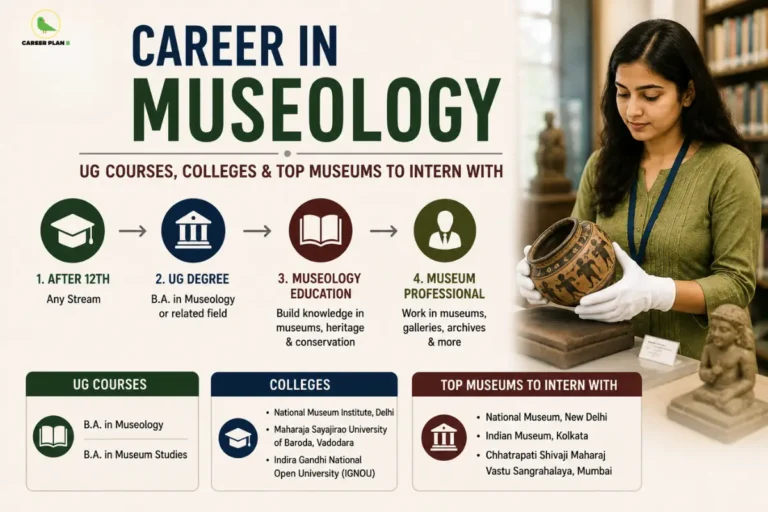
The scope of museology is genuinely underexplored by students, largely because it’s such an unfamiliar field compared to more commonly discussed arts career paths — yet India’s museum and heritage sector is substantial, with well over a thousand museums ranging from central government institutions to state, district, and private collections. If you’re drawn to history, art, archaeology, and the idea of preserving culture for future generations, museology is a legitimate, structured academic and career path worth understanding properly.
The Scope of Museology: What This Field Actually Is
Museology, or museum studies, is the academic discipline concerned with the theory and practice of running museums — collection management, conservation, exhibition design, documentation, public education, and museum administration. It sits at the intersection of history, art history, archaeology, and increasingly, management and public communication skills, since modern museums need to actively engage visitors, not just house objects.
Museology Courses India Currently Offers
Museology courses India-wide are offered by a specific, relatively small set of specialised institutions rather than widely across general universities:
| Institution | Course Offered | Level |
|---|---|---|
| National Museum Institute of History of Art, Conservation and Museology, New Delhi | M.A. in Museology (with History of Art, Conservation specialisations) | Postgraduate |
| Indira Gandhi National Centre for the Arts, New Delhi | PG Diploma in Applied Museology (PGDAM) | Postgraduate Diploma |
| Aligarh Muslim University | Museology Programmes | Postgraduate |
| Banaras Hindu University | Museology-linked programmes (via PET entrance) | Postgraduate |
| Deccan College, Pune | PG Diploma in Museology | Postgraduate Diploma |
| Chhatrapati Shivaji Maharaj Vastu Sangrahalaya (CSMVS), Mumbai | PG Diploma in Museology & Conservation | Postgraduate Diploma |
Most museology programmes are offered at the postgraduate level and require a bachelor’s degree in a relevant field such as History, Archaeology, Art History, or Fine Arts. Admission usually involves an entrance test and, in some cases, a personal interview.
Building Toward Museology From Class 12
Since most museology courses are postgraduate level, your Class 12 and undergraduate choices should build the right foundation. A humanities stream with History, and an undergraduate degree in History, Archaeology, Art History, Fine Arts, or Sanskrit, gives you the strongest entry point into postgraduate museology programmes later. If your school or undergraduate college doesn’t offer a directly relevant subject, building genuine reading and project experience in art history or archaeology independently can still help strengthen your eventual application.
For Personalized Guidance
Museum Curator Career: What the Role Actually Involves
A museum curator career is one of the most well-known outcomes of a museology education, though the role involves far more than simply “looking after old objects.” Curators are responsible for acquiring, researching, documenting, and interpreting a museum’s collection, alongside designing exhibitions that communicate this material meaningfully to the public. Related roles within museums include conservation specialists (focused specifically on the physical preservation of artefacts), exhibition designers, museum educators, and archivists — each drawing on a distinct part of the museology curriculum.
National Museum Institute: India’s Leading Specialised Institution
The National Museum Institute of History of Art, Conservation and Museology, based in New Delhi and housed within the National Museum itself, is widely regarded as India’s most established dedicated institution for this field. It offers M.A. and Ph.D-level programmes specifically in History of Art, Conservation, and Museology, giving students direct access to a working national museum’s collections and expertise as part of their training — a genuine advantage over more generalist programmes.
Careers in Heritage Conservation: A Closely Linked Specialisation
Careers in heritage conservation overlap significantly with museology but focus more specifically on the physical preservation and restoration of artefacts, monuments, and sites — a technically specialised field requiring training in conservation science, materials, and restoration techniques.This path suits students interested in the hands-on, scientific side of heritage work. They can pursue specialised conservation programmes through institutions like IGNCA or seek international training for specialised conservation fields.
Archaeology and Museum Jobs: Where the Work Actually Is
Archaeology and museum jobs in India are concentrated primarily within the government sector — the Archaeological Survey of India (ASI), state departments of archaeology and museums, and central institutions like the National Museum and various state museums. Private sector opportunities exist but are considerably fewer, mainly within private trust-run museums, art foundations, and heritage consulting. Government museum positions often require institution-specific recruitment processes or public service commission exams. Research the recruitment pathway for your target institution early.
Realistic Expectations About This Field
Museology can offer a fulfilling career for students with a genuine interest in heritage and museums, but it is important to understand the realities of the field. Government museums offer only a limited number of specialised positions, and these roles usually provide modest starting salaries. The field rewards patience, subject expertise, and long-term commitment rather than rapid career growth. Most students who choose museology do so because they are passionate about preserving history and culture, not because they expect high earnings.
How Career Plan B Helps
Museology is a wonderfully specific field, and figuring out whether your interest in history, art, or archaeology is strong and specific enough to sustain a career built around it — given its modest but meaningful job market — benefits from honest reflection. Career Plan B’s Psycheintel and Career Assessment Tests can help clarify this fit. Our Admission and Academic Profile Guidance helps you plan the right undergraduate foundation (History, Archaeology, or Art History) to build toward postgraduate museology programmes, and our Career Roadmapping service maps the full path — including which specific specialisation (curation, conservation, or museum education) best matches your strengths.
Get In Touch With Us
FAQs
Q1. Can I study museology directly after Class 12?
Not typically — most established museology programmes in India are at the postgraduate level, so you’ll need a relevant undergraduate degree (History, Archaeology, Art History, or similar) first.
Q2. What is the best undergraduate degree to prepare for museology?
History, Archaeology, Art History, Fine Arts, or Sanskrit provide the strongest foundation for postgraduate museology admission, though other humanities backgrounds can also work with additional self-directed preparation.
Q3. Are museum curator jobs mainly in the government sector in India?
Yes, the majority of established museum and archaeology positions are within government institutions like the ASI, state museums, and the National Museum, with a smaller private and trust-run museum sector.
Q4. Is museology a well-paying career in India?
Compensation, particularly in government museum roles, tends to be modest relative to some other career paths — students typically pursue this field out of genuine subject interest rather than income potential.
Conclusion
Museology is a rewarding career for students passionate about history, art, and cultural preservation. Building a career in this field typically requires postgraduate specialisation, careful academic planning, and realistic expectations about the government-focused job market.