Team6 · September 18, 2026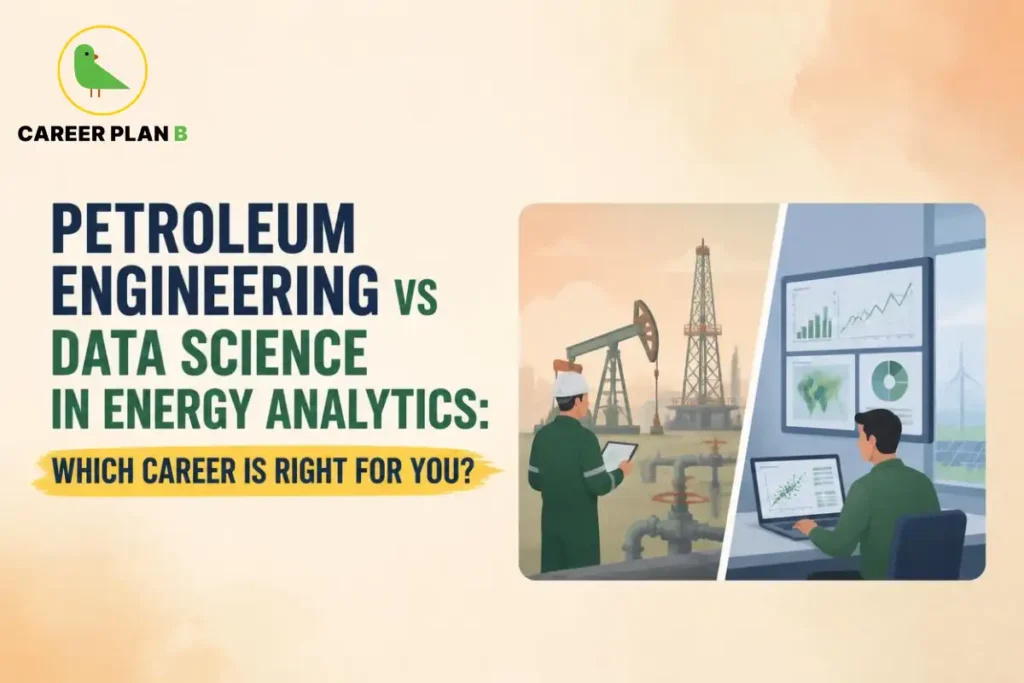
Introduction
Not long ago, the energy sector was defined by drilling rigs, pipelines, and reservoir maps. Today, it is equally defined by algorithms, dashboards, and predictive models. The rise of energy analytics has created a fascinating collision between two powerful career paths: petroleum engineering and data science. If you are an engineering student trying to decide between petroleum engineering vs. data science in energy analytics, you are looking at one of the most exciting career crossroads of this decade.
Both paths lead into India’s energy industry. Both are in demand. But they require different skills and different qualifications and will take your career in very different directions. This blog breaks down everything you need to know, from what each role actually involves to salary comparisons, skill requirements, and how these two fields are beginning to overlap in ways nobody predicted five years ago.
What Is Energy Analytics and Why Does It Matter?
Energy analytics is the use of data, statistical modelling, and artificial intelligence to improve decision-making across the energy value chain, from oil exploration and refinery operations to grid management and renewable energy forecasting.
India’s energy sector is undergoing a massive digital transformation. NITI Aayog’s energy reports have consistently highlighted the need for data-driven approaches to achieve India’s energy security goals and its 2070 Net Zero target. The Ministry of Petroleum and Natural Gas is actively pushing digital initiatives across upstream and downstream operations.
This transformation is creating two distinct but increasingly connected career opportunities, one rooted in domain engineering expertise and the other in data and technology.
What Does a Petroleum Engineer Do in Today’s Energy Sector?
The petroleum engineering career scope has evolved significantly over the last decade. While the core responsibility remains finding, extracting, and optimising oil and gas production, modern petroleum engineers are now expected to work with large datasets, simulation software, and digital oilfield technologies.
Day-to-day roles include reservoir modelling, drilling optimisation, production data analysis, and well performance monitoring. Senior roles often involve integrating real-time sensor data with engineering models to make faster and more accurate field decisions.
Key government and PSU recruiters for the petroleum engineering career scope in India include the following:
- Oil and Natural Gas Corporation (ONGC)
- Indian Oil Corporation Limited (IOCL)
- GAIL (India) Limited
- Bharat Petroleum Corporation Limited (BPCL)
- Hindustan Petroleum Corporation Limited (HPCL)
The primary gateway for PSU recruitment remains the GATE Petroleum Engineering paper.
Read More : Skills Petroleum Engineers Must Learn in 2026 to Stay Ahead in Their Careers
What Does a Data Scientist Do in the Energy Sector?
A data scientist working in the energy sector, often called an energy data analyst or energy analytics engineer, uses programming, machine learning, and statistical tools to extract insights from massive operational datasets.
In the oil and gas industry, data science jobs in the energy sector include predictive maintenance of equipment, real-time pipeline monitoring, demand forecasting for fuel distribution, seismic data interpretation using AI, and carbon emission tracking. In the renewable energy space, data scientists work on solar and wind power generation forecasting, grid load balancing, and energy storage optimisation.
Key recruiters for data science jobs in the energy sector in India include:
- ONGC’s digital and IT divisions
- NTPC Limited (for smart grid and analytics roles)
- Ministry of New and Renewable Energy (MNRE)
- Private energy analytics firms and global energy majors with India operations
- Technology companies with dedicated energy analytics practices
Unlike petroleum engineering, there is no single GATE paper for data science. However, GATE DA (Data Science and Artificial Intelligence) was introduced in 2024 and is becoming a relevant credential for those targeting research or PSU tech roles.
Petroleum Engineering vs Data Science in Energy Analytics: Quick Comparison
| Parameter | Petroleum Engineering | Data Science in Energy Analytics |
|---|---|---|
| Core Focus | Oil and gas extraction, reservoir management | Data modelling, AI, predictive analytics |
| Key Skills | Reservoir simulation, drilling, GATE PE | Python, ML, SQL, domain knowledge |
| Top Recruiters | ONGC, IOCL, BPCL, GAIL, HPCL | ONGC IT, NTPC, MNRE, private analytics firms |
| GATE Pathway | PE (Petroleum Engineering) | DA (Data Science and AI) |
| Entry-Level Salary | Rs. 8–12 LPA (PSU) | Rs. 6–10 LPA (private sector) |
| Mid-Level Salary | Rs. 15–25 LPA | Rs. 14–28 LPA |
| Growth Outlook | Stable with digital upskilling required | Rapidly growing across all energy sub-sectors |
| Global Demand | Middle East, Southeast Asia, Africa | Globally, especially in the US, Europe, and Canada |
Salary Comparison: Who Earns More?
At the entry level, petroleum engineers hired through GATE into PSUs like ONGC or IOCL typically earn between Rs. 12–16 LPA, including allowances under the IDA pay scale, making it one of the highest-paying GATE-based roles in India.
Data scientists entering the energy sector through private firms or tech companies typically start at Rs. 6–10 LPA, though this varies significantly with the organisation and skill set. However, mid-level data scientists with three to five years of experience and strong machine learning in oil and gas expertise regularly command Rs. 18–28 LPA in private and multinational settings, often surpassing petroleum engineering salaries in the private sector.
The honest picture is this: Petroleum engineering offers higher and more predictable starting salaries through the PSU route, while data science in energy analytics has a steeper long-term earnings curve, especially if you build strong domain expertise in energy analytics careers in India.
Have Any Doubts?
Skills You Need for Each Path
For Petroleum Engineering:
- Strong foundation in reservoir engineering, fluid mechanics, and thermodynamics
- Proficiency in simulation tools like Eclipse, CMG, or Petrel
- GATE PE score for PSU and M.Tech admissions
- Understanding of HSE (Health, Safety, and Environment) standards
- Increasingly: basic Python and data visualisation skills
For Data Science in Energy Analytics:
- Programming skills in Python, R, and SQL
- Machine learning and statistical modelling
- Familiarity with IoT sensor data and time-series analysis
- Domain knowledge in energy systems, oil and gas, renewables, or power grids
- Data visualisation tools like Power BI or Tableau
- GATE DA score for research roles or PSU tech positions
Can a Petroleum Engineer Become an Energy Data Scientist?
This is the most exciting question in both fields right now, and the answer is yes, absolutely.
The convergence of machine learning in oil and gas with traditional engineering workflows is already happening inside companies like ONGC, which has launched digital transformation initiatives to incorporate AI into reservoir management and production planning. Petroleum engineers who upskill in data science are becoming some of the most valuable professionals in the energy sector because they bring something pure data scientists cannot: deep domain understanding of how the industry actually works.
The best way to bridge this gap is through structured upskilling. NPTEL, India’s premier online learning platform, offers courses in data science, machine learning, and Python that are completely free and certificate-bearing.
The Department of Science and Technology (DST) also funds research in energy analytics and AI applications, a pathway worth exploring for those interested in applied research.
For those targeting an engineering career after a B.Tech in energy through the data science route, a postgraduate degree in data science, energy systems, or a combined M.Tech programme from IITs can significantly accelerate career growth.
How Career Plan B Helps
Deciding between petroleum engineering vs. data science in energy analytics requires more than just comparing salaries; it requires honest clarity about your strengths, interests, and where you want to be in ten years. Career Plan B offers personalised career counselling, psychometric assessments, and structured career roadmapping to help engineering students navigate exactly this kind of crossroads with confidence and direction.
Get In Touch With Us
Frequently Asked Questions
1. Is data science replacing petroleum engineers?
Not replacing, but transforming. Data science is changing how petroleum engineers work, not eliminating the need for them. Engineers who combine domain expertise with data skills are actually more in demand than ever before in energy analytics careers in India.
2. Which is better for a PSU job, petroleum engineering or data science?
For traditional PSU roles, GATE petroleum engineering remains the stronger route, with direct recruitment into ONGC, IOCL, GAIL, and HPCL. However, PSUs are increasingly hiring data and IT professionals for their digital transformation wings, making GATE DA a growing option too.
3. Can I do data science in the energy sector without a computer science background?
Yes. Many successful energy data scientists come from petroleum, mechanical, or electrical engineering backgrounds. What matters is building strong programming and analytical skills through online platforms like NPTEL and complementing them with energy domain knowledge.
4. What are the top energy analytics career opportunities in India right now?
Top opportunities exist in predictive maintenance, smart grid analytics, renewable energy forecasting, seismic data interpretation, and carbon accounting spread across PSUs like ONGC and NTPC, government bodies under MNRE, and private energy and technology firms.
5. Is GATE necessary for a data science career in the energy sector?
GATE is not mandatory for private sector data science roles. However, GATE DA is useful for those targeting PSU tech roles or M.Tech admissions in data science or AI programmes at IITs and NITs.
Conclusion
The choice between petroleum engineering vs. data science in energy analytics ultimately comes down to where your strengths and curiosity lie. If you love the physics of the earth, the challenge of extraction, and the stability of PSU careers, petroleum engineering is a deeply rewarding path. If you are excited by algorithms, patterns in data, and the idea of reshaping how energy systems are managed, data science in the energy sector offers exceptional long-term growth.
The most powerful insight from this comparison is that the future of India’s energy industry belongs to professionals who can think across both worlds. Whether you start as a petroleum engineer who learns to code or a data scientist who masters energy systems, the energy analytics space has room for both.
Ready to figure out which path fits you best? Visit Career Plan B to speak with expert career counsellors who can help you make this decision with clarity, backed by assessment data and real industry insight.