Team6 · September 18, 2026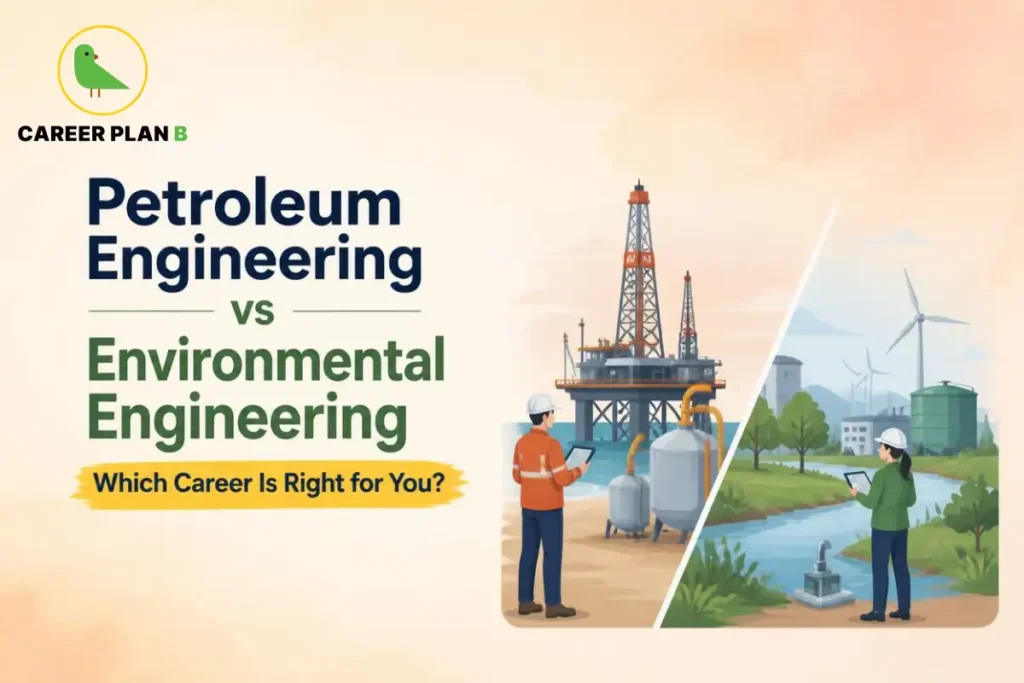
Introduction
India is at a fascinating crossroads. On one side, the oil and gas sector still powers millions of homes, factories, and vehicles. On the other hand, the push for clean air, clean water, and a greener planet is creating entirely new career paths. If you are an engineering student trying to decide between petroleum engineering vs environmental engineering, you are not alone, and this is one of the most important decisions you will make.
Both fields are deeply relevant to India’s future. Both offer strong career prospects. But they are very different in what you do every day, who hires you, and where the industry is heading. This blog breaks down everything from salary and GATE pathways to long-term job security so you can make a confident, informed choice.
What Does a Petroleum Engineer Actually Do?
Petroleum engineers are responsible for finding, extracting, and optimising the production of oil and natural gas. Their work spans exploration, drilling design, reservoir analysis, and production management. In India, this field is closely tied to public sector giants and is one of the most well-paying engineering disciplines at the entry level.
Key employers for a petroleum engineering career in India include:
- Oil and Natural Gas Corporation (ONGC)
- Indian Oil Corporation Limited (IOCL)
- Bharat Petroleum Corporation Limited (BPCL)
- GAIL (India) Limited
- Hindustan Petroleum Corporation Limited (HPCL)
For government sector entry, the GATE Petroleum Engineering (PE) paper is the primary route. Scores are used by PSUs and for M.Tech admissions at IITs and NITs.
Read More : Petroleum Engineering vs Data Science in Energy Analytics: Which Career Is Right for You?
What Does an Environmental Engineer Actually Do?
Environmental engineers work at the intersection of engineering and ecology. Their job is to protect human health and the natural environment by solving problems related to pollution, water treatment, waste management, and environmental impact assessment (EIA).
In India, this field is growing rapidly due to stricter environmental regulations and a strong national focus on sustainability. Environmental engineering jobs in India are available across both government and private sectors.
Key employers include the following:
- Central Pollution Control Board (CPCB)
- Ministry of Environment, Forest and Climate Change (MoEFCC)
- National Mission for Clean Ganga (NMCG)
- Smart Cities Mission
- State Pollution Control Boards (SPCBs) across India
GATE Environmental Science and Engineering (ES) is the dedicated paper for this field, opening doors to PSU jobs, research positions, and M.Tech programmes.
Petroleum Engineering vs Environmental Engineering: Quick Comparison
| Parameter | Petroleum Engineering | Environmental Engineering |
|---|---|---|
| Core Focus | Oil, gas, and reservoir management | Pollution control, water, and waste management |
| Top Recruiters | ONGC, IOCL, BPCL, GAIL, HPCL | CPCB, MoEFCC, NMCG, SPCBs, Smart Cities |
| GATE Paper | PE (Petroleum Engineering) | ES (Environmental Science & Engineering) |
| Entry-Level Salary | Rs. 8–12 LPA (PSU) | Rs. 4–7 LPA (government and private) |
| Mid-Level Salary | Rs. 15–25 LPA | Rs. 8–14 LPA |
| Growth Outlook | Stable but transitioning | Rapidly expanding |
| Global Demand | High in the Middle East and Southeast Asia | High globally, especially in Europe and Canada |
Which Field Pays More? Salary Breakdown
When it comes to environmental engineering salaries in India vs petroleum engineering salaries, petroleum engineering has traditionally offered higher starting packages, especially in public sector undertakings (PSUs). ONGC executive trainees, for example, start with a CTC of approximately Rs. 12–16 LPA, including allowances and perks under the IDA pay scale.
Environmental engineers in government roles under CPCB or state pollution control boards earn competitive salaries under the CPC pay structure, typically in the range of Rs. 6–10 LPA at the entry level. However, private sector environmental consultancies, infrastructure firms, and international organisations are steadily closing the gap, particularly for engineers with GATE scores and specialised skills in EIA, wastewater treatment, or climate risk assessment.
In the long run, as sustainable engineering careers gain momentum and India’s environmental compliance requirements tighten, environmental engineers with the right expertise stand to see significant salary growth over the next decade.
Have Any Doubts?
Oil and Gas vs Green Energy Careers: Where Is India Heading?
This is perhaps the most important question for anyone choosing between these two fields today.
India’s Ministry of Petroleum and Natural Gas continues to invest heavily in domestic exploration, with a target of reducing oil import dependency significantly by 2030. This means petroleum engineers will remain in demand for at least the next 15–20 years.
At the same time, India has committed to achieving Net Zero emissions by 2070 and has set a target of 500 GW of renewable energy capacity by 2030. This is directly driving demand for environmental engineers across sectors, from solar park planning to urban waste management to river rejuvenation projects under NMCG.
What is particularly interesting is the convergence happening right now. ONGC, India’s largest oil and gas company, has launched ONGC Green to actively invest in renewables and clean energy. This means petroleum engineers with an understanding of sustainability and environmental engineers with knowledge of the energy sector are both becoming more valuable, not less.
So this is not really an oil and gas vs green energy careers debate anymore. It is about deciding which starting point aligns best with your strengths and long-term goals.
How Career Plan B Helps
Choosing between petroleum engineering vs environmental engineering is not just about salary; it is about your strengths, interests, and long-term vision. Career Plan B offers personalised career counselling, psychometric and career assessment tests, and structured career roadmapping to help engineering students identify the right path, prepare for GATE, and align their academic profile with the best opportunities in either field.
Get In Touch With Us
Frequently Asked Questions
1. Which has better job security, petroleum or environmental engineering?
Both offer strong job security in different ways. Petroleum engineering is backed by established PSUs with stable pay and perks. Environmental engineering is growing rapidly due to regulatory demand and sustainability goals, making it increasingly secure over the long term.
2. Can a petroleum engineer switch to environmental engineering?
Yes. Many petroleum engineers transition into HSE (Health, Safety, and Environment) roles within oil and gas companies themselves. Additional certifications in environmental management or a postgraduate degree can make the switch smoother.
3. Which field is better for GATE PSU jobs?
Petroleum engineering through the GATE PE paper gives direct access to top PSUs like ONGC and IOCL. Environmental engineering through the GATE ES paper opens doors to CPCB, NMCG, and state boards. Both are valid GATE PSU pathways; your choice depends on which sector excites you more.
4. Is environmental engineering a good career in India in 2026?
Absolutely. With India’s expanding focus on pollution control, clean water, urban sustainability, and climate compliance, environmental engineering jobs in India are growing across government bodies, infrastructure firms, and international development organisations.
5. Which field has better global opportunities?
Petroleum engineering has a strong demand in the Middle East, Southeast Asia, and Africa. Environmental engineering is in high demand globally, especially in Europe, Canada, and Australia, where sustainability and climate regulations are stricter.
Conclusion
The debate of petroleum engineering vs environmental engineering does not have a single right answer it depends on who you are and what you want from your career. If you are drawn to high-stakes extraction industries, strong PSU salaries, and global fieldwork, petroleum engineering is a powerful choice. If you care deeply about sustainability, pollution control, and building a greener India, environmental engineering offers a rewarding and increasingly well-compensated path.
The good news? India needs both right now. The energy transition means these two fields are starting to overlap more than ever before. The best thing you can do is understand your own strengths, explore your options, and make a decision backed by solid career guidance.
Not sure which path is right for you? Visit Career Plan B to connect with expert career counsellors who can help you map out your engineering career with clarity and confidence.