Deepti · September 9, 2026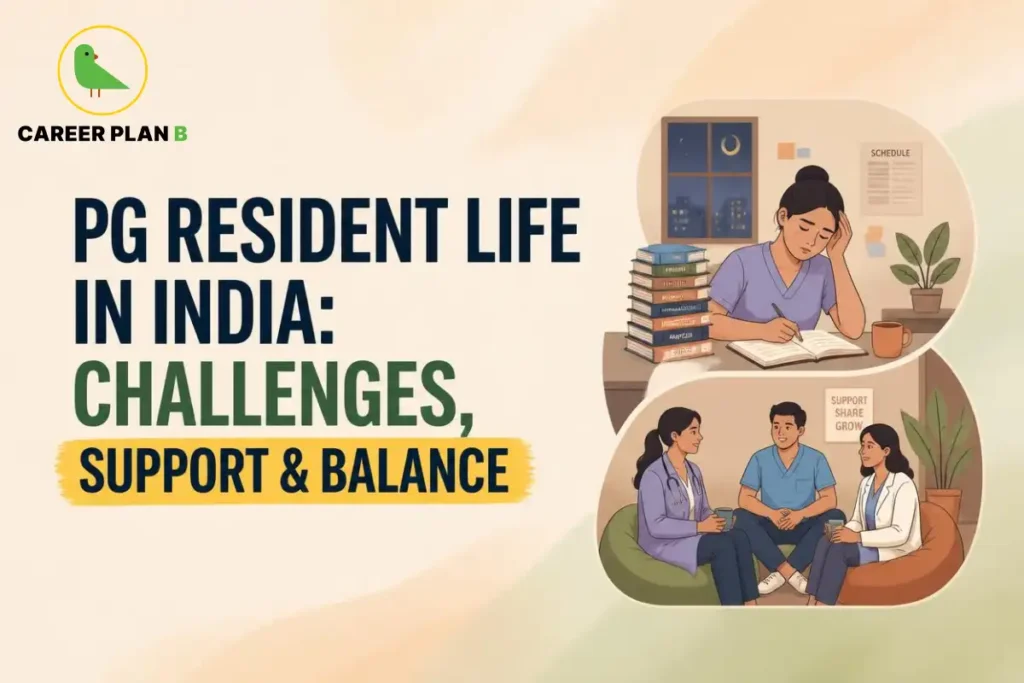
Introduction
Is 36-hour duty followed by a morning ward round just “part of the job”? For most young doctors, PG resident life feels like this every single week. Postgraduate training is where real medicine begins but it’s also where stress, sleep loss, and self-doubt quietly creep in. In fact, several Indian studies on pg life medical experiences report that a majority of residents show signs of burnout within their first two years. This blog looks honestly at pg life challenges, the support systems that actually help, and practical ways to protect your time and mental health during training.
What Makes PG Resident Life So Demanding?
Pg resident life in India runs on long duty hours, heavy patient loads, and constant academic pressure often at the same time. Add hostel living, distance from family, and the weight of exams like thesis submission, and it’s easy to see why medical residency life feels relentless.
Common PG Life Challenges Residents Face
- Extended duty hours: 24–36-hour shifts with little recovery time
- Emotional exhaustion: Constant exposure to critical illness and loss
- Financial strain: Low stipends against a high cost of living
- Isolation: Away from family, with little time for friends
- Academic load: Thesis, exams, and case presentations on top of ward duty
These medical residency challenges rarely arrive one at a time — they stack up, and that’s exactly why so many residents report stress during medical residency, especially in the second and third years when both clinical and academic demands peak.
For Personalized Guidance
How to Manage PG Life Challenges Day to Day?
You can’t remove the workload, but you can change how you respond to it. Here’s what tends to help residents cope better:
| Challenge | Practical Strategy |
|---|---|
| Long duty hours | Micro-naps during breaks; protect post-duty sleep |
| Burnout in medical residency | Regular debriefs with seniors or peers |
| Time management for medical residents | Batch tasks; use a simple daily checklist |
| Isolation | Join a resident support group or mess community |
| Financial stress | Track expenses; explore hospital welfare schemes |
Burnout in Medical Residency: Why It Happens
The World Health Organization officially classifies burnout as an occupational phenomenon caused by chronic workplace stress that hasn’t been managed well, marked by exhaustion, cynicism, and reduced professional efficacy. For residents, this usually builds up from unpredictable hours, minimal downtime, and pressure to “perform” in front of seniors. Recognising early signs — irritability, detachment from patients, disturbed sleep — is the first step toward recovery.
Ways to Manage Stress During Medical Residency
- Set a fixed “wind-down” routine, even if it’s just 15 minutes
- Talk to a trusted co-resident instead of bottling it up
- Use short breathing or mindfulness breaks between rounds
- Seek professional counselling early — not as a last resort
- Protect at least one weekly off, as outlined under NMC’s PG training norms
Building a Support System for Doctors
No one should go through resident doctor life alone. A strong support system for doctors usually includes seniors who mentor rather than intimidate, peers who understand the grind, and family who respect your unpredictable schedule.
How to Build a Support System During PG Training?
- Identify one senior resident or faculty mentor you trust
- Stay connected with your batch — shared struggles build resilience
- Use institutional resources like Tele-MANAS, India’s mental health helpline listed on the National Health Portal, when things feel overwhelming
- Keep in touch with family, even through short daily messages
The National Medical Commission also mandates a weekly day off and regulated duty structures under the Postgraduate Medical Education Regulations know your rights and use them.
Work-Life Balance for Doctors: Is It Really Possible?
Work-life balance for doctors during residency looks different from a typical 9-to-5 but it isn’t impossible. Small, consistent habits matter more than big lifestyle changes here.
How to Maintain Work-Life Balance During Medical Residency?
- Plan personal time around your duty roster, not around “free time that never comes”
- Eat and sleep on a schedule, even if shifted
- Say no to optional extra duties when you’re running on empty
- Use post-duty days fully for rest, not chores
How to Balance Personal Life and Medical Residency?
Treat personal time as non-negotiable, not optional. Even 30 minutes of a hobby, a call home, or a walk outside the hospital resets your mind for the next shift. Work-life balance in medical residency isn’t about doing less work; it’s about protecting the hours that are actually yours.
Also read: First Week as a PG Resident – Tips from Seniors – Career Plan B
How Career Plan B Helps
Navigating pg resident life is easier with the right guidance early on.
Career Plan B offers personalised career counselling, PsycheIntel and career assessment tests, admission and academic profile guidance, and career roadmapping helping aspiring and current medical residents make informed, well-supported decisions at every stage of their journey.
Get In Touch With Us
Frequently Asked Questions
Q1. What is the biggest challenge in PG resident life?
Long, unpredictable duty hours combined with academic pressure top the list for most residents.
Q2. How to manage PG life challenges effectively?
Prioritise sleep, lean on peer support, and use institutional resources like counselling services early rather than waiting for a crisis.
Q3. How to maintain work-life balance during medical residency?
Protect your off days, eat and sleep on a routine, and treat personal time as a fixed commitment, not an afterthought.
Q4. How to build a support system during PG training?
Find a mentor, stay close to your batchmates, and don’t hesitate to reach out to family or helplines like Tele-MANAS when needed.
Q5. What are common signs of stress during medical residency?
Irritability, disturbed sleep, emotional numbness, and losing interest in things you once enjoyed are early warning signs.
Q6. How to balance personal life and medical residency realistically?
Accept that balance will look different week to week — small, consistent personal habits matter more than rare big breaks.
Conclusion
PG resident life will always be demanding that’s the nature of medical training. But challenges like burnout, isolation, and poor time management don’t have to define your residency. With the right support system, small daily habits, and awareness of your rights as a resident, work-life balance is genuinely achievable. If you’re navigating this journey and want personalised guidance, reach out to Career Plan B to build a roadmap that supports both your career and your well-being.