Team Career Plan B · July 17, 2026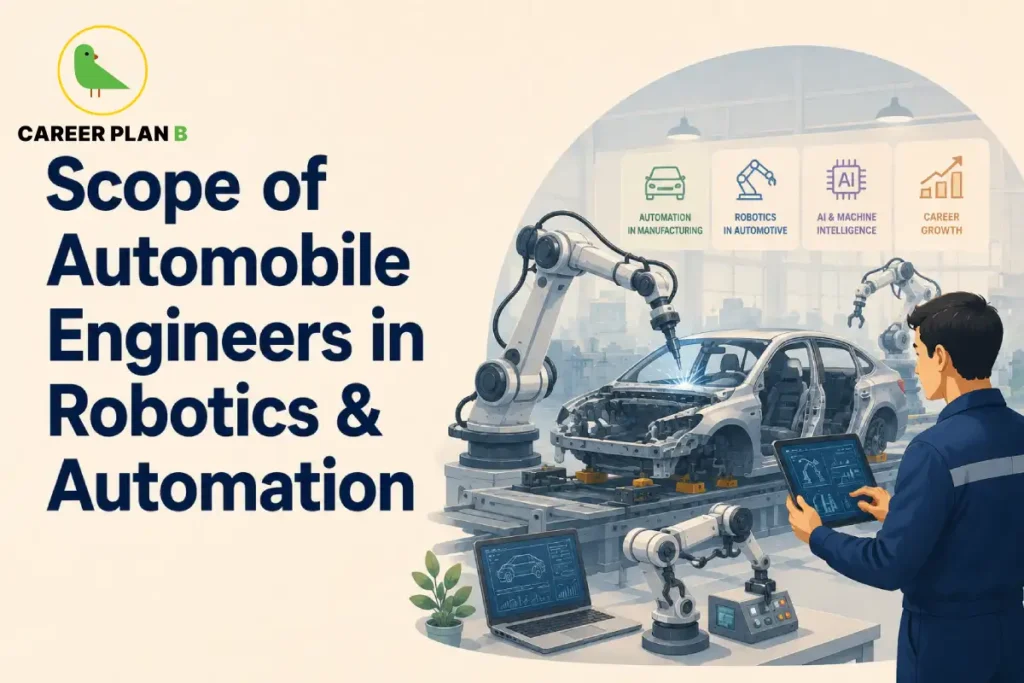
Introduction
Walk into a modern car manufacturing plant today, and you’ll see robotic arms welding chassis, automated systems inspecting parts, and machines working alongside engineers. Robotics and automation now shape almost every stage of vehicle production. This transformation highlights the growing scope of automobile engineers in robotics and automation. The automobile industry once treated these technologies as separate disciplines. Today, they play a central role in modern automobile engineering. This blog explores where automobile engineers fit into this fast-growing field, the skills you’ll need, and the career opportunities it offers.
Why Robotics and Automation Are Becoming Core to Automobile Engineering
The automotive industry has always relied on large-scale manufacturing, but the level of automation involved today is unlike anything seen before. Robotic assembly lines, automated inspection systems, and smart factories are now standard in most modern vehicle production facilities. This isn’t a separate field bolted onto automobile engineering; it’s becoming a natural extension of it. As a result, automobile engineers in robotics roles are increasingly common, since building and maintaining these automated systems requires strong mechanical and vehicle-systems knowledge.
Key Areas Where Automobile Engineers Are Applying Robotics & Automation
Let’s look at where this overlap is most visible in practice.
Robotic Assembly Lines and Manufacturing
Modern vehicle assembly relies heavily on robotic arms for tasks like welding, painting, and part assembly. Automobile engineers play a key role in designing, integrating, and maintaining these systems, making robotics in automotive manufacturing one of the most established applications in the field.
Automated Quality Control and Inspection Systems
Engineers use automated sensors and vision-based systems to detect defects and maintain quality throughout the production process. These technologies reduce human error and improve manufacturing consistency.
Robotics in Vehicle Testing
Automated testing rigs simulate real-world driving conditions, crash scenarios, and durability tests. They help engineers complete testing faster while maintaining consistent results.
Automation in Autonomous Vehicle Systems
Beyond manufacturing, automation plays a central role in autonomous vehicle development. It supports sensor integration, control systems, and real-time decision-making.
Skills Automobile Engineers Need for Robotics & Automation Roles
If you’re interested in this space, here are some important skills for robotics and automation careers:
- Fundamentals of robotics and mechatronics
- Programmable Logic Controllers (PLC) and industrial automation systems
- Sensors, actuators, and control systems
- Basic programming knowledge, especially for automation software
- Understanding of manufacturing processes and quality systems
Building a strong foundation in these areas can significantly improve your readiness for roles that blend automobile engineering and automation.
Career Opportunities in This Space
As automation continues to expand across the automotive sector, several career paths are opening up for automobile engineers, including:
- Automation Engineer
- Robotics Integration Engineer
- Manufacturing Systems Engineer
- Vehicle Testing and Validation Engineer (Automated Systems)
These roles reflect how automobile engineering career opportunities are expanding well beyond traditional design and manufacturing positions into more technology-driven areas.
Have Any Doubts?
How India Is Supporting Growth in This Area
India’s growing manufacturing base has created strong momentum for automation-related careers in the automotive sector. AICTE has been actively encouraging technical institutions to update their curricula to include robotics, automation, and mechatronics-related subjects, helping students build relevant skills early. ARAI plays an important role in testing and certifying vehicles, and its work increasingly involves automated testing systems and standards relevant to modern vehicle validation. The Ministry of Heavy Industries has also supported manufacturing modernization initiatives that encourage the adoption of automation and robotics within the automotive sector.
Together, these efforts point toward a strong and growing future of automation in automobile industry careers, particularly for engineers who combine core automobile knowledge with automation skills.
How Career Plan B Helps
Curious whether a career in automotive robotics and automation is right for you? Career Plan B can help you explore this path with clarity. Through personalised career counselling, PsycheIntel and career assessment tests, and admission and academic profile guidance, we help you understand if this specialization matches your interests and strengths. Our Career The roadmapping process also guides you on the right courses, electives, and skills to build toward roles in automation and robotics within the automotive industry.
For Latest Information
Frequently Asked Questions
- Is robotics and automation only for mechanical engineers?
No. Mechanical and automobile engineers play major roles in manufacturing and testing. Electrical and electronics engineers also contribute, especially in sensor development and control systems.
- Do I need to learn coding for automation roles?
Basic programming knowledge is valuable for working with automation software and control systems. However, hardware-focused roles often rely more on engineering fundamentals than advanced software expertise.
- Is this different from mechatronics engineering?
It’s closely related. Mechatronics combines mechanical, electrical, and computer engineering, and many robotics and automation roles in the automotive sector overlap significantly with this field.
- Are these roles limited to manufacturing plants?
No. Automation skills are also valuable in vehicle testing, autonomous vehicle development, and even research and development roles.
- Is this a growing career path in India specifically? Yes, as manufacturing modernization continues and automation adoption increases across Indian automotive plants, demand for these skills is expected to grow steadily.
- Can I specialize in this area during my undergraduate degree?
Many colleges now offer electives or minor specializations in robotics, automation, or mechatronics, which can help you build relevant skills alongside your core automobile engineering degree.
Conclusion
The scope of automobile engineers in robotics & automation reflects just how much the automotive industry has evolved, from manual assembly lines to highly automated, technology-driven manufacturing and testing processes. Engineers who build skills in robotics, automation, and control systems alongside their core automobile engineering foundation are well-positioned for this growing space. If you’re interested in exploring this career path further, Career Plan B can help you understand your options and plan the right way forward.