Team6 · July 15, 2026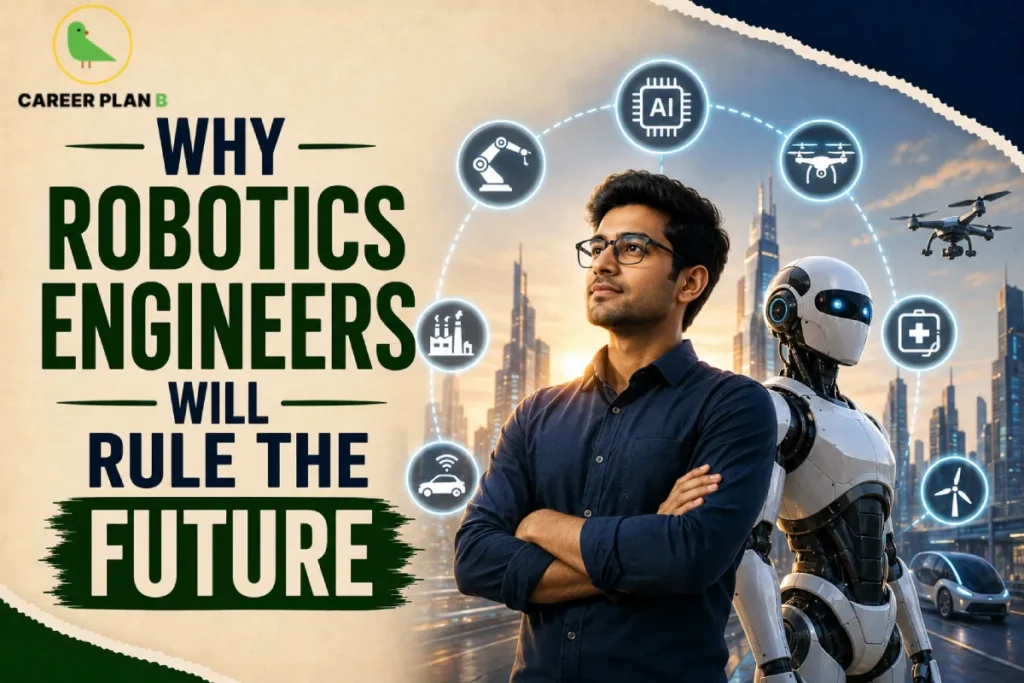
Introduction
The future is not just digital; it moves, lifts, operates, and thinks. From self-driving cars navigating busy streets to robotic arms performing delicate surgeries, the world around us is being physically redesigned by one group of professionals more than almost any other: robotics engineers. And if current trends are anything to go by, the belief that robotics engineers will rule the future is not hype; it is a data-backed reality.
The global robotics market was valued at over $62 billion in 2023 and is projected to surpass $165 billion by 2029, according to the International Federation of Robotics. Behind every one of those robots, every sensor, every motor, and every line of control code is a robotics engineer.
In this blog, we explore why this career is exploding in demand, which industries are driving that growth, what skills you need to thrive, and how you can position yourself to be part of this revolution.
The Rise of Robotics: Why Now?
For decades, robotics was largely confined to factory floors and science fiction. That has changed dramatically. Three major forces are driving the future of robotics engineering right now:
- Labour shortages and rising wages are pushing industries to automate faster than ever before. Robots do not call in sick, do not need overtime pay, and can operate 24/7.
- Technological convergence, the merging of AI, machine learning, advanced sensors, and cloud computing, has made robots smarter, cheaper, and more adaptable than previous generations.
- Post-pandemic priorities have accelerated investment in automation and robotics jobs across supply chains, healthcare, and logistics, as organisations seek resilience against future disruptions.
According to the International Federation of Robotics, a record 3.5 million industrial robots are now operating globally, a number that continues to climb year on year.
What Does a Robotics Engineer Actually Do?
A robotics engineer is part mechanical engineer, part electrical engineer, and part software developer. Their work spans the full lifecycle of a robotic system from concept and design to testing, deployment, and maintenance.
On any given day, a robotics engineer might be:
- Designing the mechanical structure of a robotic arm
- Programming motion control algorithms
- Integrating sensors and cameras for environmental awareness
- Testing robots in simulated and real-world conditions
- Collaborating with AI teams to add intelligent decision-making
The scope is vast. Robotics engineers work on surgical robots, warehouse automation systems, agricultural drones, underwater exploration vehicles, and even Mars rovers.
Have Any Doubts?
Core Robotics Engineer Skills
To succeed in this field, you need a strong blend of technical and problem-solving abilities:
- Proficiency in C, C++, and Python
- Robot Operating System (ROS)
- CAD and mechanical design tools (SolidWorks, AutoCAD)
- Embedded systems and microcontroller programming
- Control theory, kinematics, and dynamics
- Sensor fusion and signal processing
- Basic understanding of machine learning and computer vision
5 Industries Where Robotics Engineers Are in High Demand
The demand for robotics engineers is not concentrated in one sector; it is spreading across almost every major industry. Here are five where growth is especially strong:
1. Manufacturing and Automotive
Robotics in manufacturing and healthcare leads all sectors in robot adoption. Automotive giants like Toyota and Tesla rely on thousands of robotic systems for welding, painting, and assembly. The push toward smart factories and Industry 4.0 has made robotics engineers indispensable here.
2. Healthcare and Medical Robotics
Surgical robots like the da Vinci system allow surgeons to operate with precision that human hands alone cannot achieve. Rehabilitation robots, drug-dispensing systems, and hospital logistics robots are all areas where robotics in manufacturing and healthcare demand continues to surge.
3. Defence and Aerospace
Governments worldwide are investing heavily in autonomous drones, bomb disposal robots, and unmanned aerial vehicles (UAVs). In India, the Defence Research and Development Organisation (DRDO) actively develops robotics-based solutions for national security applications.
4. Agriculture
Agri-robots are transforming how we grow food, from automated harvesting and crop monitoring drones to soil analysis bots. With global food demand rising, agricultural robotics is one of the fastest-growing automation and robotics jobs segments.
5. Space Exploration
Space agencies like ISRO and NASA rely on robotics engineers to design rovers, robotic arms for space stations, and autonomous systems that can operate in environments where humans cannot survive. India’s growing space ambitions make this an exciting frontier for Indian robotics engineers specifically.
Robotics Engineer Salary: What Can You Expect?
Robotics engineer salary figures are strong and growing. Here is a realistic breakdown:
| Experience Level | India (Per Annum) | Global / USA (Per Annum) |
|---|---|---|
| Entry Level (0–2 years) | ₹4 – ₹7 LPA | $65,000 – $85,000 |
| Mid-level (3–6 years) | ₹8 – ₹15 LPA | $90,000 – $120,000 |
| Senior Level (7+ years) | ₹16 – ₹25 LPA | $130,000 – $160,000+ |
According to the U.S. Bureau of Labour Statistics, employment in engineering roles closely tied to robotics and automation is projected to grow through 2032, with median annual wages well above the national average.
In India, AICTE has significantly expanded accredited programmes in robotics, mechatronics, and automation engineering as a direct response to rising industry demand.
How to Build a Career in Robotics Engineering
If you are wondering why choose robotics as a career, the answer lies in a rare combination: job security, high salaries, global opportunities, and the chance to work on technology that genuinely changes lives.
Here is a clear roadmap to enter the field:
Step 1: Choose the Right Degree Pursue a B.Tech or B.E. in mechanical engineering, electrical engineering, electronics, mechatronics, or computer science. Many universities now offer dedicated robotics engineering programmes.
Step 2: Build Hands-On Skills Join robotics clubs, participate in competitions like RoboSumo or FIRST Robotics, and build personal projects. Practical experience matters enormously in this field.
Step 3 Learn the Core Tools Get comfortable with ROS, Python, C++, and CAD software. Online platforms like Coursera, edX, and NPTEL offer robotics and embedded systems courses from top Indian and global institutions.
Step 4: Pursue Internships Target companies in automotive, manufacturing, healthcare tech, and defence for internships. Real-world exposure is what separates good candidates from great ones.
Step 5: Stay Current Robotics evolves fast. Follow research from institutions like IITs and ISRO and global organisations like the IEEE Robotics and Automation Society to stay at the frontier.
How Career Plan B Helps
Knowing that robotics is a great career is one thing; figuring out your specific path within it is another. Career Plan B offers personalised career counselling, Psycheintel career assessment tests to identify your strengths, and structured career roadmapping to help you move from where you are to where you want to be. Whether you are a student unsure about which engineering stream to choose or a professional exploring a shift into robotics, Career Plan B gives you a tailored, clear plan, not generic advice.
For Latest Information
Frequently Asked Questions (FAQs)
1. Is robotics engineering a good career choice in India?
Absolutely. With India’s push toward manufacturing automation through initiatives like Make in India and growing investments in defence and space robotics, robotics career opportunities in India are expanding rapidly at both domestic and global levels.
2. What is the minimum qualification to become a robotics engineer?
A B.Tech or B.E. in mechanical, electrical, electronics, or computer science engineering is the standard entry point. Specialised postgraduate programmes in robotics and mechatronics offer an added advantage.
3. Do robotics engineers need to know AI and machine learning?
Increasingly, yes. Modern robots use AI for perception, navigation, and autonomous decision-making. Having foundational knowledge of machine learning gives robotics engineers a significant competitive edge.
4. Which country has the highest demand for robotics engineers?
The USA, Germany, Japan, South Korea, and China lead globally in robotics adoption. However, India is quickly emerging as a significant player, particularly in manufacturing, defence, and space, making it a strong market for robotics career opportunities locally as well.
5. Can a robotics engineer work in the space sector in India?
Yes. ISRO and allied organisations recruit engineers with robotics, electronics, and mechatronics backgrounds for projects involving rovers, robotic systems, and autonomous spacecraft systems.
Conclusion
The evidence is clear: robotics engineers will rule the future, not metaphorically but literally. They are the professionals designing the machines that will perform surgeries, grow our food, explore other planets, and keep our factories running. Every industry is automating, every government is investing, and every forward-looking organisation is hiring.
The question is no longer whether robotics engineering is a smart career. The question is whether you are positioning yourself to be part of this transformation early enough.
The best time to start was yesterday. The second-best time is right now.
Take the first step toward your robotics career today. Visit Career Plan B for personalised guidance, career assessments, and a roadmap built specifically for you.