Deepti · October 27, 2026
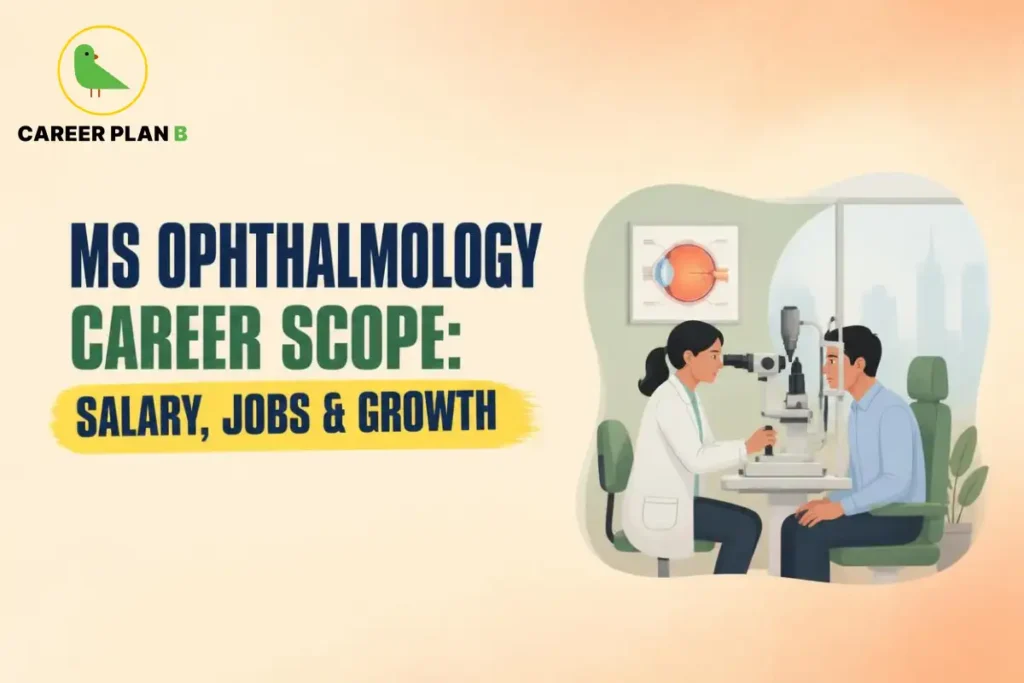
MS Ophthalmology career scope includes government service, private hospitals, consultant positions, eye-care centres, teaching, and private practice. Graduates can also pursue fellowships in areas such as retina, glaucoma, and cornea. Your salary and career growth depend on experience, surgical skills, location, employer, and practice setup. Which path fits your clinical interests and long-term goals?
What Is the Career Scope After MS Ophthalmology?
MS Ophthalmology is a postgraduate medical qualification that prepares doctors to diagnose and manage eye conditions and perform ophthalmic procedures. Ophthalmologists treat conditions such as cataracts, glaucoma, retinal disorders, and corneal diseases.
The National Medical Commission (NMC) publishes postgraduate medical education rules and training standards. Its MS Ophthalmology competency-based curriculum covers clinical training and specialty areas that can shape a doctor’s future career.
The degree opens several career paths. Graduates can work as hospital doctors, consultants, government specialists, medical educators, or independent practitioners. Additional training can help them develop advanced skills in a specific area of eye care.
What Jobs Can You Get After MS Ophthalmology?
The Career After MS Ophthalmology depends on the type of patient care you enjoy, your surgical skills, and your preferred work environment.
1. MS Ophthalmology Government Jobs
Government hospitals, medical colleges, public health institutions, and research organisations recruit qualified ophthalmologists for clinical and specialist roles.
Common opportunities include:
- Ophthalmologist or specialist in a government hospital.
- Senior resident in an eligible medical institution.
- Medical college teaching positions that meet current faculty rules.
- Specialist appointments through central or state health services.
- Eligible clinical and research roles in government-supported institutions.
The ICMR-Bhopal Memorial Hospital and Research Centre recruitment notice listed Ophthalmology under Specialist Grade III recruitment in 2025. The notice specified a Level 11 pay matrix of ₹67,700–₹2,08,700 and accepted specified postgraduate qualifications in ophthalmology.
Candidates must check each recruitment notice for eligibility, required experience, age limits, registration rules, and appointment conditions. Government service can offer structured pay progression and defined service benefits.
2. MS Ophthalmology Hospital Jobs
Private hospitals, corporate healthcare groups, multispecialty hospitals, and dedicated eye hospitals offer opportunities for qualified ophthalmologists.
Common roles include:
- Junior consultant ophthalmologist.
- Consultant ophthalmologist.
- Cataract surgeon.
- Glaucoma or retina specialist after appropriate training.
- Eye-care centre specialist.
- Visiting consultant or surgeon.
MS Ophthalmology Hospital Jobs often involve outpatient consultations, diagnostic procedures, surgical work, and follow-up care. Employers may value hands-on experience with cataract surgery, diagnostic equipment, emergency eye care, and patient management.
New graduates can build their experience in a supervised clinical role. Experienced doctors can move into senior consultant positions or develop expertise in a subspecialty.
3. Teaching and Academic Careers
Medical colleges and eligible training institutions offer opportunities in teaching, clinical supervision, and research. Doctors can pursue academic positions after meeting the relevant qualification and experience requirements.
The NMC’s medical education regulations provide the framework for faculty qualifications. Doctors should read the current rules before applying for a teaching post.
Academic work suits professionals who enjoy clinical education, research, mentoring, and the development of future ophthalmologists.
For Personalized Guidance
MS Ophthalmology Salary in India
The MS Ophthalmology Salary in India varies by experience, city, employer, clinical responsibilities, and surgical expertise. Private hospitals set their own compensation, so one salary figure cannot represent every ophthalmologist.
Official recruitment notices and institutional documents provide useful reference points.
| Career or training stage | Published salary or stipend example | What it means |
|---|---|---|
| Government specialist | ₹67,700–₹2,08,700 under the Level 11 pay matrix in the 2025 ICMR notice | Official pay scale for a specific recruitment route, not a guaranteed offer to every graduate |
| MS Ophthalmology resident at Aravind | ₹48,000 per month in Year 1, ₹49,000 in Year 2, and ₹50,000 in Year 3 | Institution-specific stipend for the 2025–26 academic session |
| Post-MS service at Aravind | ₹1,20,000 per month in the first service year and ₹1,40,000 in the second | Institution-specific compensation under a declared two-year service obligation |
Official salary sources: ICMR recruitment notice and Aravind Eye Hospital MS Ophthalmology prospectus 2025–26.
Aravind’s prospectus lists the post-MS salary figures alongside a two-year service obligation and associated bond conditions. Candidates should read the complete terms before treating those figures as a potential offer.
What affects MS Ophthalmology Salary Per Month?
Several factors influence monthly earnings:
- Experience: Senior consultants may qualify for positions with greater responsibility and better compensation.
- Surgical skills: Strong clinical judgement and proficiency in relevant procedures can improve employment prospects.
- Location: Employers in different cities and regions may offer different pay.
- Employer: Government institutions, private hospitals, and independent eye-care centres use different compensation structures.
- Further training: A relevant fellowship may help doctors qualify for focused clinical roles.
- Practice setup: Clinic owners earn from their practice after paying operating expenses, rather than receiving a fixed salary alone.
When comparing offers, review basic pay, allowances, incentives, working hours, surgical workload, and employment terms. A high monthly figure does not always provide the best professional fit.
Is MS Ophthalmology Private Practice a Good Option?
- MS Ophthalmology Private Practice gives doctors the option to work independently, partner with an established clinic, or join a group eye-care practice.
- A doctor can start with consultation services and expand into surgical care when they have the required skills, facilities, and support. Clinic ownership requires investment in diagnostic equipment, trained staff, premises, maintenance, and patient management.
- Independent practice does not guarantee a higher income than hospital employment. Patient volume, local competition, operating costs, referral networks, and the range of services influence profitability.
- Doctors should compare these factors before choosing between a salaried job and independent practice.
Further Studies After MS Ophthalmology
Further Studies After MS Ophthalmology can help graduates strengthen clinical skills and develop expertise in a focused area of eye care.
The NMC’s MS Ophthalmology curriculum identifies several subspecialty clinics and training areas.
| Fellowship or subspecialty | Career focus |
|---|---|
| Retina and uvea | Retinal diseases, retinal surgery, and inflammation inside the eye |
| Glaucoma | Diagnosis and long-term management of glaucoma |
| Cornea and refractive surgery | Corneal disorders and suitable vision-correction procedures |
| Paediatric ophthalmology | Eye conditions in children and adolescents |
| Oculoplastics | Eyelid, orbital, and related reconstructive procedures |
| Neuro-ophthalmology | Visual problems associated with the nervous system |
Fellowship eligibility, duration, clinical exposure, and certification vary by institution. Candidates should review the training programme carefully before applying.
Doctors who enjoy research and education can also pursue academic work, clinical research, and other eligible advanced training opportunities. Your choice should reflect the skills you want to develop and the patients you want to serve.
MS Ophthalmology Jobs Abroad
MS Ophthalmology Jobs Abroad may appeal to doctors who want international clinical experience, advanced training, or a long-term overseas career.
Each country sets its own medical licensing and specialist recognition requirements. An Indian MS degree does not automatically qualify a doctor for independent practice or consultant-level employment abroad.
For example, the UK’s General Medical Council (GMC) explains the registration routes available to doctors trained outside the UK. Doctors seeking specialist registration must also meet the relevant requirements for that register.
Candidates should check the medical regulator’s official website in their target country before paying for an examination, licensing process, or overseas training programme. Language requirements, recognised qualifications, immigration rules, and experience requirements can affect eligibility.
MS Ophthalmology Career Growth: What Comes Next?
The MS Ophthalmology Career Path can develop in several directions:
MS graduate → junior ophthalmologist or resident → experienced clinician or consultant → senior consultant, subspecialist, academic, or independent practitioner.
This pathway represents possible progression, not a guaranteed promotion ladder. Clinical experience, surgical competence, further training, professional performance, and available positions influence career growth.
Doctors can compare career paths across postgraduate specialties through Career Plan B’s October guides to MD Radiodiagnosis Career Scope and MD Paediatrics Career Scope.
For job searches such as ophthalmology jobs near me, review official hospital career pages, government recruitment portals, and medical college vacancy notices. Check the advertised qualifications, location, experience requirements, salary, and application deadline before applying.
How Career Plan B Helps
Career Plan B helps medical graduates compare career paths through Personalized Career Counselling, PsycheIntel and Career Assessment Tests, Admission and Academic Profile Guidance, and Career Roadmapping.
These services help doctors assess their interests, identify suitable development opportunities, and plan next steps around their skills and long-term professional goals.
Get In Touch With Us
Frequently Asked Questions
Q1. What is the career scope after MS Ophthalmology in India?
Graduates can work in government hospitals, private hospitals, eye-care centres, medical colleges, research, and private practice.
Q2. What is the MS Ophthalmology Salary Per Month in India?
Salaries depend on experience, location, employer, and skills. Official recruitment notices and institutional offers provide specific pay figures rather than one universal salary.
Q3. What government jobs can I get after MS Ophthalmology?
You can apply for eligible ophthalmologist, specialist, senior resident, and academic positions listed by government institutions.
Q4. Can I start MS Ophthalmology Private Practice after graduation?
Yes, you can establish a clinic or join an existing practice after meeting the relevant professional and regulatory requirements.
Q5. What are the Further Studies After MS Ophthalmology?
You can explore fellowships in retina, glaucoma, cornea, paediatric ophthalmology, oculoplastics, and other relevant fields.
Q6. Can I get ophthalmologist jobs abroad after MS Ophthalmology?
Yes, overseas opportunities may be available. You must meet the target country’s licensing, qualification recognition, and employment requirements.
Conclusion
MS Ophthalmology career scope offers several paths in clinical practice, hospital employment, teaching, private practice, and advanced training. The right choice depends on your interests, skills, and career goals. Which path fits your ambitions? Explore your options and seek personalised career guidance from Career Plan B before planning your next move.