Deepti · August 12, 2026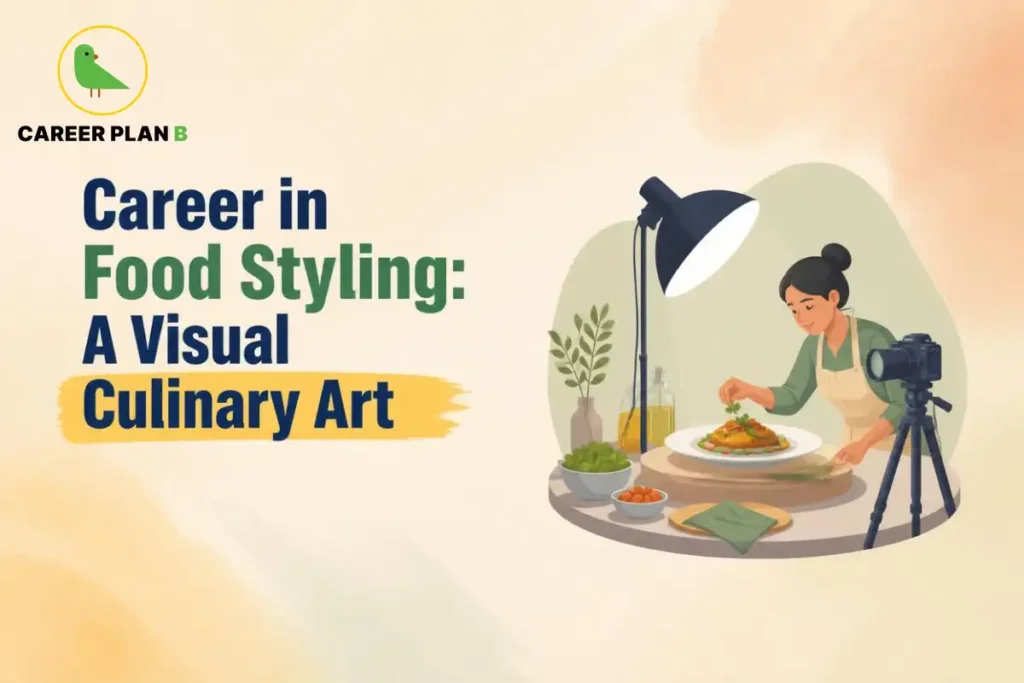
Introduction
A career in food styling sits at a genuinely interesting intersection of culinary skill, visual design, and photography — it’s the reason a plate of food in an advertisement, cookbook, or Instagram post looks irresistible in a way home cooking rarely does. Food stylists are the professionals behind that look, working closely with photographers, chefs, and brands to make food visually compelling. For students who enjoy both cooking and aesthetics, this is a career worth understanding properly rather than dismissing as “just plating food nicely.”
What a Food Stylist Actually Does
A food stylist prepares and arranges food specifically for the camera — which is a meaningfully different skill from cooking food to eat. This can involve using techniques that make food look fresher or more vibrant under studio lighting, careful ingredient selection for visual appeal, and close collaboration with photographers on angles, props, and composition. Food stylists work across advertising campaigns, cookbook shoots, restaurant menu photography, packaging design, and increasingly, social media content for food brands and influencers.
How to Become a Food Stylist: Where to Start
There’s no single mandatory qualification for how to become a food stylist, but most professionals build toward it through one of these routes:
- A culinary arts diploma or degree, which builds the foundational cooking and ingredient knowledge that styling depends on
- A background in photography or visual arts, combined with self-taught culinary skills
- Direct apprenticeship or assisting an established food stylist or food photographer — genuinely one of the most common entry routes in this field, since much of the craft is learned hands-on
For Personalized Guidance
Culinary Art Careers: Where Food Styling Fits
Food styling is one of several culinary art careers that don’t require working as a full-time chef, alongside food writing, recipe development, and culinary content creation. If you enjoy cooking but aren’t drawn to a restaurant kitchen’s pace and pressure, food styling — and related visual/culinary hybrid roles — is worth exploring as a genuine alternative within the same broad field.
Food Stylist Course India: What to Look For
While dedicated food stylist course India programmes are still relatively few compared to mainstream culinary courses, several culinary institutes now offer short-term food styling and photography workshops as standalone certifications, and some hospitality/culinary degree programmes include food presentation and styling modules. When evaluating any such course, look specifically at whether it includes hands-on studio shoots (not just lectures), since this is a craft learned primarily through practice.
Building a Career Alongside Food Photography
Food styling and food photography career paths are closely linked — many professionals develop skills in both, since understanding how food will appear through a camera lens (lighting, angles, depth of field) directly informs styling choices. If you’re drawn to this field, it’s worth learning basic photography fundamentals even if styling remains your primary interest, since the two skills reinforce each other constantly on real shoots.
Food Styling Training Pathways: Quick Comparison
| Pathway | Focus Area | Typical Duration | Best Suited For |
|---|---|---|---|
| Culinary arts diploma/degree (Hotel Management institutes, IHMs) | Cooking fundamentals, plating basics, kitchen discipline | 1–4 years | Students wanting strong culinary grounding before specialising in styling |
| Food styling & photography certificate courses | Composition, props, lighting, styling-specific techniques | A few weeks to a few months | Those wanting a fast, focused entry into styling specifically |
| Photography/visual arts background + self-taught styling | Camera work, visual composition, editing | Varies, builds over time | Visually inclined students without a culinary background |
| Assisting an established food stylist | On-set experience, client handling, real production workflow | Ongoing, builds over months/years | Building a genuine portfolio and industry contacts before going independent |
The Food Styling Skills That Actually Matter
Beyond basic cooking ability, the food styling skills that separate a good stylist from a struggling one include:
- Patience and precision — food styling shoots can take hours to get one shot right, often involving repeated small adjustments
- Understanding of food science — knowing how different foods behave under heat and light (which ingredients wilt, discolour, or melt quickly) helps you plan shoots realistically
- Prop and composition sense — an eye for how backgrounds, textures, and surrounding objects support the food rather than distract from it
- Collaboration skills — working closely and efficiently with photographers, chefs, and creative directors under time pressure
Building a Portfolio as a Student
If you’re still in school or college, the most useful first step is building a simple portfolio — shoot and style food at home using natural light, experiment with props from your own kitchen, and document your process. This costs little beyond a smartphone camera and patience, and gives you something concrete to show if you later approach a stylist or photographer for an internship or assisting opportunity.
How Career Plan B Helps
Deciding between culinary school, a photography-focused path, or a hybrid approach toward food styling is a genuine decision worth mapping out properly. Career Plan B’s Psycheintel and Career Assessment Tests can help confirm whether this creative-culinary blend genuinely fits your strengths before you commit to a specific course. Our Admission and Academic Profile Guidance team can help you evaluate culinary and design institutes realistically. And our Career Roadmapping service helps you plan a path that could include food styling, food photography, or broader culinary content work depending on where your interests lead.
Get In Touch With Us
FAQs
Q1. Do I need to be a trained chef to become a food stylist?
Not necessarily, though solid cooking knowledge helps significantly — many stylists come from culinary backgrounds, but some enter through photography or visual design instead.
Q2. Is there a dedicated food styling degree in India?
Not widely as a standalone degree yet — most students build toward it through culinary arts programmes, photography backgrounds, short-term styling workshops, or direct apprenticeship.
Q3. What’s the difference between a food stylist and a chef?
A chef cooks food for people to eat, while a food stylist prepares and arranges food to create an appealing look on camera. Although the two roles share some skills, each requires a distinct area of expertise.
Q4. Can I start building food styling skills while still in school?
Yes — practising food photography and styling at home with basic equipment is a genuinely useful, low-cost way to start building a portfolio.
Q5. Is food styling a financially stable career?
It varies considerably by how established you are and whether you work independently or within an agency/studio; like many creative fields, income tends to grow with a strong portfolio and industry reputation over time.
Conclusion
Food styling is a niche but growing career for students interested in both food and visual creativity. Building a portfolio, developing skills through culinary or photography courses, and gaining hands-on experience through apprenticeships can help build a successful career in the field.