Deepti · August 12, 2026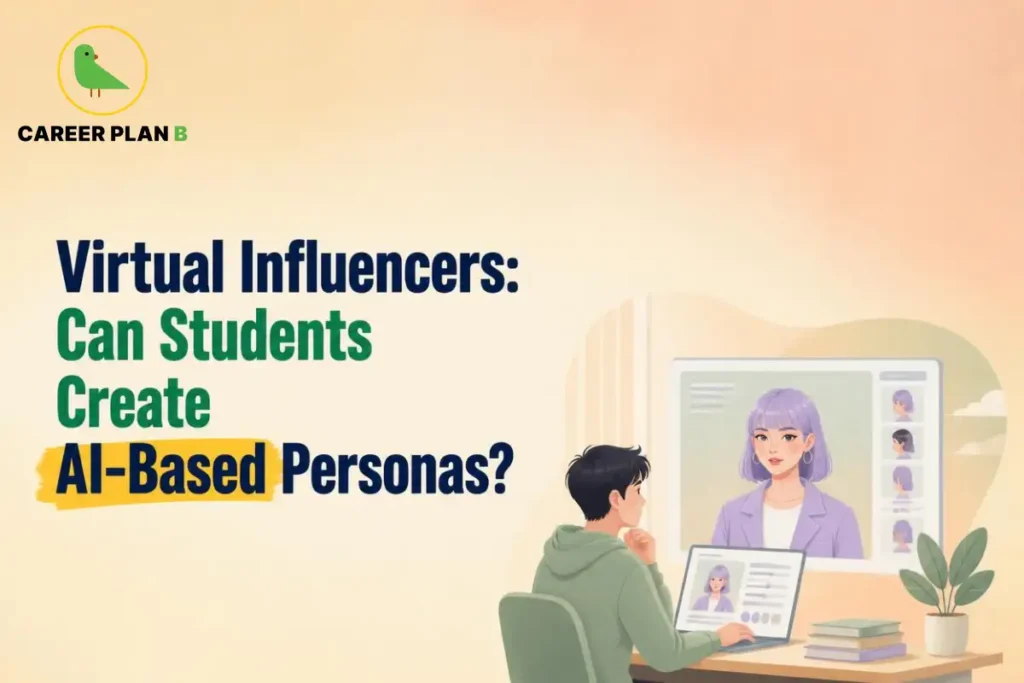
Introduction
Virtual influencers AI personas — computer-generated characters with their own personalities, Instagram followings, and even brand deals — have moved from a novelty to a genuine content category over the past few years. Names like Lil Miquela internationally, and a growing set of Indian virtual creators, have shown that an entirely fictional, AI-assisted persona can build a real audience. For students curious about content creation, design, or AI tools, this raises a fair question: can you realistically create something like this yourself, and does it lead anywhere as a career?
What a Virtual Influencer Actually Is
A virtual influencer is a digitally created character — built using 3D modelling, CGI, or increasingly, generative AI image and video tools — that posts content, “speaks” in a defined voice, and engages an audience much like a human influencer does. Some are highly produced, backed by studios and agencies; others are simpler, built by individual creators using accessible AI tools. The persona’s backstory, aesthetic, and voice are usually as deliberately designed as the visuals themselves.
Can Students Realistically Build One?
Yes, at a basic level — and this is genuinely different from five years ago. AI content creation tools available today (AI image generators, voice synthesis tools, and basic animation software) have lowered the technical barrier considerably. A student with a clear creative concept, consistent visual style, and patience for iteration can build a simple virtual persona without needing a studio budget or professional 3D modelling skills. What’s harder to shortcut is the same thing that makes any content account succeed — a distinct creative voice and consistent posting.
What Skills Actually Matter Here
Building a genuine digital avatar career draws on a mix of skills:
- Creative concept development — a virtual persona needs a clear personality, aesthetic, and reason for existing, not just a realistic-looking face
- Basic AI tool literacy — comfort experimenting with image generation, voice tools, and increasingly, AI video tools
- Content strategy — understanding what makes content shareable, much like any influencer or social media career
- Consistency and patience — audience-building for virtual personas follows the same slow-build pattern as any content career, not an overnight process
For Personalized Guidance
Understanding the Career Path Realistically
An AI influencer career today exists in a few distinct forms: independent creators building a persona from scratch (the most accessible entry point for students), working within an agency or studio that develops virtual influencers professionally, or working adjacent to this space in AI content tools, prompt engineering, or digital design roles that support virtual creator projects without necessarily running your own persona. For most students, the second and third routes are the more realistic long-term career directions, since the first is closer to an independent creative project with uncertain outcomes — much like any influencer career.
The Virtual Influencer India Landscape
The virtual influencer India space is still nascent compared to markets like the US, Japan, and South Korea, but it’s growing — Indian brands have begun experimenting with virtual creators for campaigns, and a small but expanding community of Indian creators works in this space. Because it’s early-stage, there’s genuine room for a motivated student to build recognition, but also genuine uncertainty about how quickly (or whether) it converts into consistent income.
A Few Honest Cautions
This space involves real considerations worth thinking through before committing significant time:
- Platform and legal ambiguity — rules around AI-generated content disclosure are still evolving on most social platforms, and following whatever current disclosure norms apply matters for credibility and platform compliance
- High effort, uncertain payoff — like any content career, most attempts don’t reach meaningful monetization, so treating this as a serious extracurricular interest rather than a guaranteed path is the sensible approach
- Real skill-building regardless of outcome — even if a specific persona project doesn’t take off, the AI tool literacy and content strategy skills built along the way are genuinely valuable and transferable
How Career Plan B Helps
If experimenting with virtual influencers or AI personas has sparked a genuine interest in digital design, AI tools, or content strategy as a career direction, it’s worth exploring that systematically. Career Plan B’s Psycheintel and Career Assessment Tests can help clarify whether your interest points toward design, technology, marketing, or media as a formal academic direction. Our Personalised Career Counselling helps you weigh this alongside more conventional paths, and our Career Roadmapping service can help connect this interest to relevant courses in design, computer science, or digital marketing.
Get In Touch With Us
FAQs
Q1. Do I need coding or 3D modelling skills to create a virtual influencer?
Not necessarily at a basic level — many current AI content creation tools allow persona-building without deep technical skills, though more advanced personas do involve technical expertise.
Q2. Is being a virtual influencer a realistic full-time career for a student right now?
It can become one over time, but like any content career, most attempts take a long time to build a meaningful audience, so it’s best approached as a serious interest rather than a guaranteed path initially.
Q3. What career fields relate to virtual influencer work besides being a creator yourself?
Digital design, AI content tools, prompt engineering, and digital marketing all connect meaningfully to this space, often with more stable career structures than running an individual persona.
Q4. Is the virtual influencer space bigger outside India?
Yes, currently — markets like the US, Japan, and South Korea have more developed virtual influencer ecosystems, though India’s is growing.
Q5. What should I focus on if I want to explore this seriously?
Building genuine skill in whichever specific tool or creative area interests you most (AI image tools, animation, or content strategy), rather than trying to do everything at once.
Conclusion
Virtual influencers and AI-based personas represent a genuinely accessible, if uncertain, creative space for students curious about digital content and AI tools — the technical barrier has dropped significantly, but building a real audience still takes the same patience and consistency any content career requires. Treat it as a serious extracurricular skill-building interest first, and let it inform a longer-term direction in design, technology, or media rather than betting everything on one persona’s success. If you’d like help thinking through where this interest could realistically lead, Career Plan B’s counsellors can help you map it out.